
Piermont student water testing performed for traces of manganese
The alert was set off several years ago by a social media comment noting that a medical professional in Warren had begun a study of the possible high incidence of cancer among some residents living along Route 25C and 25 from the Piermont area over Ore Hill and into Warren.
By Bernie Marvin
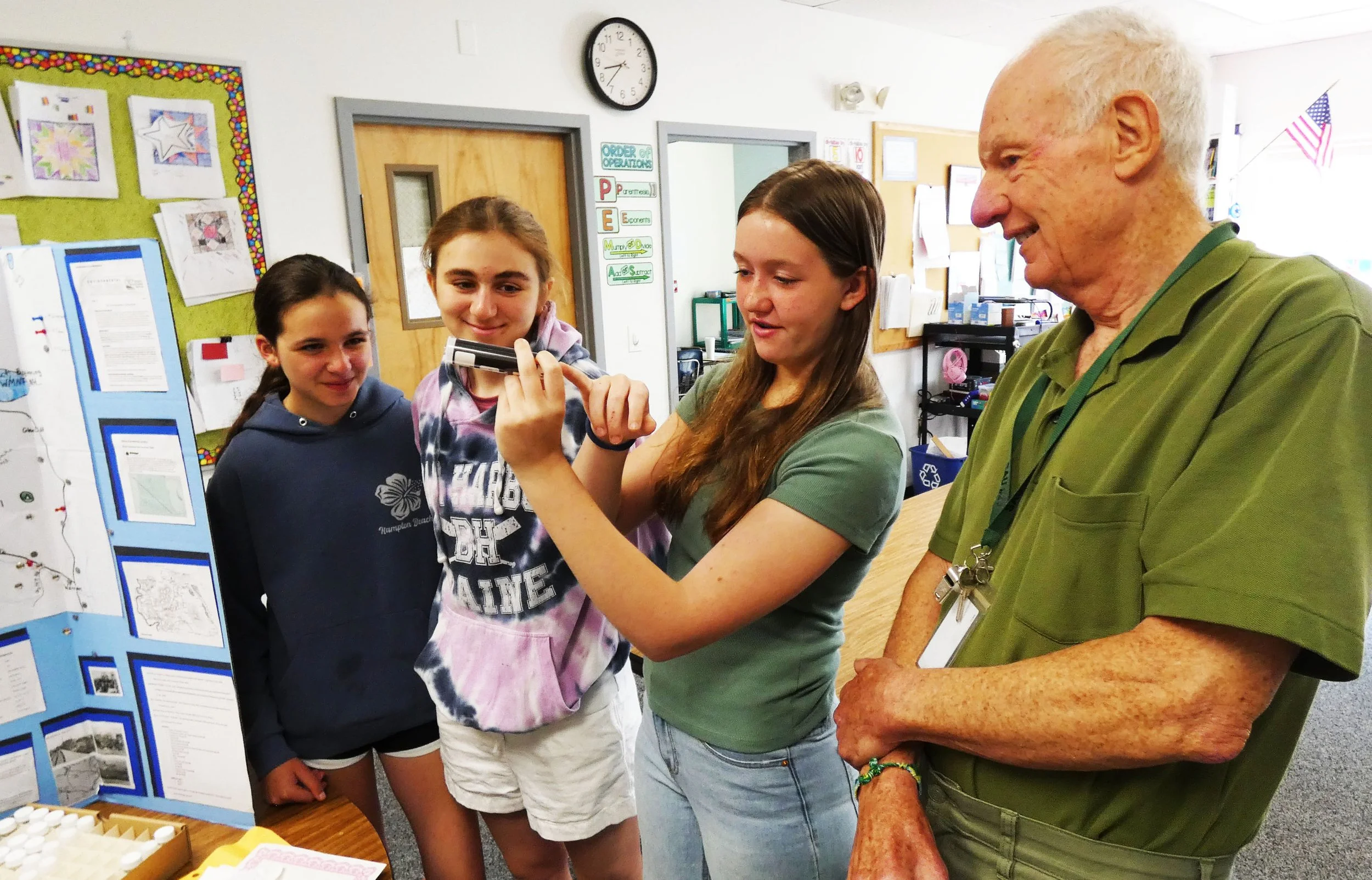
Piermont Village School students, left to right, Sam Hogan, Isabelle Spooner and Kate Donnelly show Science Teacher Geoff Ashworth how they measured water samples from properties in the Haverhill, Piermont and Warren areas for manganese content. Those results were used by the students as the subject of a New Hampshire Middle school Science Fair exhibit held last month at the New Hampshire Technical Institute. Samples from two locations in Warren revealed there were .3 parts per million of manganese in the water. Residents of those two locations were notified of the findings. The Bridge Weekly/Bernie Marvin.
Piermont, NH – A group of science class students and their teacher from the Piermont Village School recently tested several groundwater and well sites along Route 25C between Piermont and Warren, and along sections of Route 10 and 25 in Haverhill, a large area where mining was once conducted. They were concerned about the presence of manganese in the area's water sources, which could have been released when the mines were abandoned many years ago.
Piermont Science Teacher Dr. Geoffrey Ashworth, who has been at the Piermont Village School for six years, and three students, Kate Donnelly, Isabelle Spooner, and Sam Hogan, were alerted to the possible presence of harmful chemicals in the water being consumed by residents in the three towns, where, between them, lies Ore Hill, the site of a large mining operation many years ago.
The alert was set off several years ago by a social media comment noting that a medical professional in Warren had begun a study of the possible high incidence of cancer among some residents living along Route 25C and 25 from the Piermont area over Ore Hill and into Warren.
Mining on Ore Hill many years ago, the writer indicated, could have been the culprit behind contaminated drinking water caused by poor excavation practices in the area. With that in mind, the three Piermont students spoke with Dr. Ashworth about conducting some research into the possible presence of manganese in the water.
At the same time, plans were being made for the school to have a presence at the New Hampshire Middle School Science Fair at the Technical Institute in Concord on May 21, 2026. They decided that studying the harmful chemical would be a strong topic for their Science Fair project.
Dr. Ashworth told The Bridge Weekly in a recent interview at the school that water from areas where students lived was tested. Scientific research testing equipment was purchased by the school, with other supplies being donated to the experimenters by the New Hampshire Academy of Science at the Crossroads Academy in Lyme.
He said the sample bottles they received were placed with the families, and water testing samples were drawn. He said the group was pleased that there was little manganese present across the entire range of properties tested and that only two homes in Warren were found to have more than a trace amount of manganese, measured at the .3 parts per million limit. The families were notified of the chemical's presence by the school, Dr. Ashworth said.
He noted that he would recommend that the two residences where manganese was found have a full water test conducted by the state to determine whether there are more chemicals in the water beyond a trace of manganese.
Dr. Ashworth said that student Sam Hogan came up with the idea to do the water testing program. The group talked about how they would perform the testing and find the results for each water sample submitted by the residents in the three-town area that was being tested. The information about the water testing program was presented graphically on a large cardboard sheet and displayed in the science fair exhibit.
At each test site, a tap or well water sample was gathered. The group found only two samples from the Route 25 area that measured manganese at 3 parts per million. The testing program remained blind throughout, with the sample bottles being numbered. Dr. Ashworth said the samples were tested for color depth, which corresponded to the manganese percentage in each sample.
That would determine just how much manganese was contained in the water sample. Dr. Ashworth said he and the three students traveled to the May 21 science fair, where there were 60 or more exhibits being judged. He said the judges' comments to the Piermont team were superb; they received high ratings, but unfortunately, they took home no awards.
The students and Dr. Ashworth figured that their experiment, which was presented at the fair, was probably too well done for that particular science fair. They agreed that what they had done in sampling and gathering the information was "reaL science." He said they feel good about what they did and that their science project, presented at the fair, was well done.
He said that next year Kate will move on to the ninth grade, Sam and Isabelle will be eighth graders, and he is looking forward to another great science fair exhibit. He said the students should be proud of what they did. "Real science with real people, and they got real science results," he said.
The state guidelines for manganese are set at 0.3 on the scale, and they found two cases of local water exceeding that level. "That's real science," Dr. Ashcroft said.
A Unique Rivendell Overseas EducationProgram Takes Students To Spain This Year
The program at Rivendell continues to be a deep-rooted part of the Orford school that has allowed those who have been a part of this travel program to be immersed in the cultural make-up of the population they meet through their own eyes, their experiences with those people, and to be part of a well-managed, safe adventure that develops an intellectual curiosity about what is going on beyond our shores.
By Bernie Marvin
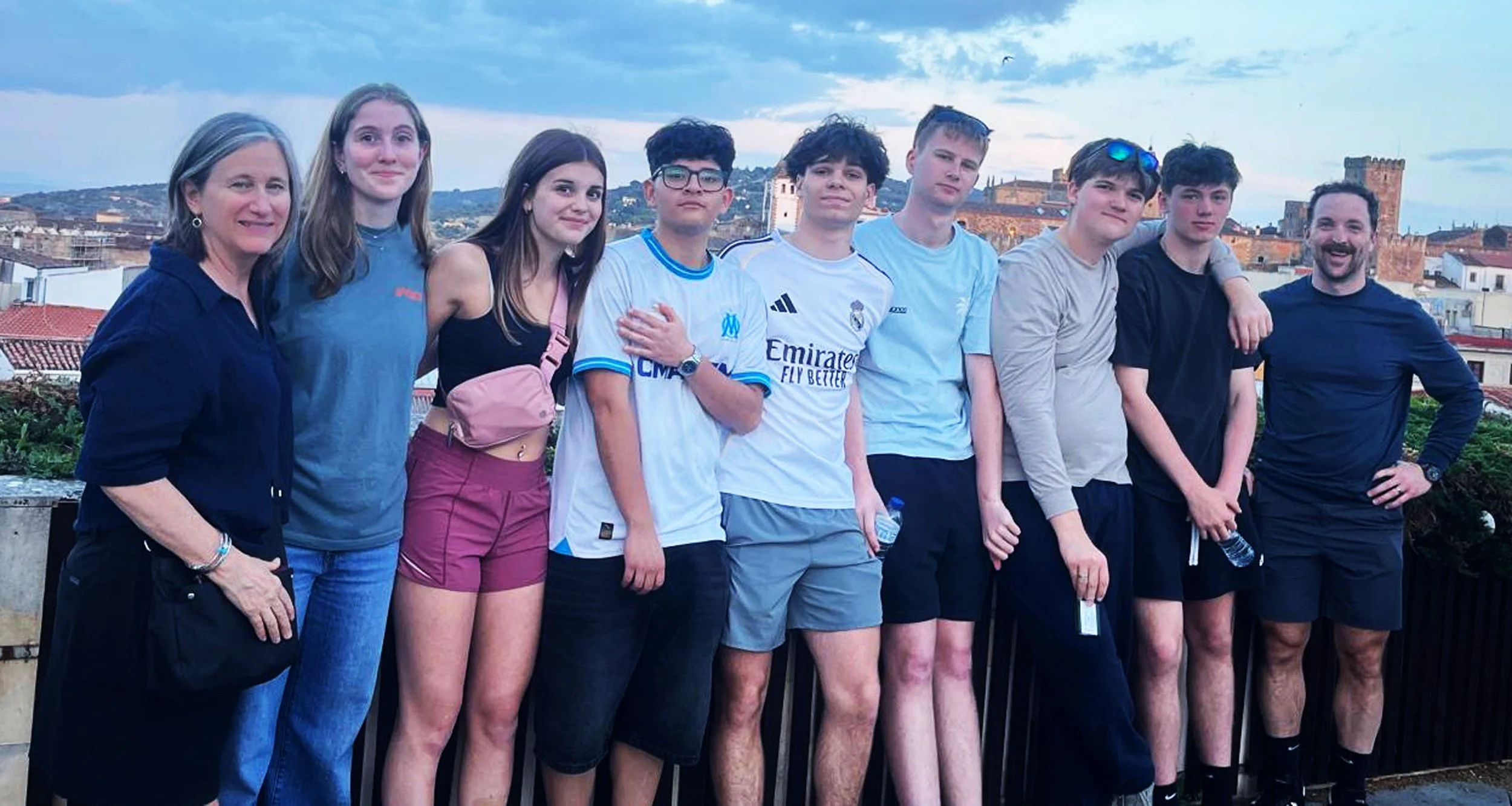
While in Spain for their April 2026 trip, students and staff included, left to right Rivendell Academy Principal Patricia Rella with students Lily Murray, Lindsey O'Hearn, Alessio Stefanelli, Wyatt Parker, Evan Woodward, Nolan Bourn, Nathaniel Daisey and Rivendell Counselor Jeffrey Eckert. Courtesy photo
Orford, NH - Worldwide school curriculum travel experiences for French and Spanish classes at Rivendell Academy are more than a tourist-level plane trip to Europe to try out a grande assiette or piatto plano of spicy food or read a museum's descriptive four-color brochure about an art display in Madrid or Paris.
For the participating students at Rivendell, the overseas learning program at this school provides early awareness of other people around the world and how they live. These foreign trips might also inspire Rivendell students to pursue further study of what they have experienced on their travels, and to realize that their early pursuit of excellence might last a lifetime.
The program at Rivendell continues to be a deep-rooted part of the Orford school that has allowed those who have been a part of this travel program to be immersed in the cultural make-up of the population they meet through their own eyes, their experiences with those people, and to be part of a well-managed, safe adventure that develops an intellectual curiosity about what is going on beyond our shores.
The foreign travel program is but one of the many great ways for the kids to study social structures, political profiles, or intellectual curiosities of those they meet while overseas. Rivendell Academy has a superb foreign travel program for French and Spanish students. This very active and popular program has been running for several years, with each language class taking a trip every other year.
Last year, it was the students' turn for the French trip, and this April, during an extended school break, seven students traveled to Spain and spent 11 days immersed in this program, a well-known Rivendell favorite for a long time.
The Spanish class has been an important part of this long-standing international exchange and study program. This year's group included Rivendell Principal Patricia Rella and Counselor Jeff Eckert, who traveled with students Wyatt Parker, Nathanial Daisey, Lily Murray, Lindsey O'Hearn, Evan Woodward, Nolan Bourne, and Allesandro Stefanelli.
Comments from staff and students involved with both last year's French class and this year's Spanish class indicate that the educational trips are as popular as ever and are among the most important parts of the participants' educational and life experiences at Rivendell, they reported.
The school information catalog outlines travel opportunities, noting they are a "robust program of regional, national, and international travel," that includes the long-standing exchange program with a school in France, immersive language and culture-focused trips to Latin America and Spain, and long-distance bicycling trips to nearby places such as Quebec City and Lake Champlain.
According to those who have been on these trips (The Bridge Weekly interviewed some of them over the past two years), the fundraising requirements can be fun but demanding. Preparation for overseas trips is a huge responsibility for individual students and families, who must raise at least $4,000 per family for the travel package.
The foreign travel programs show how well the school manages activities with students and their families. The trips receive rave reviews from the kids, parents, staff, and others who accompany them on these adventurous learning trips.
Although they were serious about their travels around Spain for those 11 days in April, they still had time to talk about what they saw and enjoyed while in the country. Two of the seven students The Bridge Weekly spoke with this year both commented on their seven-hour plane trips, saying they were long but not too difficult, and they would do it again if the opportunity came around.
They said they enjoyed the Spanish food they had, but after a few days, it became repetitive. One student mentioned he liked going back to American food, "something I am used to," he offered. They enjoyed seafood; there was a lot of it, like seafood paella, usually made with clams, shrimp, calamari, and a rich base of tomatoes, herbs, and other meats.
A big assist for the trip was that Principal Rella had lived in Spain for over three years and knew places the group could visit that were educational and safe. She knew about the motels and hotels that were clean, safe, and reasonably priced. With that prior knowledge from having lived there, Principal Rella built an itinerary for the Rivendell group to follow for this year's trip.
She noted that many parts of the trip were immersive, giving students opportunities to live with Spanish residents in the area whom Principal Rella knew and was familiar with. She said she tried to arrange visits to places she knew and to places where Spanish people she knew lived or worked.
Those folks joined them so the Rivendell group could be around real Spanish people, and it wasn't just a tourist thing. "For most of our trip in Spain, we had a Spanish person with us," Ms. Rella said.
Back in 2001, during the September 11 terrorist attacks on America, the overseas trip was intended to have the Rivendell group stay in homes for the duration of the trip. When the terrorists struck, all planes in the air were ordered to land at the nearest airport immediately. The plane carrying the Rivendell class members was over the Atlantic Ocean, heading east to Europe. It turned around and headed back to the United States.
Rivendell Counselor Eckert told The Bridge Weekly that when the students, he, and Principal Rella returned to their school and classrooms, it was always a "tricky thing" to keep track of a group of high school kids while they were in their care. He said they are very active and want to "explore everything."
He said during the trip, the chaperones have to act like parents and make sure no one gets lost. They traveled to cities such as Toledo and Madrid and found the smaller places safer to travel with young people, and as the trip progressed, the kids gained more freedom.
There were nightly phone calls between Spain and America as the travelers kept their parents up to date on their day's activities. No pen pals were resulting from the trip, and post cards were sent to parents and friends.
Counselor Eckert sent a postcard from Spain to his mother-in-law and was informed that it took an entire month to reach its destination, and it was reported that the group came back with some souvenirs. photos and lots of sweets for families.
Principal Rella said that the trip members will submit a report on their program to the school board soon. Eleven days is a long time to be away, but it was enough time for the kids to see the vast differences in how Spanish people live compared to the American kids.
Interesting, too, for the American visitors: in Spain, they noted that no family or school students they met worked any afternoon or summer job. They also don’t begin a work schedule until after their college years are completed, something they will probably be discussing with their parents and the school board.
Rivendell Principal Rella, who had considerable input on the trip and who was also one of two chaperones, said in her statement: "The trip to Spain was intentionally designed as a true cultural and language immersion experience. I wanted students to move beyond tourism and engage authentically with the people, language, customs, and rhythms of daily life in Spain. One of the most valuable aspects of the trip was having a local Spanish guide and community member with us for much of the journey. Their perspective, language support, and help navigating local culture gave our group a deeper and more meaningful experience.
"What impressed me most was how fully the students embraced the opportunity. They were open-minded, flexible, and collaborative. They tried new foods, adapted to the later Spanish schedule, navigated unfamiliar situations with maturity, and consistently supported one another. Watching students step outside of their comfort zones and rise to the challenge was incredibly rewarding. The experience reinforced the value of travel as an educational opportunity that builds independence, cultural understanding, communication skills, and confidence in ways that are difficult to replicate in a classroom. The Rivendell community places high value on international travel, and the resources invested are well worth it!
In his follow-up comments on the trip, where he also served as a chaperone, Rivendell School Counselor Eckert told The Bridge Weekly:
“Experiential learning is my favorite way to educate students. Yes, we saw beautiful sights and ate incredible food. It sounds like a vacation, and it was in some ways. However, I saw each student grow and change in a way that we cannot replicate in school. When students are on a trip-- whether it is in the mountains on an outing club trip or in Spain-- they are intrinsically motivated. They really want to be there. But the real world does not adapt to their needs. The students have to adapt. They have to deal with a different language, time zone, bed to sleep in, food to eat, and more. The kids rose to the challenge, and I was so impressed with their growth in maturity and independence!”
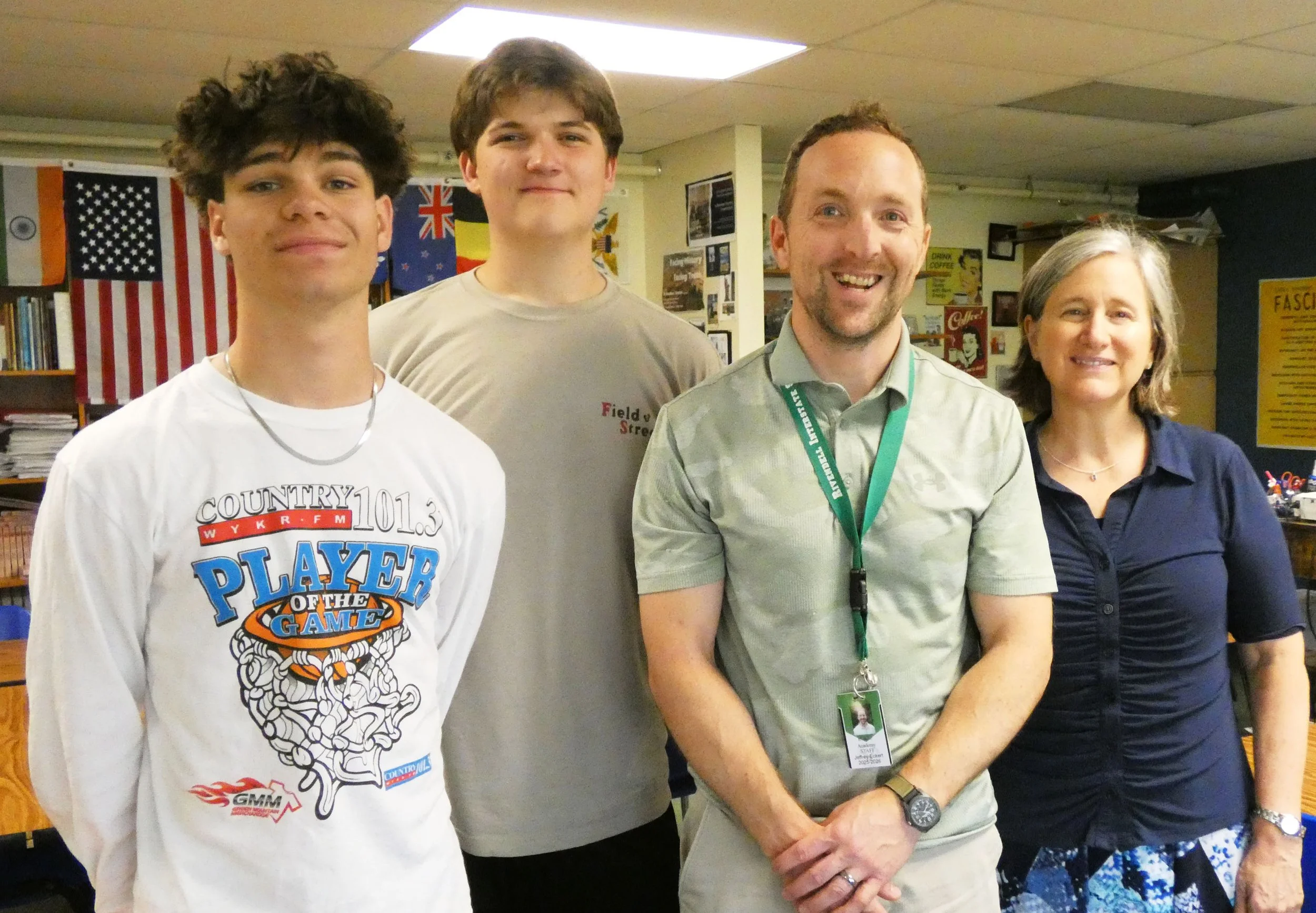
Rivendell Academy staff and students interviewed for the Bridge Weekly story on their Spanish Class trip included, left to right, students Wyatt Parker and Nathaniel Daisey with Rivendell School Counselor Jeffrey Eckert and Rivendell Principal Patricia Rella. The Bridge Weekly/Bernie Marvin.
Cottage Hospital “Any Which Way” Event Fields 70 Runners
With nearly 70 participants in the 5K event, many other families of walkers lined up at the 802 Timing Company’s start line at 9 AM to hear Jakub Kubkowski’s air horn signal the start of the event, which took runners and walkers through the quiet morning streets of Woodsville.
By Bernie Marvin
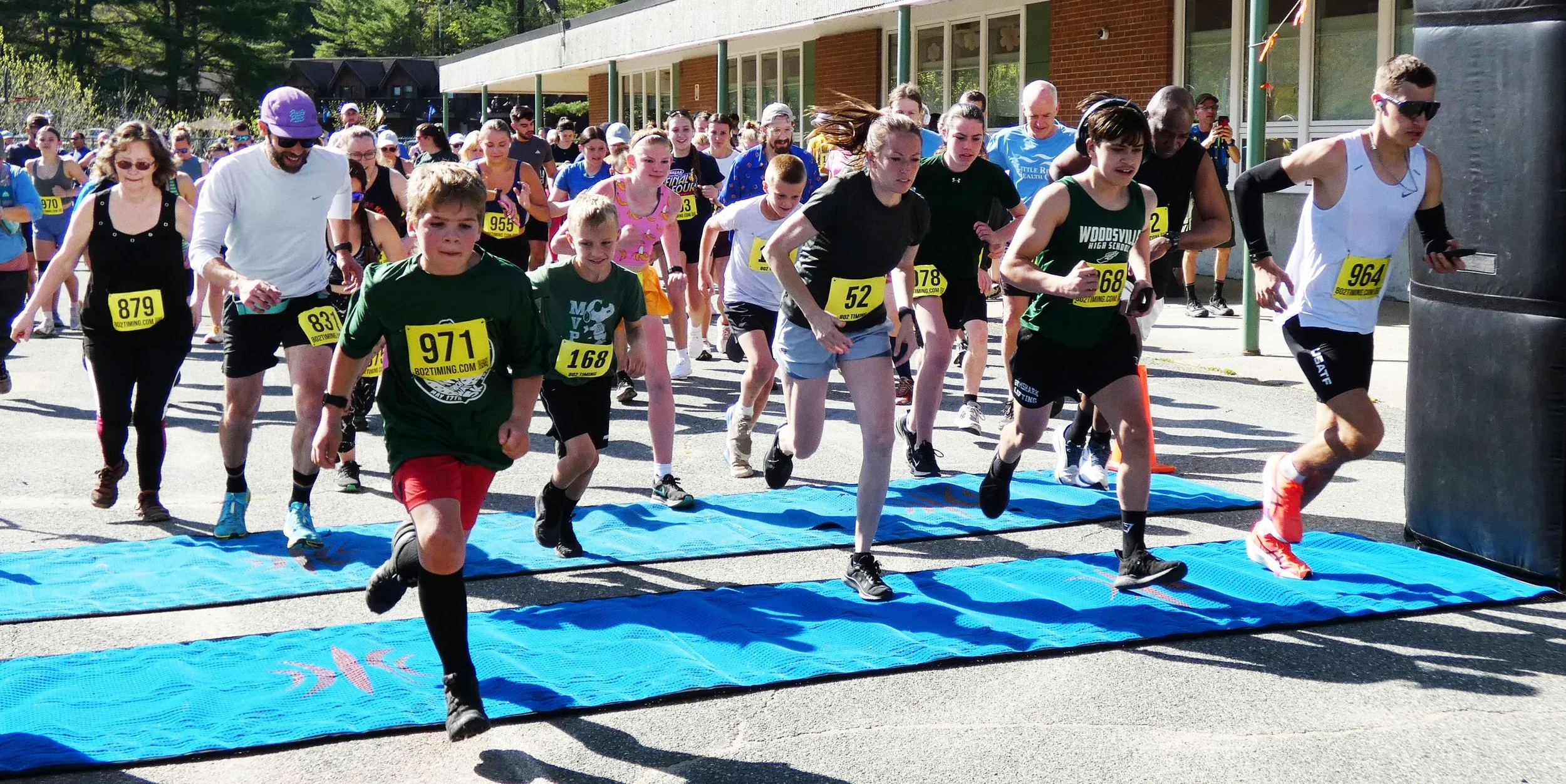
They’re off and running the Cottage Hospital Any Which Way Walk and Run 5K race that began at the Woodsville Elementary School and wound its way through Woodsville streets last Sunday morning, May 17, 2026. The Bridge Weekly/Bernie Marvin
Woodsville, NH - The 6th Annual Cottage Hospital Any Which Way 5K Run and Walk was greeted early last Sunday morning, May 17, 2026, by a warm sun and clear skies, much to the event organizers’ approval after a stretch of drizzly, below seasonal temperatures.
With nearly 70 participants in the 5K event, many other families of walkers lined up at the 802 Timing Company’s start line at 9 AM to hear Jakub Kubkowski’s air horn signal the start of the event, which took runners and walkers through the quiet morning streets of Woodsville.
There were some good times logged this year. Liam Genereaux, age 31, paced his run that brought him over the finish line at just 19:22, followed by Jake Danis, age 16, at 19:24; Matt Cote, age 36, at 20:02; Jason Chester, age 44, with 20:56, and the top female runner, Christa Ferguson, age 36, at 21:15.
Other top females included Rylynn Hambrick, age 14, at 22:11; and Rachel Stanton, age 39, at 24:07. Top male runners included W. Lang, age 9, at 26:00; B Sawyer, age 12, at 28:04 and P Hunter, age 12, at 28:08.
In a course-side interview prior to the race, Cottage Hospital CEO Holly McCormack told The Bridge Weekly that this, the 6th year of the event, saw a very robust sign-up with quality runners from throughout the North Country and beyond.
She said Cottage Hospital, an independent hospital and one of just two in the North Country, has had a good year, with successful job recruiting and popular hospital programs.
She said the race is a fundraiser for Cottage Hospital’s Operating Room renovations, an ongoing project that also promotes local wellness initiatives while providing important funding for several infrastructure programs planned throughout the hospital.
Ms. McCormack said this is the sixth race she has entered during her years as Chief Operating Officer at the hospital. She said that as she looks around the sea of runners and walkers, she recognizes many faithful participants who have also attended every event each year.
The race this year, as it has for many years, kicked off from behind the Woodsville Elementary School, where there has always been ample parking for the event in front or behind the building at the junction of Routes 10 and 302.
The timed event got underway at 9:00 AM sharp for runners, and the family walkers followed that group The route is 3.1 miles long and includes several interior Woodville roads and streets, ending about 20 minutes later at the finish line located at the rear of the Woodsville Elementary School playground.
Several strong local organizations assist in sponsoring this event. Companies and groups such as DJ Kev’s DJ Service, WYKR Radio 101.3 FM, the Cottage Hospital Auxiliary, The Brick Store, Northcountry Healthcare, and many others.
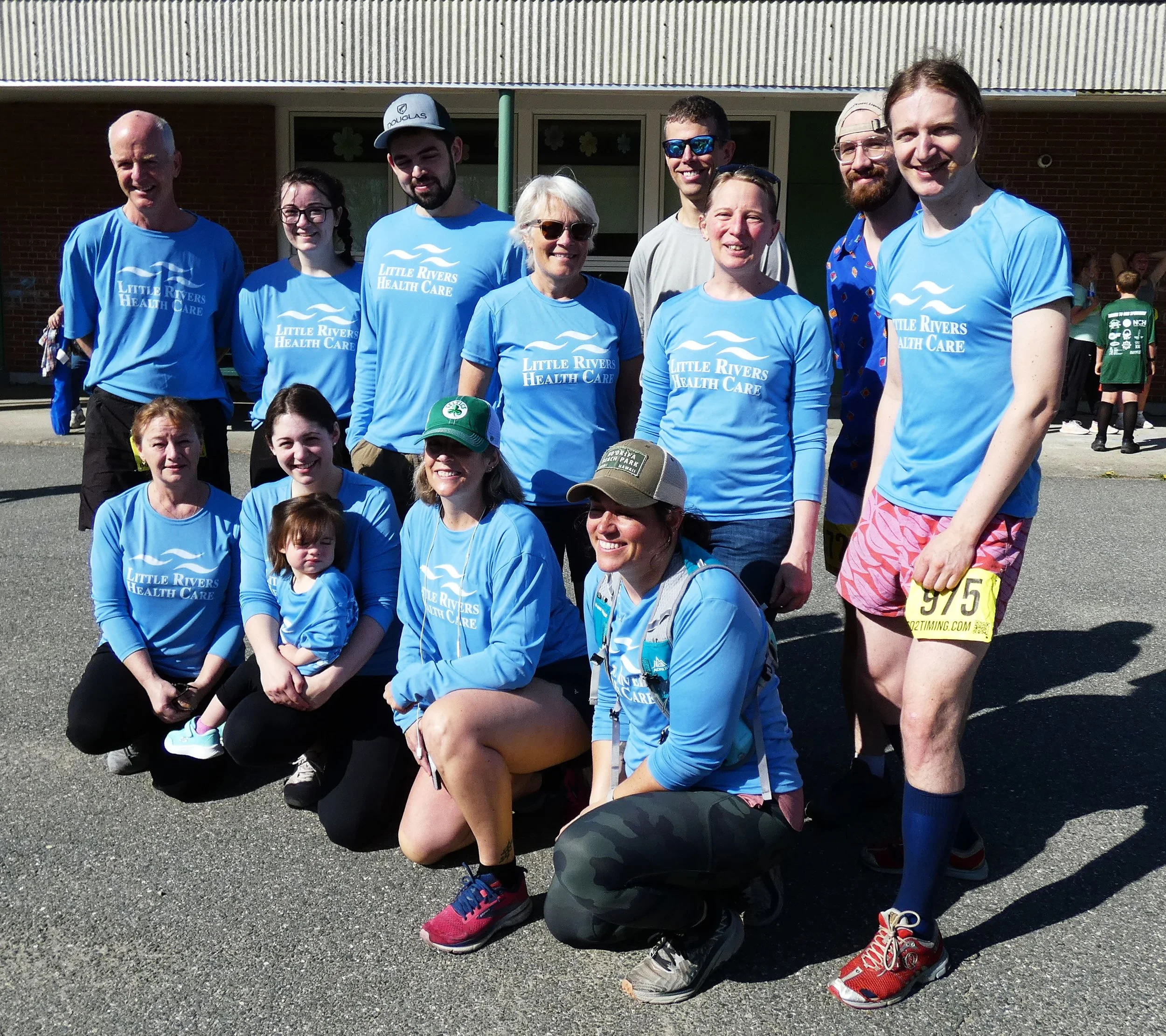
Running in the recent Cottage Hospital Any Which Way 5K run & Walk were these participants from Little Rivers Health Care; kneeling, left to right are Jackie Gilmour, Rebecca Partington holding Raelynn Partington, Lisa Pearson and Amanda Regis. Standing, left to right are Dr. Stephen Genereaux, Bri Aila, Brandon Partington, Dr. Fay Homan, Tracy Thompson, Liam Genereaux, Rick Evans, Owen Davies (standing behind Tracy and Liam.) The Bridge Weekly/Bernie Marvin

Left to right are W. Lang and A. Roy as they run the 5K Any Which Way event sponsored by Cottage Hospital last weekend. The Bridge Weekly/Bernie Marvin.
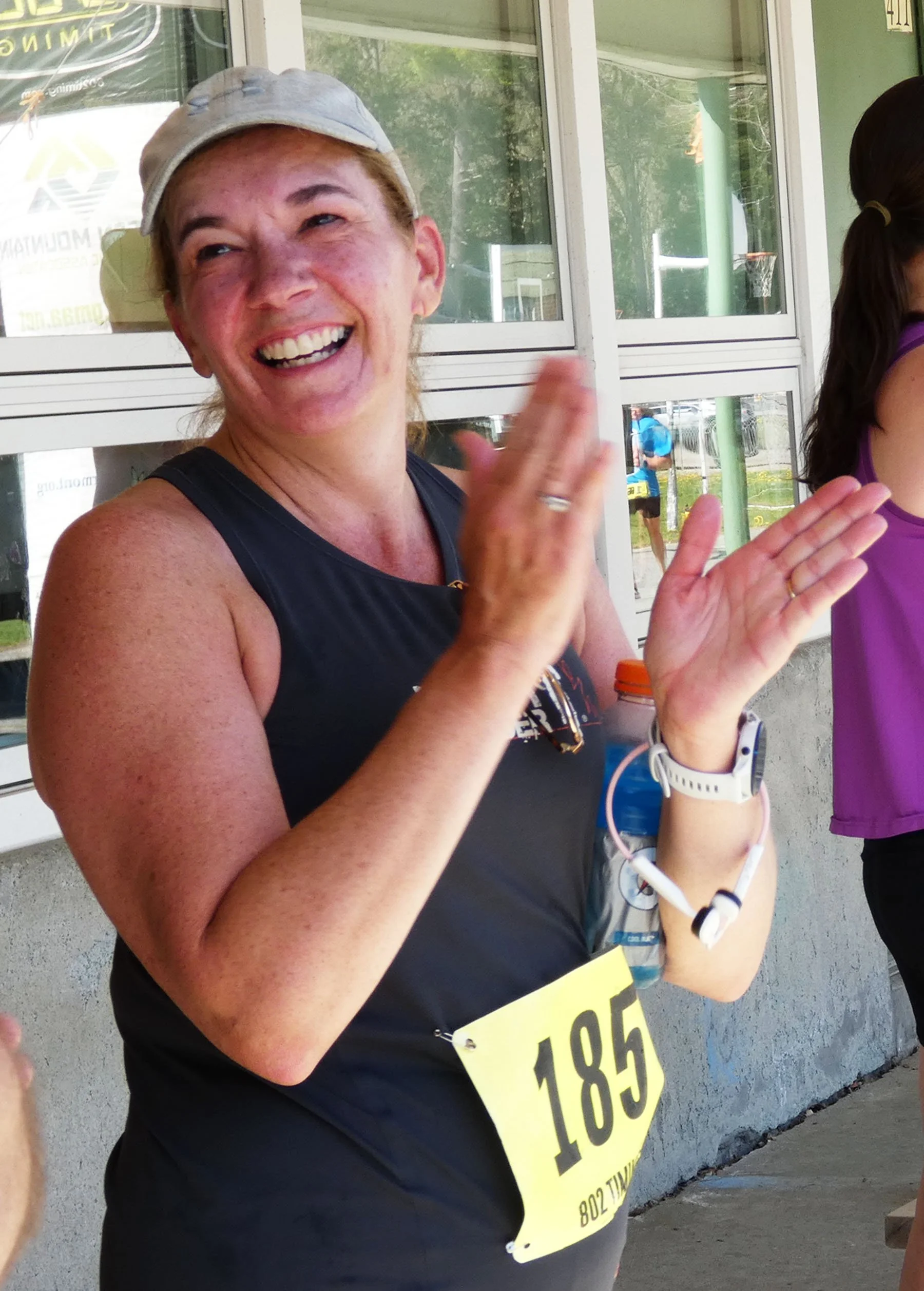
Cottage Hospital CEO Holly McCormack at the finish of her 5K race last weekend in Woodsville. Holly has run every one of the six 5K races the hospital has produced. The Bridge Weekly/Bernie Marvin
Domenic Castaldi’s Pursuit of Independence
Earlier this week, Aly Richards officially announced her campaign for Vermont governor. She is pictured with her husband, James Pepper, their twin sons, Beau and Wesley, and their beloved pup, Eleanor “Ellie” Roosevelt. Aly currently resides in Montpelier but is deeply rooted in the Newbury/Bradford community.
By Trish Griswold
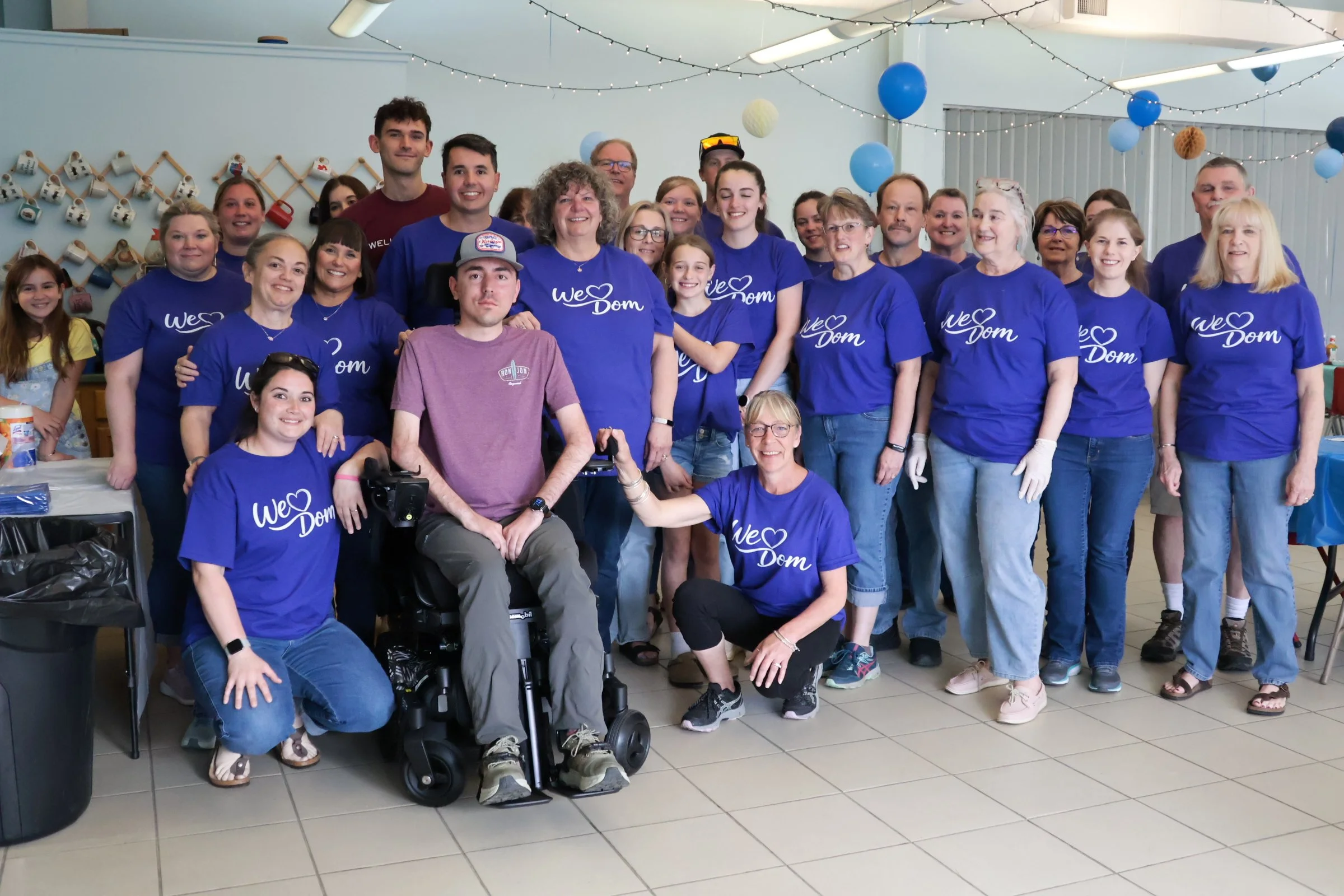
Wells River Savings Bank employees hosted a benefit dinner and raffle in honor of their beloved colleague, Domenic Castaldi. “No matter what he has going on, he treats every customer like they are the only thing in the world that matters,” says Branch Manager Patti Clark. “When he is working with a customer, nothing matters except that person and making sure he is taking care of their needs no matter what they are.” - TBWS/Trish Griswold
Bradford, VT - On Saturday, May 16th, Wells River Savings Bank (WRSB) employees and hundreds of people from the surrounding communities gathered together at the Orange East Senior Center in Bradford to support Domenic “Dom” Castaldi, a remarkable young man whose courage, strength, resilience, and work ethic serve as an inspiration to others.
“Domenic is the most incredible person I have ever met. He is such a strong person. Despite his health challenges, he comes to work every single day and never complains,” remarks WRSB Branch Manager Patti Clark. “I have had the privilege of working with Dom for eight years, and I can honestly say that I have never heard him complain about anything. But, aside from his amazing work ethic, he is genuinely the nicest person you could meet. He has such a wonderful relationship with our customers; everyone loves him.”
Born in Concord, NH, and raised in Belmont, Dom was an active child. He enjoyed school and played a variety of sports, including soccer, basketball, baseball, and track. From an early age, Domenic was an avid fisherman and a “gearhead,” passionate about trucks, cars, and all-terrain vehicles (ATVs). At age 11, Dom and his mother, Gretchen (Clough) Moulton, moved back to Gretchen’s hometown of North Haverhill, NH.
During a physical education class at Haverhill Cooperative Middle School (HCMS), Dom’s teacher, Pat Riggie, noticed something peculiar. Despite Dom’s relative strength and athleticism, he was unable to do a push-up. Dom had recently experienced a significant growth spurt, and his body was going through many changes, Gretchen recalls, but Mr. Riggie knew there was something more.
As it turned out, Dom was suffering from scapular winging, a condition in which the scapula (more commonly known as the shoulder blade) sticks out rather than resting flat against the rib cage. Follow-up blood tests were also positive for the enzyme creatine kinase, an indicator of muscular dystrophy, a genetic disorder marked by degeneration of the skeletal muscles.
By his sixteenth birthday, Dom had undergone three surgeries, including scapular fusion on both sides. This is a procedure wherein surgeons fuse the scapula directly to the ribs. The nature of the procedure forced Dom to give up physically demanding activities and refocus his energy. As part of the recovery process, Dom was homebound for months. “I saw Dom struggle to be who he wanted to be when he was in middle school,” Pat recalls. “He had a great attitude, and he tried to persevere, but his body was not cooperating.”
Domenic finished middle school and enrolled at Woodsville High School, where he graduated in 2018. Dom also completed the 21st Century Media and Design program as well as a customized architectural design program at Riverbend Career and Technical Center (RBCTC). He had always dreamed of pursuing a career in the automotive industry but accepted that this would be extremely difficult due to physical constraints. That led to an unexpected but life-altering internship at WRSB. In fact, Dom attended Lakes Region Community College while working part-time at WRSB. He earned an associate’s degree in business management and has been employed as a full-time customer service representative ever since. “I’m very grateful for my job,” Dom says. “I love the people [at WRSB], my co-workers, and the customers. Never in a million years did I see myself as a banker, but I wouldn’t trade it for anything in the world.”
In 2022, ten years after his initial diagnosis, Dom says, the State of New Hampshire revoked important health insurance benefits when he began working full-time. His mobility continued to decline, so he sought genetic testing to pinpoint which subtype of muscular dystrophy he has. Dom presented with all of the symptoms of Facioscapulohumeral Muscular Dystrophy (FSHD), a slow but progressive form of muscular dystrophy that primarily affects the face, shoulder blades, and upper arms; however, a full sequence of genetic testing did not confirm the diagnosis. Even Dom’s parents participated in genetic testing to help find some answers, but “nothing showed up,” Gretchen says. Despite the medical community’s best efforts to garner a diagnosis, Domenic’s medical condition is officially unknown.
“As a mom, you have dreams for your kids,” Gretchen reflects, “but when you have a child in Domenic’s position, it’s no longer about your dreams. It’s about them not being able to fulfill theirs.” Gretchen’s feelings of helplessness are exacerbated by a system that has, without question, failed Domenic. The only way to solidify an FSHD diagnosis is through genetic testing, but without a formal diagnosis, Dom is ineligible for clinical trials that could offer him access to medications, treatments, and therapies that might help reduce, slow, and/or potentially remediate some of his symptoms.
Additionally, the one or two programs that might be available to him without a formal diagnosis, Dom explains, will not accept his application because he “makes too much money.” The only way Dom can access any state or federally funded support(s) is to stop working full-time, despite the fact that he is fully capable and wants to work full-time. His only option is to go part-time or give up work altogether and apply for disability benefits. This isn’t feasible either, Dom says, because he requires personal care and lift assistance at home. If he goes to work part-time, Gretchen would need to reduce her work hours to care for him, which would have a significant financial impact on the entire family, which includes his 14-year-old sister, Lily.
Dom’s greatest challenge right now, however, is mobility. This past winter, Dom gave up driving due to the cold weather, as his progression of decline has accelerated. “I’ve gone downhill pretty fast over the past year,” Dom shares. “The winter was brutal.” The cold snap in December caused persistent muscle stiffness, which made it nearly impossible for Dom to steer his Dodge Ram pickup truck. Since then, his grandparents have been driving him to work in the mornings, and Gretchen or one of his co-workers has been driving him home.
At some point, Dom concedes, the physical and mental toll of New England’s long, harsh winters will likely force him to relocate to a warmer climate, but he is not ready to make that change yet. Lily will start high school next year, and she has a passion for agriculture - particularly her horses, chickens, and beloved pets. “She needs to get what she deserves too. I wouldn’t want to leave her.”
In an effort to help Domenic maintain his independence, Pat, with assistance from Mary Cataldo, the mother of one of Dom’s longtime friends, created a GoFundMe page in Dom’s honor. “I've known Gretchen for a long time and Dom since he was in middle school… I just wanted to help,” Pat states. “People came to my hour of need when I was diagnosed with brain cancer, so I wanted to pay it forward… I had everything taken away from me for a brief time. I couldn't drive. I couldn't coach. I couldn't teach. I couldn't work out. So, I can connect with how Dom is feeling. He loves his truck. He loves to drive. I also understand that he was reluctant about receiving help. I felt the same way when people donated to my cause. I simply told him that this is a way for people to help. Let them help you.”
While Dom is eternally grateful for the kindness and generosity bestowed upon him, accepting assistance from others is difficult. “This isn’t me crying for help. This is help that was offered to me,” Dom says. “It’s very hard to accept all the help because I’m an independent person. It’s also hard because I want to give back, but I feel like I can’t, and that’s hard.”
The money raised through fundraising efforts will be used to purchase a motorized wheelchair that will increase Dom’s mobility both at home and at work. Funds will also be used to purchase and modify a vehicle so that Domenic can drive himself to and from work. The cost is well over $100,000, as the modifications that he requires include joysticks and voice command technology that is only compatible with newer vehicles. Domenic is already taking driving lessons twice a week to learn how to maneuver the joysticks. He has done extensive research and has a keen eye for engineering. “I have a vision of what can be done,” Dom contends. “Anything is possible.”
Author’s Note: It is not too late to join Team Domenic and the fundraising efforts to support his mobility and independence. His GoFundMe page will remain open until July 1st. WRSB has also established a savings account in Dom’s name. Contributions can be made directly to this account at any of their five locations.
“It’s so heartwarming that people see him for who he truly is, not his disability,” Gretchen says. “We’re not sure how to even begin to say ‘thank you.’”
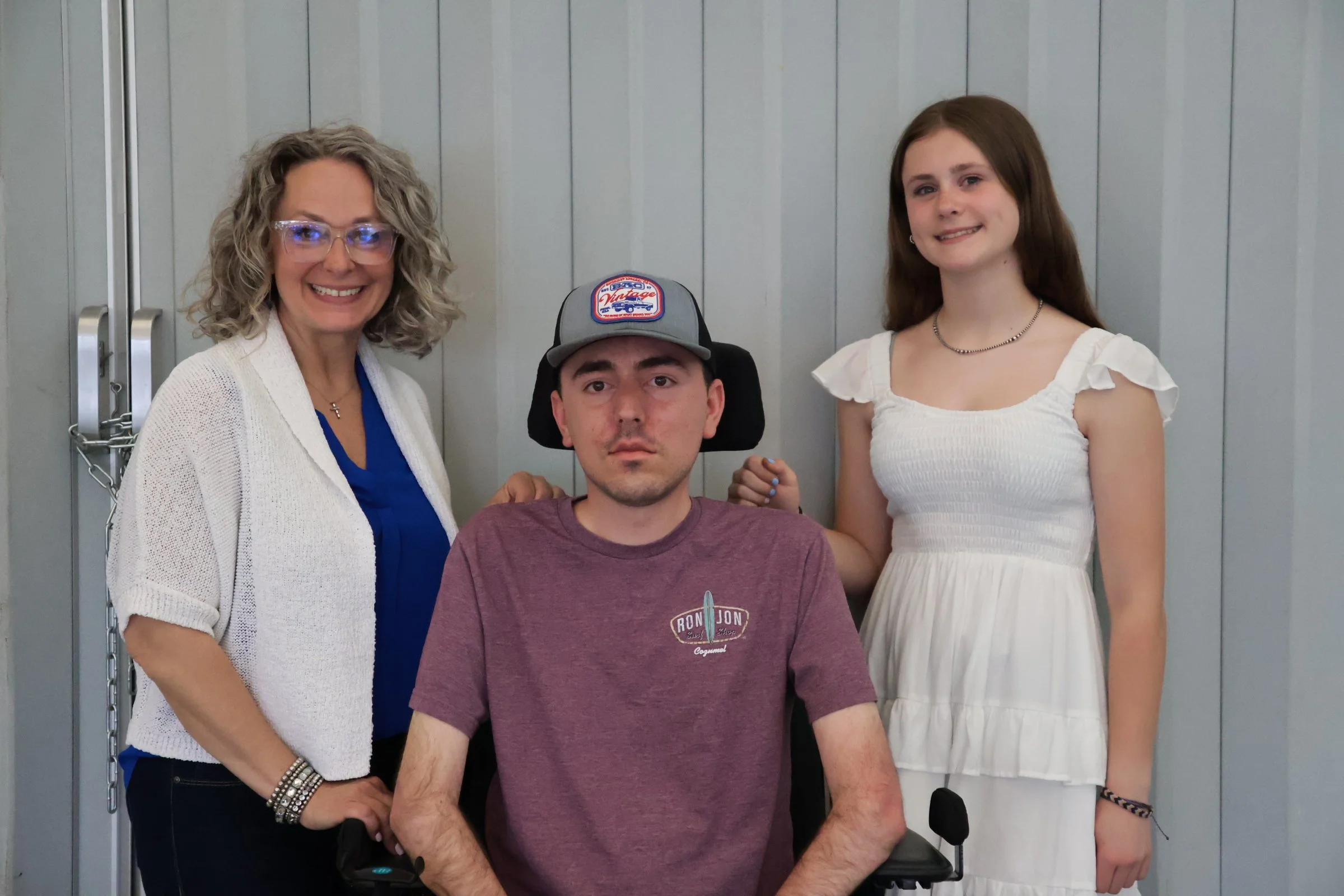
Words cannot begin to express how appreciative Domenic Castaldi (center), his mother, Gretchen (L), and his sister, Lily (R), are for the kindness, compassion, and generosity Dom has received from his Wells River Savings Bank colleagues and customers, family, friends, and community. “I am so lucky to have all of these people by my side,” Dom says. “I don’t know what I would do without them.” - TBWS/Trish Griswold
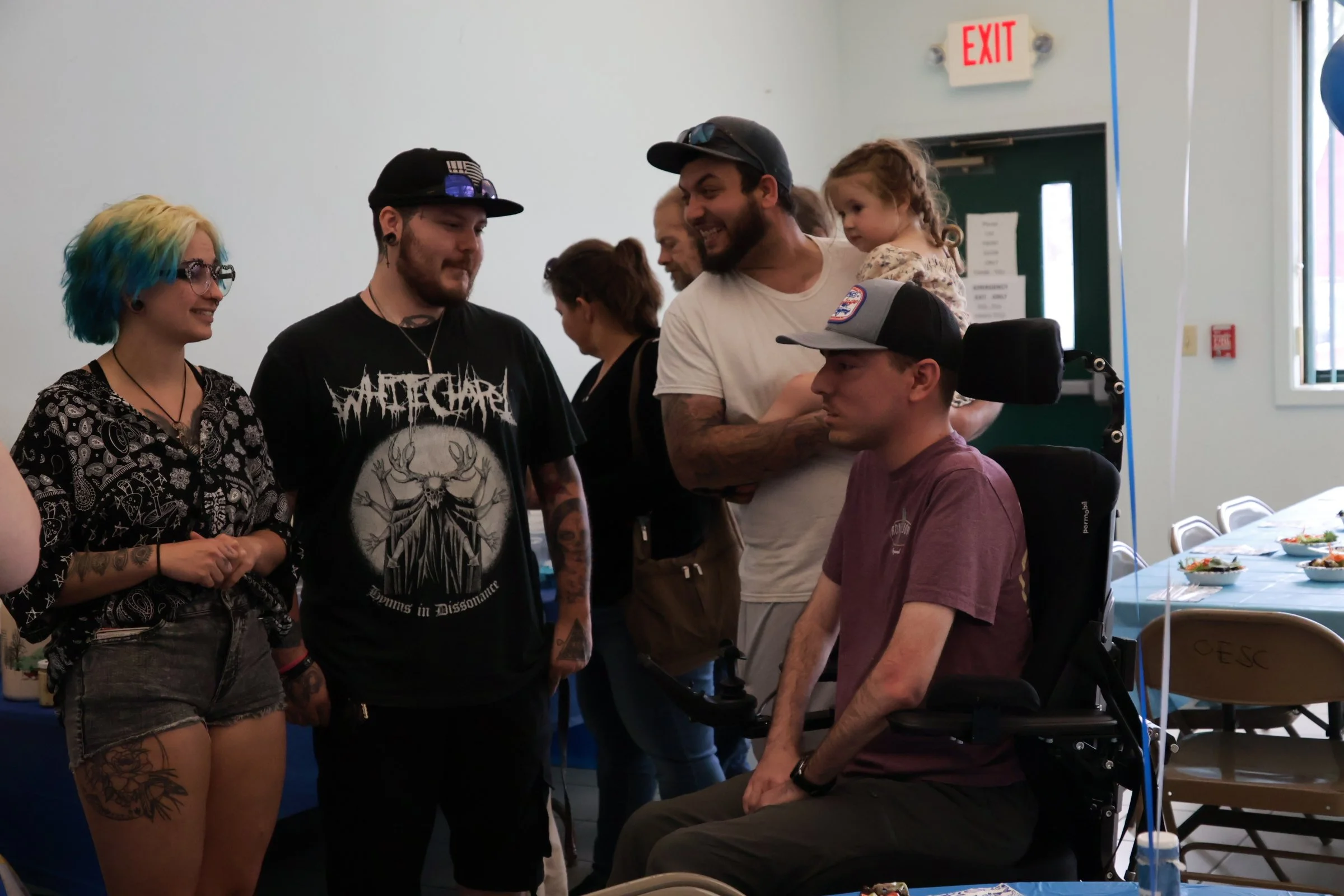
Kate Hamilton, Dakota Hernandez, DJ Tabor (holding his daughter, Ella), and Domenic Castaldi (L-R) reminisce during Saturday night’s fundraising event. Domenic, Dakota, and DJ graduated from Woodsville High School in 2018 and remain close friends. - TBWS/Trish Griswold
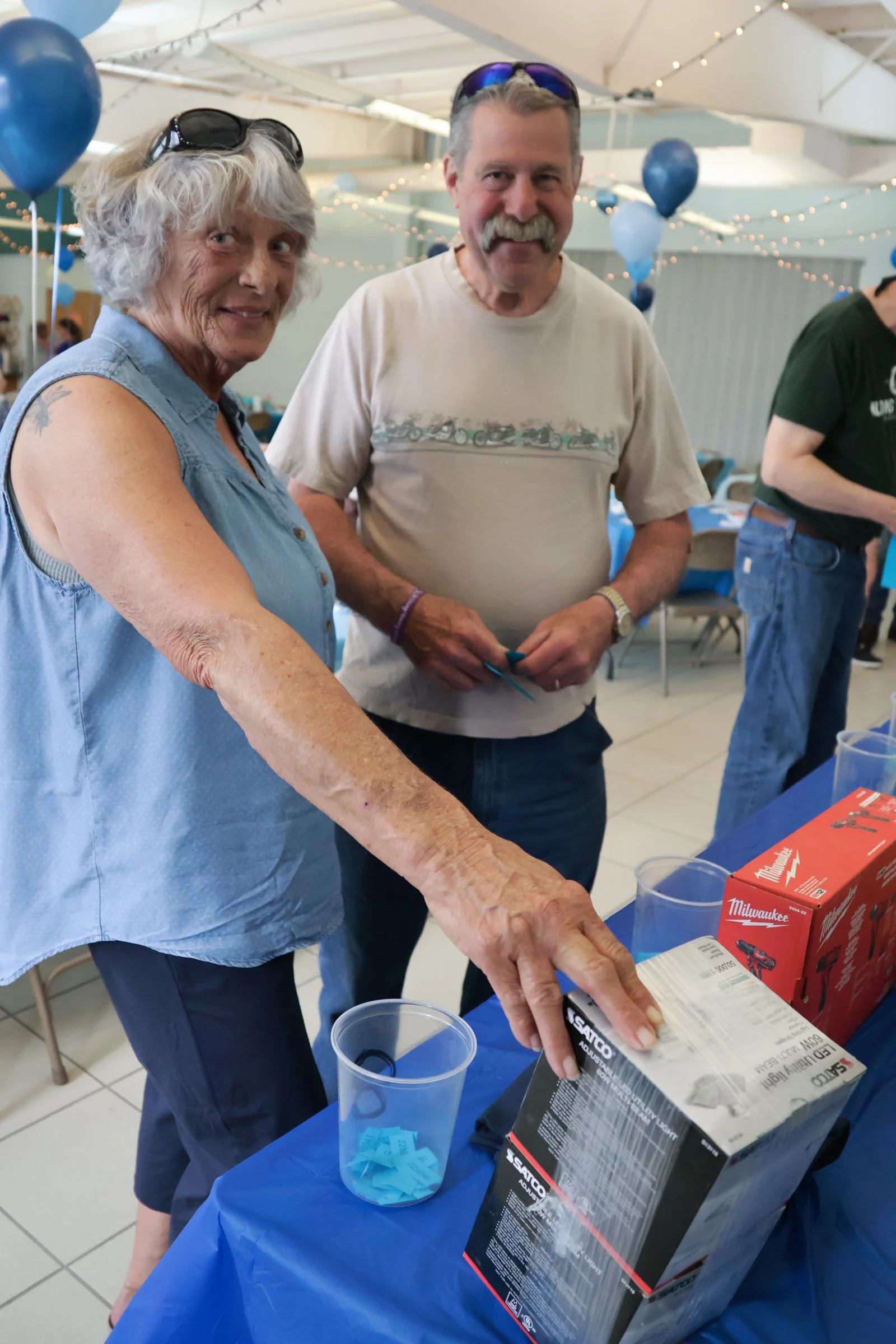
Irene (L) and Ron Fournier purchased raffle tickets for a chance to win an adjustable LED utility light. Other raffle items included: gift baskets, gift cards, power tools, grills, Red Sox tickets, mittens and an air conditioner, all donated by individuals and local businesses. - TBWS/Trish Griswold
Catamount Arts Announces the 2026 Levitt AMP St. Johnsbury Music Series
With summer just around the corner, Catamount Arts has unveiled the 2026 lineup for the Levitt AMP St. Johnsbury Music Series, setting the stage for another season of free live music right in the heart of the Northeast Kingdom.
Now a staple of the region’s summer calendar, the series has grown into a much-anticipated tradition in St. Johnsbury, drawing locals and visitors alike for evenings filled with music, fresh air, and community spirit at both Dog Mountain and downtown St. Johnsbury.
By Antonia Munson
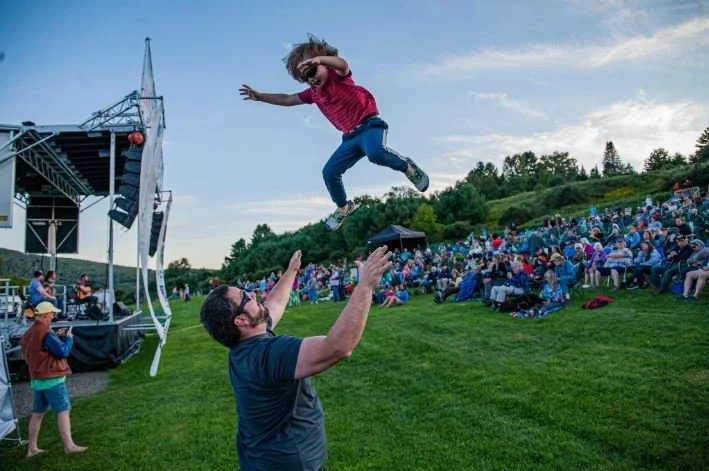
Concertgoers Enjoy Scenic Dog Mountain”(Photo: Courtesy photo from catamountarts.org)
With summer just around the corner, Catamount Arts has unveiled the 2026 lineup for the Levitt AMP St. Johnsbury Music Series, setting the stage for another season of free live music right in the heart of the Northeast Kingdom.
Now a staple of the region’s summer calendar, the series has grown into a much-anticipated tradition in St. Johnsbury, drawing locals and visitors alike for evenings filled with music, fresh air, and community spirit at both Dog Mountain and downtown St. Johnsbury.
This year’s lineup once again brings a wide mix of sounds to the stage—from folk and blues to brass bands, Celtic-inspired rhythms, indie rock, soul, and more.
Since first launching at Dog Mountain in 2018, the Levitt AMP series has steadily become a signature summer feature in the NEK. What began as a single-venue concert series has since expanded into downtown programming as well, helping spark the popular Friday night “Final Fridays” street events that now bring music and activity right to downtown St. Johnsbury.
This summer continues that mix of settings, with eight Sunday concerts at Dog Mountain and three Friday evening shows downtown, giving concertgoers the chance to experience live music in both the scenic setting of Dog Mountain and the energy of downtown St. Johnsbury.
At its heart, the series is built around a simple idea: making live music accessible while creating a space where the community can come together. Over time, it has become a familiar summer rhythm in the Northeast Kingdom, where families, neighbors, and visitors gather outdoors to enjoy performances in a relaxed, welcoming setting.
A defining part of the Levitt AMP series is that all concerts are free and open to the public. Support from the Levitt Foundation, along with regional sponsors and community partners, makes it possible for Catamount Arts to continue bringing touring artists to St. Johnsbury at no cost to concertgoers.
The Levitt Foundation works nationwide to activate public spaces through free live music, supporting hundreds of concerts each year in communities across the country. These programs are designed to make high-quality live performances accessible while strengthening local cultural life.
Locally, the Levitt Amp concert series has become a familiar part of the region’s summer identity. Dog Mountain, in particular, has become a go-to gathering place for Sunday shows, where concertgoers often arrive early to settle in, enjoy the picturesque scenery, and spend the evening outdoors with friends and family.
Accessibility remains an important focus for organizers.
At Dog Mountain, accessible parking is available on a first-come, first-served basis, including designated van-accessible spaces. Staff are on site during events to help direct attendees and provide assistance as needed.
Because the terrain includes uneven gravel and grassy areas, accommodations are available for those who need closer drop-off access to the concert space. ATV transportation from the parking area can also be arranged upon request, and accessible restroom facilities are available on site.
New this year, Rural Community Transportation (RCT) will offer a free Sunday shuttle service from July 13 through August 31, connecting the St. Johnsbury Welcome Center with Dog Mountain before and after each concert.
For additional accessibility questions or accommodations, attendees are encouraged to contact the Catamount Arts Box Office.
As another Vermont summer approaches, the Levitt AMP St. Johnsbury Music Series returns to Dog Mountain and downtown St. Johnsbury with a season full of free outdoor concerts. The series continues to bring accessible live music into shared public spaces, drawing the community together throughout the summer in the heart of the Northeast Kingdom. Community members and visitors alike are invited and encouraged to attend performances throughout the season. For full details on the 2026 lineup and concert information, visit catamountarts.org.
The 2026 Levitt AMP St. Johnsbury Music Series schedule is as follows:
Brass Queens — Friday, June 26 at 7 p.m. on Railroad Street in St. Johnsbury
Dyer Davis — Sunday, July 12 at 5 p.m. at Dog Mountain
Albannach — Sunday, July 19 at 5 p.m. at Dog Mountain
Mark Taylor — Sunday, July 26 at 5 p.m. at Dog Mountain
Kyshona — Friday, July 31 at 7 p.m. on Railroad Street in St. Johnsbury
Noah Richardson — Sunday, August 2 at 5 p.m. at Dog Mountain
House of Hamill — Sunday, August 9 at 5 p.m. at Dog Mountain
Chambers/Deslauriers featuring Annika Chambers & Paul Deslauriers — Sunday, August 16 at 5 p.m. at Dog Mountain
LADAMA — Sunday, August 23 at 5 p.m. at Dog Mountain
Jon Hayes & The Company — Friday, August 28 at 7 p.m. on Railroad Street in St. Johnsbury
Küf Knotz & Christine Elise — Sunday, August 30 at 5 p.m. at Dog Mountain

The Bombardment of Bees
Climate change and pollution have a profound impact on bees. Bees cannot smell flowers covered in pollutants. These flowers are visited by insects 70% fewer times versus untarnished flowers, showing a clear sign that pollution directly impacts a bee’s ability to find food.

Many people are scared of bees, mistakenly perceived as dangerous when in reality, bees are the ones in danger. In the winter of 2024-2025, in the U.S., honeybee losses totalled between 60% and 62% – the highest winter losses ever recorded. For context, normal winter honeybee losses run within the range of 30% - 50%. Sadly, wild bees are under just as much strain as honeybees, with “about half the bee species that have been monitored… in decline” says Bee Regenerative Board Secretary Bridgett Burns.
This percentage is important because bees are an indicator species, which means they represent the overall health of all pollinator insects. More specifically, when bees struggle - all pollinators struggle. Currently, bees -- both commercial and wild – are dying at an unsustainable rate, placing themselves and all pollinators at equal risk of extinction.
Why should you care? Approximately 35% of all food requires pollination to grow. Here in Vermont which has a rich farming history, (note the myth that Vermont has more cows than people.), farms rely on pollinators. To better address this crisis, it is important to understand the causes for the bee population decline, including: parasites, pesticides, invasive species, climate change, and their struggle to recover.
Parasite Pandemic
Within the last few decades, the spread of Varroa Mites has become a dangerous problem for bees. Varroa mites originated in the United States bee population when the Asian Honeybee spread them to Italian Honeybees, the most common species for making commercial honey. This invasion is so serious that nearly (if not all) hives are currently infested with mites. They target the larvae of the hive and “suck the energy out of the brood,” says Burns. When mites feed from the larvae, many larvae die, impeding population growth within the hive.
Another common problem associated with mites is the diseases they carry; mites can spread diseases such as the Deformed Wing Virus, which disables the bee’s ability to fly. Hence, they are unable to provide for the hive. However, the biggest problem varroa mites present is carried out by humans who use pesticides to keep their numbers low. These poisons are harmful to the localized environments bees use to feed themselves.
Pesticides = Poison
Another recent issue bees face is neonicotinoids. Neonicotinoids, also known as neonics, are “derived from a neurotoxin,” explains Burns. This pesticide is not applied directly to bees and instead has a secondhand effect on the bees that come into contact with it. Neonics are applied directly to plants like crops, seeds, lawns, and the soil to keep insects considered “pests” away. When bees land on these plants, they absorb some of the insecticide and are poisoned from the inside out. This poison can kill bees and make the bees’ daily functions difficult to achieve. Neonics are especially harmful because they impact both wild bees and honeybees and the pesticide can take months to years to break down. The largest use of neonics that we still have in Vermont relates is used for soybeans and cereal grain seeds.
Invasive Species
Invasive species have a crippling impact on many animals, including bees. Invasive species are particularly harmful threats to bees because there is no way to “stop” or fully contain these plants. They spread like wildfire, collapsing entire ecosystems. Why? Invasive species often have few to no natural predators in environments where they do not originate. They also have an easy time outcompeting native species for food and space because the competing species are not adapted to protect themselves from invasive species. Some common invasive species in Vermont are: Japanese knotweed, bush honeysuckle, buckthorn, and purple loosestrife. These species reduce the amount of flowering plants that bees can feed from, making it difficult for bees to get enough food to sustain them through winter.
Pollution and Unstable Winter Conditions
Climate change and pollution have a profound impact on bees. Bees cannot smell flowers covered in pollutants. These flowers are visited by insects 70% fewer times versus untarnished flowers, showing a clear sign that pollution directly impacts a bee’s ability to find food.
Climate change itself also negatively impacts bees. Bees survive the winter by surrounding their queen and vibrating all winter to keep the queen in the center warm. When winters become warm, bees wake up and begin searching for flowers. Because they spread out and are not surrounding their queen, when the temperature drops again, the queen is susceptible to freezing to death. This destroys the only way that bees have to repopulate once the worker bees die.
At the same time, the change in temperature can cause flowering plants to bloom prematurely, leaving fewer plants blooming for when the bees begin looking for them. This is a serious problem because at this point in time, it is nearly impossible to completely avoid the effects of pollution and climate change. In Vermont, we have experienced the fluctuation of winters going from freezing temperatures to warm and back to freezing again overnight. Sadly, the destruction caused by pollution may never be undone.
Continual Deficit
Both wild bees and commercial honeybees face a new struggle: recovery of their recent population loss. Over time there has been a “45% increase in human managed bee colonies globally over the past 50 years” (Coallier et al.). Many of these beekeepers buy new hives every year and by the end of the season, they create new hives out of what they bought. With the recent heightened loss of hives, there are not enough bees to go around, making it difficult for beekeepers to repopulate. If the trend of bee deaths continues, bees may never see a full recovery.
Unless Vermont winters become safer for bees, the population may continue to drop. The same trend holds true for wild bees. When there are fewer wild bees, they have a difficult time repopulating and recovering from their losses. This is dangerous because it is the culmination of all of the threats bees face, causing a situation that could be the sign of a decline for years to come in pollinator health and population.
You Can Help
How can you help Vermont bees? Some of the simpler and easier ways to help can still make a difference. 1) Plant native flowering plants such as: Wild Geranium, Wild Bergamot, Goldenrod, and New England Aster. 2) Leave old stumps, stems, and leaves in your lawn because “70% of all bee species are ground nesting species” (“10 Ways to Save the Bees”). This allows bees an ideal environment to create homes for the summer and winter. 3) Raise bees yourself and/or buy local honey from one of our many independently owned apiaries. 4) Lobby for change to help bees. Contact your state representatives and tell them that you are against pesticides and want money allocated toward Vermont’s invasive species problem. 5) Support local bee conservation efforts to preserve our local wildlife. Some local organizations that participate in research and efforts to conserve bees are: The University of Vermont’s Vermont Bee Lab, the Vermont Pollinator Working Group, and the Vermont Beekeepers Association.
Your effort in conserving bees can make all the difference in whether these necessary creatures will continue to support us and the environment. Remember that while bees have stingers, they are the ones being stung.
Kurtis Brooks is a Senior attending Blue Mountain Union High School. He is a native Vermonter who lives on a three acre field with many kinds of bees.
Talent and hard work make the WHS Three-Day CRASH effort sadly realistic
In the mayhem playing out before more than 200 people, who included students, staff, parents, and members of the public, watched and commented on the work being done close to the observers' view. The action going on was described over the school's sound system by long-time medical responder and Emergency Medical Technician Richard Guy.
By Bernie Marvin
Woodsville, NH – A three-day project produced last week by many dedicated people from around the area ended up as a life-like experience with a death-like result located adjacent to the Woodsville High School parking lot.
With superb play-acting right from the early morning opening scene, wailing sirens from responding emergency vehicles to an indescribably wild scene of two mangled vehicles, an assortment of emergency vehicles, medical personnel, and rescue responders poured onto the tarmac of Woodsville High School parking lot to go to work and hopefully save a life and reduce suffering of other souls involved in the madness of a seriously bad mock motor vehicle crash. The entire scenario was planned, set up, and executed with the same seriousness as a real crash.
In the mayhem playing out before more than 200 people, who included students, staff, parents, and members of the public, watched and commented on the work being done close to the observers' view. The action going on was described over the school's sound system by long-time medical responder and Emergency Medical Technician Richard Guy.
I can't count on both hands and feet times two the number of years EMT Guy has been at the scene of the Woodsville High School mock crash scenes from the past, but I know my first experience with this type of program was in the early 1980's, and he was there at the locus of the accident set-up for that school project at the old Butson's Supermarket parking lot.
That means that Mr. Guy and others of the Woodsville Fire Department and medical team have been doing this for a long time and have lots of experience with both the actual, fatal crash scenes and the fake crash scenes, like this one, as well.
Injured passengers in varying degrees of moulage (mock accident injury applications) in each crash vehicle were high school students who included Trent Alling, who was deceased as a result of his injuries, along with others who were injured, including Grace McLellan, Katie Houston, and Makayla Walker.
In the second involved vehicle, students suffering immensely realistic moulage injuries included Taylor McFarland, Maddie Monterosso, Jill Roy, and Eyrleigh Hambrick.
Woodsville Fire and Medical units arrived on scene at 8:30 sharp on the first day of the three-day program. The injured were cut loose from the wreckage and transported to Cottage Hospital by ambulance. The deceased student driver was transported from the scene in a Ricker Funeral Home hearse. Ensuring that proper legal requirements were intact, the Medical Examiner, in a role played by Haverhill Recreation Director Sherri Sargent, was on the scene.
Also, on scene for the one-hour action staging was Grafton County Attorney Martha Ann (Marcie) Hornick. She was on board later in production as the prosecutor who led the proceedings against the impaired vehicle operator that the deceased student was in.
With the shrouded body of the Alling student lying in plain view of the 200 observing students, the scene was solemn and remained so until the hearse had cleared the parking lot. But the sadness of that incident would be returned for Part Two, as creators at the school had also scheduled a full funeral for the deceased student at the Dr. John A. Bagonzi Community Building that was held the next day with flowers, music and testimonials, including an officiant Melissa Gould, pall bearers, and a visiting speaker, Derek Curtis of Groton, who had lost a child, Blue Mountain Union High School student "TC" Curtis, as a result of injuries suffered in an auto crash in 2018.
The Community and State partners who are assisting with the Mock Crash include: Haverhill Police Department, Grafton County Sheriff Department, Grafton County Attorney's Office, Ricker Funeral Home, Woodsville Cottage Hospital, Woodsville Emergency Medical Services, Woodsville Fire Department, AAA Northern New England, NH Liquor Commission, NH Department of Transportation Driving Toward Zero, NH Department of Highway Safety, Woodsville High School Band, Haverhill Recreation Department, JTB Towing and Recovery, Hatchland Farm, Copies and More, Private Citizens and WHS Students.
Day Two of the program opened inside the Dr. John A. Bagonzi Community Building, where the high school classes once again assembled to observe and some to participate in the funeral of the student killed in the mock fatal crash that played out before the students who gathered at the school's parking lot early the previous day.
Student and faculty pallbearers included Principal Hayden Coon, Teachers Robert Scianna and Glen Page, also Assistant Principal Matt Kelly, and students Maddox Furyes and Grace McLellan.
The casket, memorial photos, flowers, and signs were placed around the gym as seniors and staff made their entrance and took their seats in designated areas. An intermittent slideshow was held to commemorate the life of deceased student Trent Alling, with appropriate background music provided by Music Director Wright.
Opening the service was Derek Curtis, father of BMU student TC Curtis, who was killed in a vehicle crash in 2018. The students listened intently to his words as a father who had experienced the death of a child.
Student speakers were Grace McLellan, Josie Drake, and Mila Townsand.
Vocalist Mila Townsend sang Amazing Grace, as the vista of flowers and students marked the realistic setting of a memorial service for a student loved by friends and classmates, his short life snuffed out the previous day in a motor vehicle crash. Melissa Gould was an officiant throughout the program, something she does professionally with great feeling and love.
The service was closed with a reading and a poem recitation by Melissa. Pallbearers assembled once again to carry the casket out of the Community Building, and students returned to the Roundhouse with their teachers.
Teachers then facilitated discussions on the mock funeral they had just witnessed.
Day Three of the three-day event began at noon on Friday, May 1, 2026, and included a mock court trial, featuring Grafton County Attorney Marcie Hornick, Defense Attorney Amanda Jacobson, a Lead Assistant County Attorney, and Judge Tara Heater, a Deputy County Attorney.
During the court proceedings, students observed and heard the arraignment and bail hearing for the defendant charged in the staged mock crash scene. Also, they witnessed the trial proceedings, including witness testimony, evidence presentation, closing arguments, and the defendant's sentencing.
An important part of the program included the day's activities on the final day, Friday, May 1, 2026. It included large-group sessions on safe driving, reducing impaired and distracted driving crashes, a lunch period, and the mock trial from noon to 1:30 PM.
Assembled in the parking lot for student visits and discussions were AAA Northern New Hampshire and programs that included distracted-driving glasses, impaired-vision goggles, and a program by the New Hampshire Liquor Commission that included a golf-cart operation activity and impairment glasses.
The New Hampshire Department of Transportation cargo trailer was set up alongside other outdoor stations for student access during student rotations. The program ended at 3 PM.
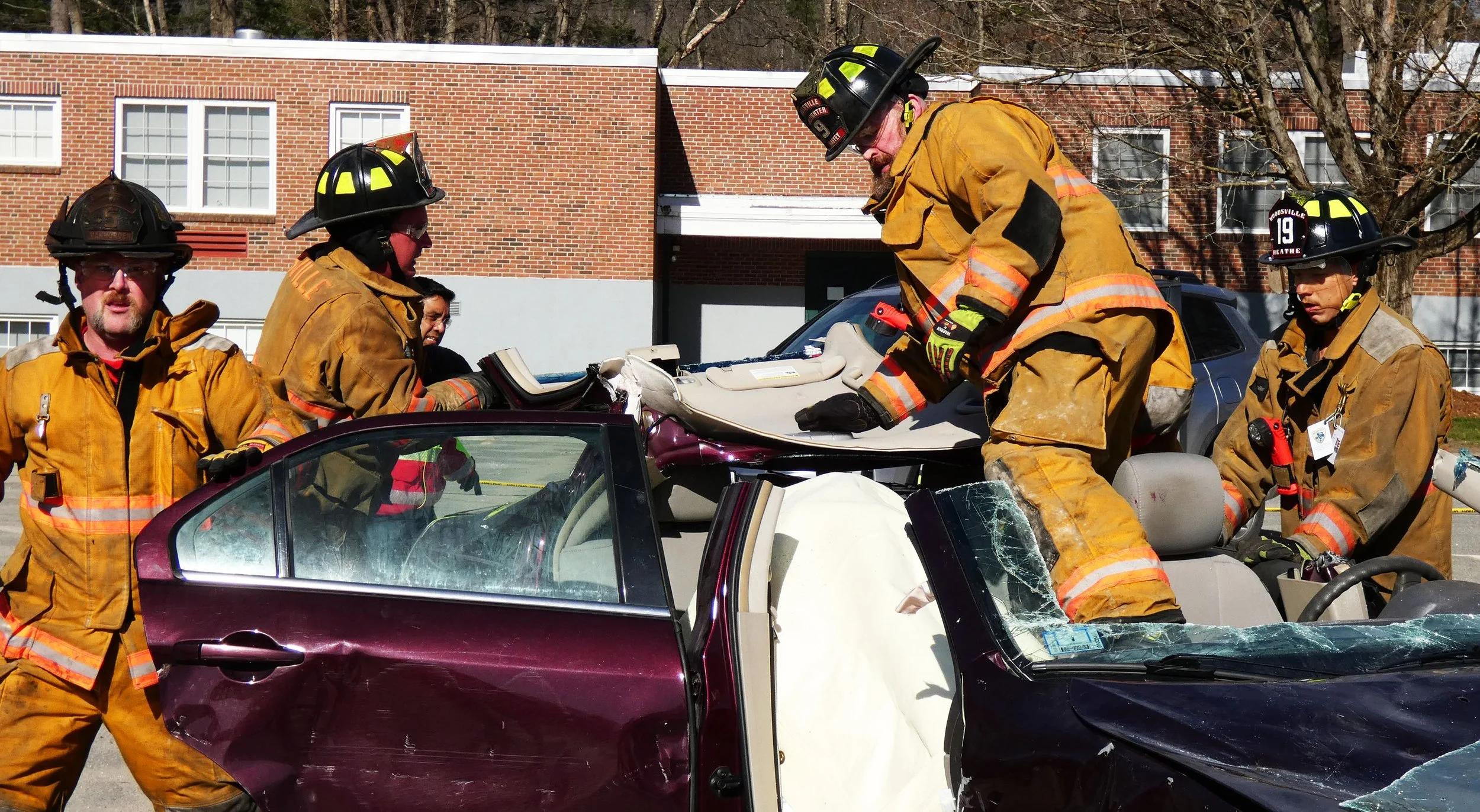
At the mock crash produced recently at Woodsville High School, Woodsville Fire Department rescue crews work to free injured students trapped in a wrecked vehicle. The Bridge Weekly/Bernie Marvin
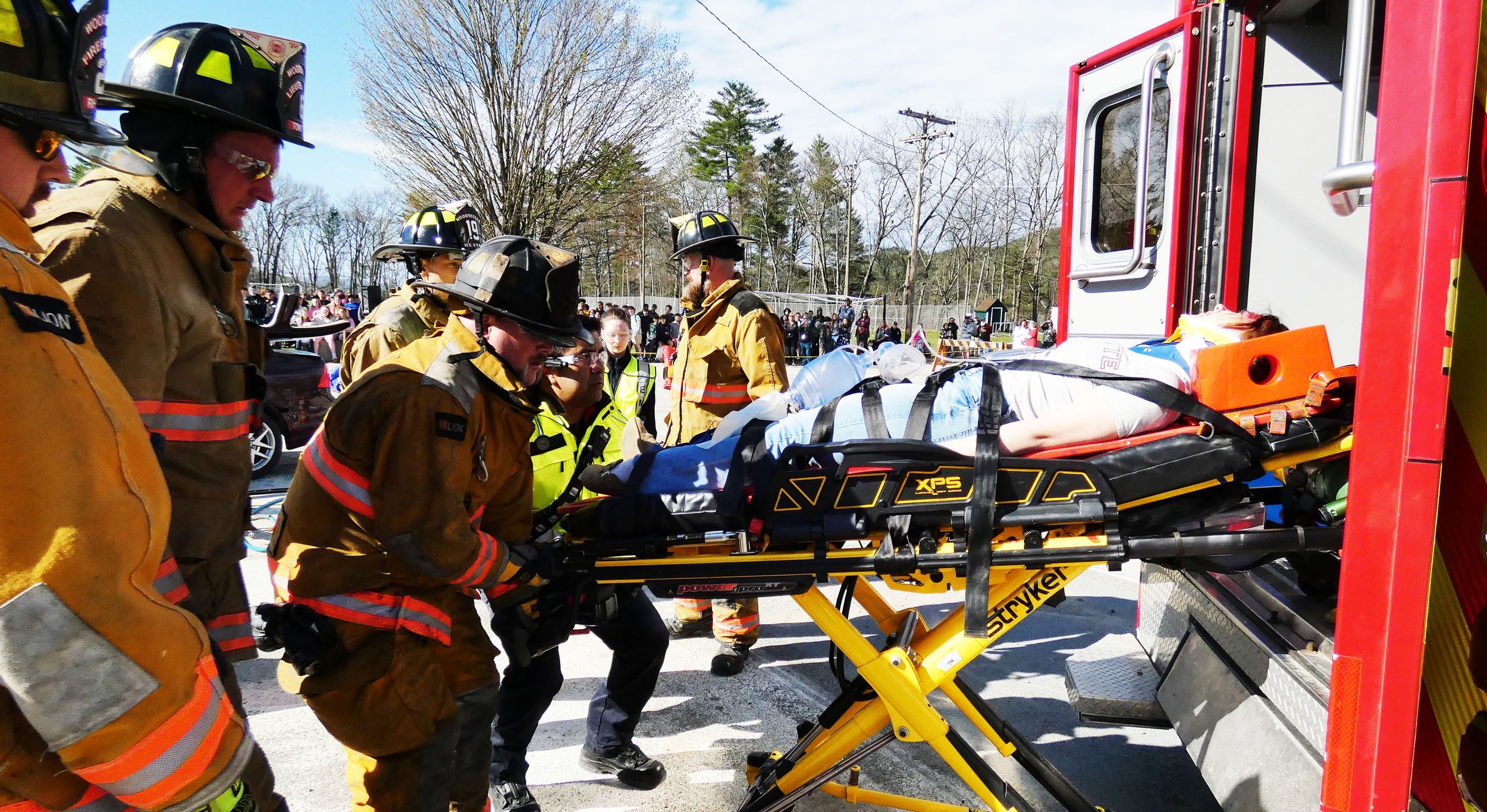
Injured Woodsville High School student is loaded into a Woodsville ambulance, after being freed from a crashed vehicle during a school-wide mock accident, funeral, and court trial awareness exercise held at the school over April 29, 30, and May 1, 2026. The Bridge Weekly/Bernie Marvin
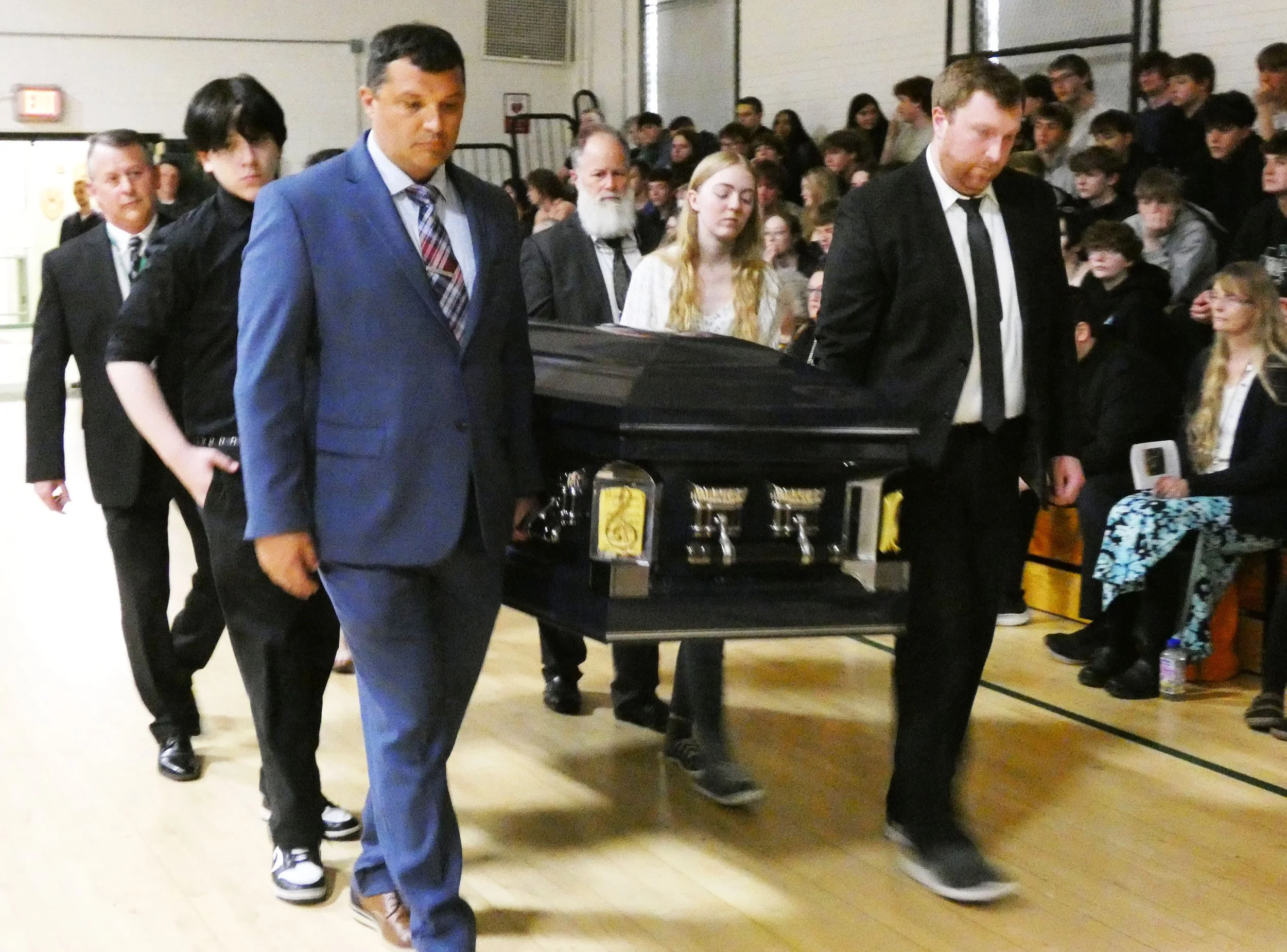
During the funeral services staged for a victim of a mock motor vehicle crash at Woodsville High School, pallbearers bring in the coffin of student Trenton James Alling for funeral services at the Dr. John A. Bagonzi Community Building. From left to right, seen are Teacher Bob Scianna, Maddox Furyes, Principal Hayden Coon, Teacher Glen Page, Grace McLellan, and Assistant Principal Matthew Kelly. The Bridge Weekly/Bernie Marvin.
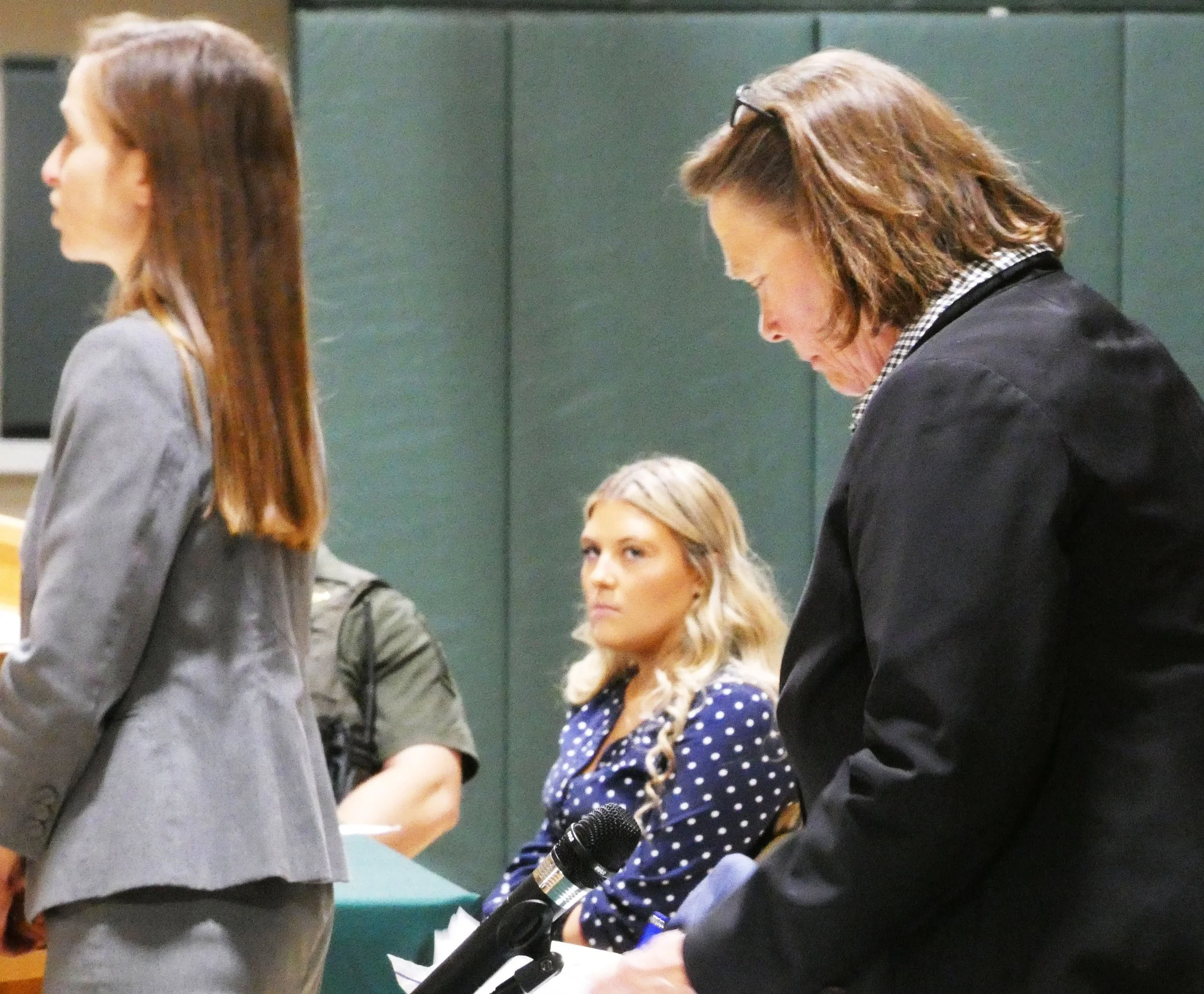
At trial on the third day of the WHS Crash program, defendant Taylor McFarland, a Woodsville High School student, at center, listens as Grafton Country Attorney Marcie Hornick, at right, and defense lawyer Amanda Jacobson, argue the charges leveled against McFarland. The Bridge Weekly/Bernie Marvin
New Model A club forms for Northern NH and NE Kingdom
“We are excited to build a friendly, local community around these cars. Model A owners are invited to join us as we explore back roads, share knowledge, and keep these historic vehicles on the road,” said Club President Eric Zaharee.
By Bernie Marvin
Lisbon, NH – A newly chartered Model A club has been formed for New Hampshire’s North Country and Vermont’s Northeast Kingdom. The club’s membership has been accepted by the Model A Ford Club of America (MAFCA).
The new club held its first meeting earlier in April, which marked the official launch of the club that will be serving the Granite and Green Mountain States’ Model A enthusiasts. The Northern Valley A’s, a 501(c)7 social club was created to bring together owners and admirers of the 1928–1931 Ford Model A. The club plans to host seasonal tours, informal gatherings, technical troubleshooting sessions, and showcase the vehicles at community events in the area.
“We are excited to build a friendly, local community around these cars. Model A owners are invited to join us as we explore back roads, share knowledge, and keep these historic vehicles on the road,” said Club President Eric Zaharee.
Club members are anxiously waiting for the weather to warm as bit and hopefully the final mud will dry, and members can drive their vehicles. The group will be holding monthly meetings through October. Members are planning each month but there are no trips in the schedule, yet.
If you live in the area and own or are restoring a Model A, you are welcome to connect with the club and participate in upcoming activities. For more information or to get involved, contact the Northern Valley A’s at northernvalleyas@gmail.com. Visit us on Facebook facebook.com/NorthernValleyAs.
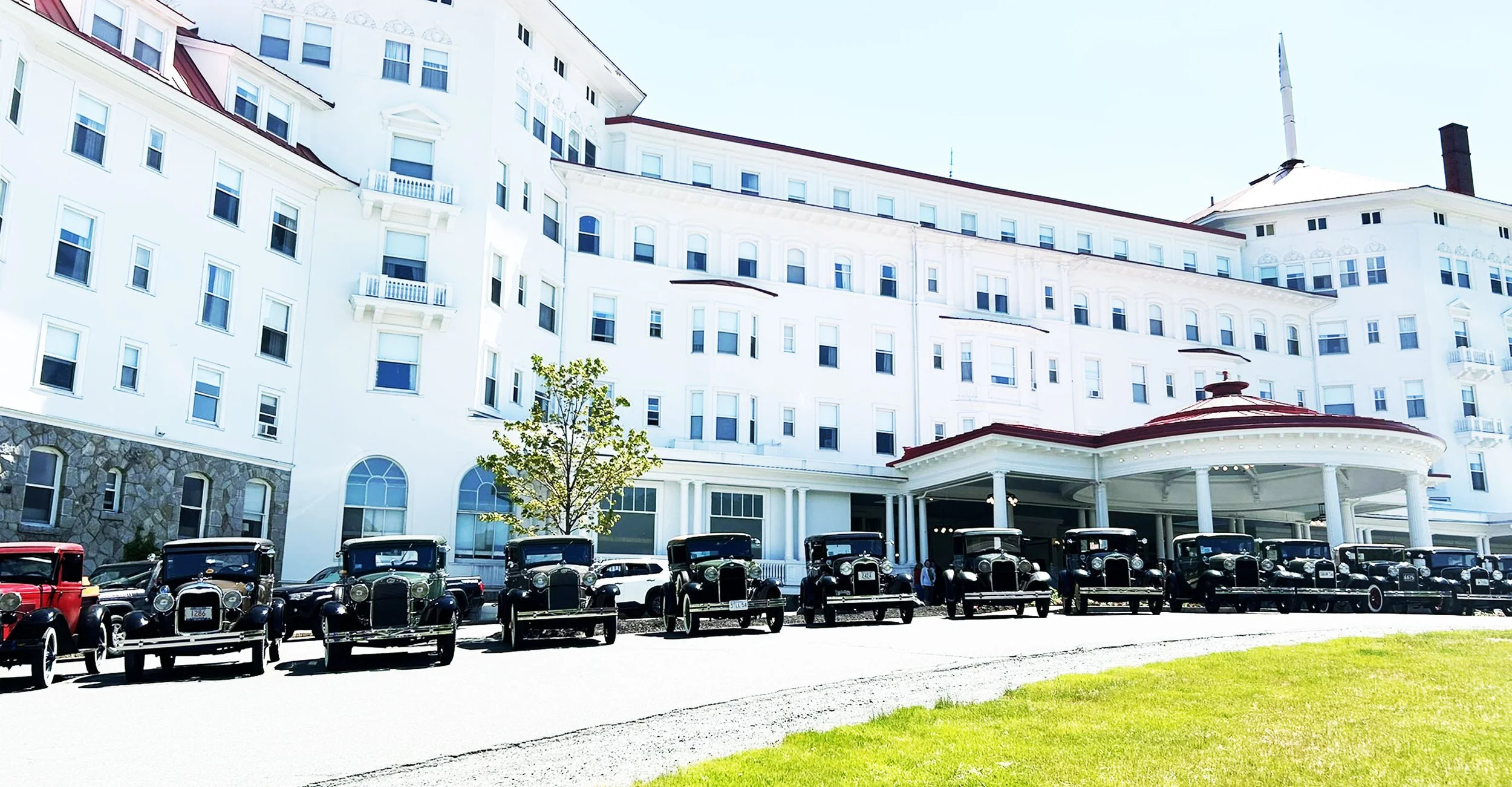
A long line of Model A vehicles lined up in front of the Mount Washington Hotel during a recent club meeting of the Worcester County Model A Club. The trip was arranged by members of the Northern Valley A’s Club, a new club in the North Country. Courtesy photo
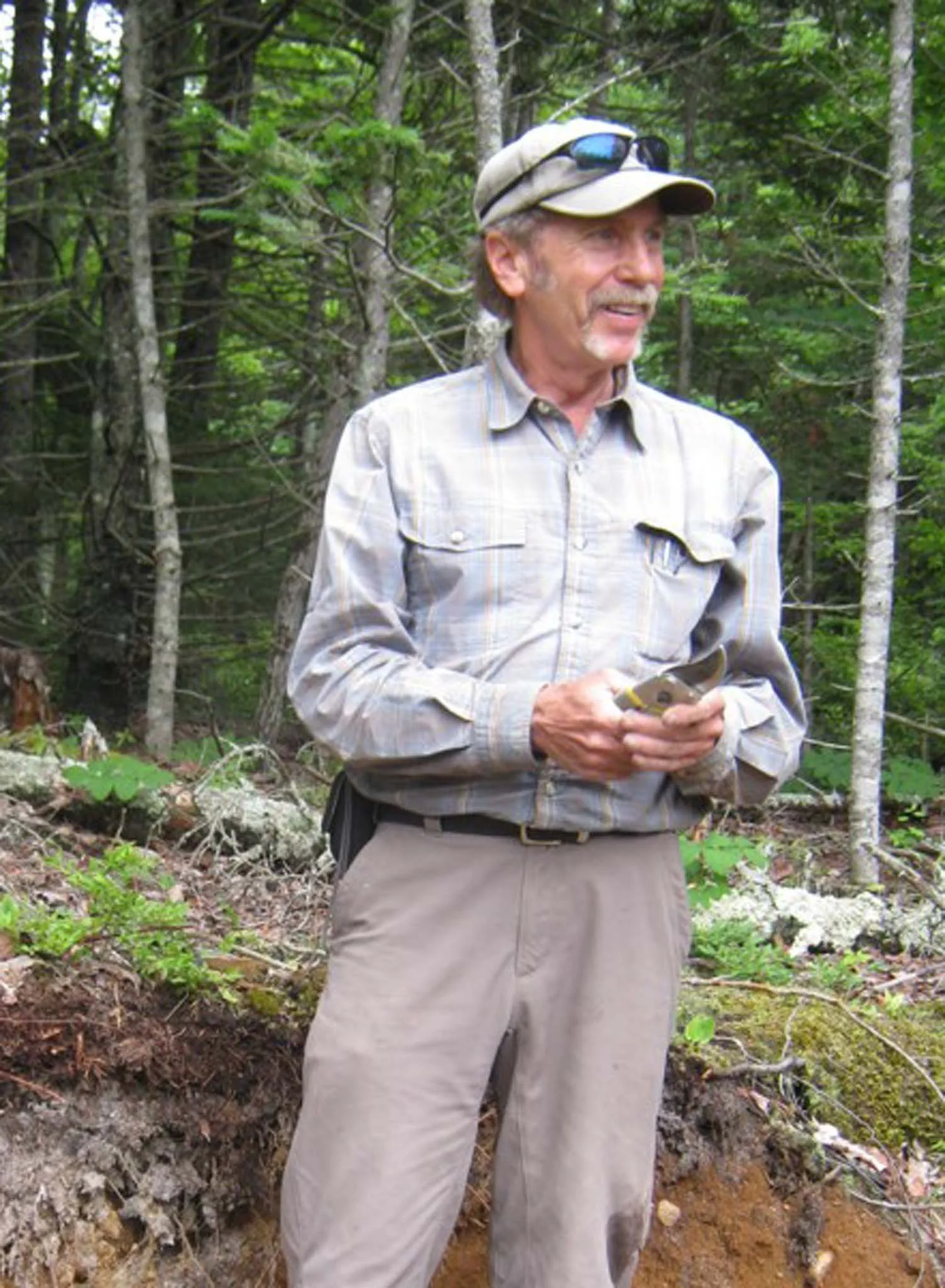
Soil Scientist Joe Homer Talks About Sugar Hill Dirt
Joe's speech in Sugar Hill was for the Sugar Hill Improvement Association, and according to those who were there, it was an engaging and informative talk. Joe explored the fascinating world beneath their feet, mainly soil. He spoke on how soil forms and why it plays a crucial role in agriculture, environmental health, and climate resilience. Attendees said they gained a deeper understanding of why healthy soil matters to everyone.
By Bernie Marvin
Sugar Hill, NH – Soil Scientist Joe Homer is well known in these parts of the North Country because of his long-time work with soil. He recently presented his "Let's Talk Dirty" program at the Carolina Crapo Building.
Joe has served as the New Hampshire State Soil Scientist for the USDA–Natural Resources Conservation Service. He retired after more than 33 years of service with that organization and has performed and managed mapping and fieldwork throughout New England, with additional work in New Mexico, Arizona, Texas, Oregon, and Minnesota.
He has also served as a field soil scientist, soil survey project leader, and assistant state soil scientist in New Hampshire. He is the author of the Grafton County and Coos County Soil Survey reports and has conducted hydric soils and wetlands identification and delineation for the USDA in New Hampshire, and has trained other federal and state agency staff, as well as New England consultants.
Joe's speech in Sugar Hill was for the Sugar Hill Improvement Association, and according to those who were there, it was an engaging and informative talk. Joe explored the fascinating world beneath their feet, mainly soil. He spoke on how soil forms and why it plays a crucial role in agriculture, environmental health, and climate resilience. Attendees said they gained a deeper understanding of why healthy soil matters to everyone.
Joe brought his years of experience in soil science and environmental education to the crowd. His approachable style and passion for the subject make complex scientific concepts accessible and enjoyable for audiences of all ages.
The event was open to the public and was underwritten as a part of the Carolina Crapo Education Fund. It was established by Henry Crapo in honor of his wife, Carolina, shortly after the Sugar Hill School burned down in 1948. The Sugar Hill Improvement Association administers the funds for projects identified to better the Town of Sugar Hill.
The Carolina Crapo Trust Fund also provides book awards for students pursuing their education or training, in addition to bringing speakers to the town. There was no fee to hear soil scientist Homer speak.
Soil Scientist Joe Homer presented a program on the benefits of soil’s role in food production, and strong soil conservation. Courtesy photo

Don’t Let Your Friends Go Without You: Vermont’s Sci-Fi, Fantasy & Horror Expo Returns
The 7th annual Vermont Sci-Fi, Fantasy & Horror Expo returns to the Champlain Valley Exposition in Essex Junction on Saturday–Sunday, April 25–26, 2026, and it’s shaping up to be the kind of event you don’t just “drop by.” You plan around it. Because once you’re inside, you start realizing how big it is, how much there is to do, and how quickly the weekend fills up.
If you’ve ever seen someone’s convention photos afterward—kids grinning in Jedi robes, a parent holding a freshly signed poster, a group of friends who clearly had the best weekend—and thought, Wait… that was in Vermont?—this is your heads-up.
By Joshua Smith
Green Mountain Turtles will be there
The 7th annual Vermont Sci-Fi, Fantasy & Horror Expo returns to the Champlain Valley Exposition in Essex Junction on Saturday–Sunday, April 25–26, 2026, and it’s shaping up to be the kind of event you don’t just “drop by.” You plan around it. Because once you’re inside, you start realizing how big it is, how much there is to do, and how quickly the weekend fills up.
Jeff Folb—owner and general manager of Vermont Gatherings, the team behind the Expo—calls it Vermont’s own version of a Comic-Con experience, “our local Comic-Con, without calling it a Comic-Con.” And that’s not just a fun line—it’s a pretty accurate description of what the Expo has become. It began as a Vermont Sci-Fi & Fantasy event, and Folb says “a couple years ago we added horror,” then “officially unofficially added paranormal and pop culture.” In other words: it’s not one niche. It’s a whole universe of niches—under one roof, for one weekend.
Three buildings. One problem: you can’t do it all.
The most important thing first-timers don’t understand is scale. This Expo isn’t a single hall with a handful of tables. Folb says the event runs across “three attached buildings,” covering “about 80,000 square feet.” That layout is part of the fun: you can bounce from sci-fi to fantasy to paranormal to hands-on workshops to gaming—without ever feeling like you’ve “seen it all.”
And yes, you can do it in one day—technically. But Folb puts it plainly: “You could certainly get through the show in a day, but if you really want to… experience it—meet guests, get autographs, go to panels, do gaming—“you could certainly very easily stretch that out into two days.” Translation: if you only come for one day, you’ll probably spend the next week saying, Next year we’re doing both.
What’s on the floor? Pretty much everything.
So what is it, exactly? Folb describes it as an expo “featuring all kinds of guests” and “almost any medium you can think of” within sci-fi, fantasy, horror, paranormal, and pop culture.
This year’s guest lineup includes Bruce Boxleitner and Claudia Christian from Babylon 5 (Folb notes Boxleitner was also in Tron), plus Adam Berry from Ghost Hunters and Kindred Spirits, and Brett Wagner, known for portraying Leatherface.
But guests are only one piece of the weekend. Folb says there are “over 150 authors and artists, comic creators, game designers… cosplayers… crafters… vendors, gaming panels.” If you like browsing, you’ll be in heaven: art for your walls, handmade fandom merch, costume pieces, props, jewelry, books, comics, and the kind of “I didn’t know this existed” stuff you only find at conventions.
He also breaks down how the buildings feel different. One area is “a little more horror focused and paranormal focus,” while another includes what he calls the “old Star Wars section,” with costuming groups and Star Wars-themed vendors. It’s the kind of variety that lets different members of a family or friend group split up—and still all come back excited.

Bruce Boxleitner will be there

Claudia Christian will be there
The experiences people remember
Beyond shopping and autographs, this Expo leans hard into things you can do.
There’s a dedicated building for “panel rooms, food and beverage and gaming,” with scheduled and pickup games “all day, both days,” including role-playing, board games, and more. Folb says you can expect “10 or 12 panels and workshops a day,” ranging from paranormal topics to creative sessions like “how to create a comic book… how to create a character… how to get published.”
There’s also a professional photo setup with scheduled sessions for guests—and Folb notes attendees can book photos in costume, too.
“Horror” doesn’t mean “not for kids”
If you’re a parent reading the event name and hesitating at the word horror, Folb is clear about the tone: “All of our shows… are family friendly and family focused,” and even when a guest is known for scarier roles, the Expo doesn’t cross the line into adult-only content.
Costumes are encouraged, but not required—Folb estimates “probably 40 or so percent” of attendees show up in some form of costume. And there’s a built-in incentive: the Expo gives out “awards and prizes for costumes” throughout both days. So whether your kid has a full superhero outfit or you’re rocking a last-minute wizard cape, you’re part of the fun.
The “FOMO” truth: this is the weekend people talk about afterward
Folb says the bigger mission is creating events where “you can bring the grandparents and the grandkids and everyone in between, and everyone’s gonna have a great time.” That’s what makes this Expo different: it’s not designed for just one age group. It’s built so nobody’s bored—because there’s always another building, another panel, another game, another photo op, another aisle you haven’t explored yet.
Or, as Folb sums it up: “It’s an event… an experience for everyone.”
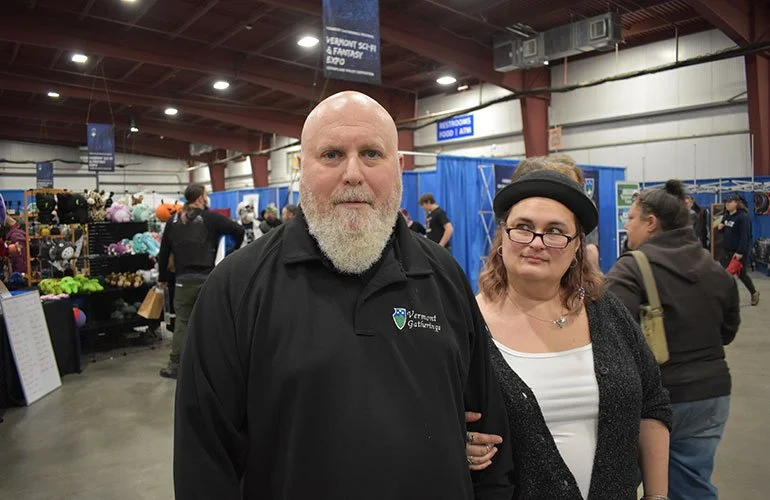
Jeff Folb is the Owner and General Manager of Vermont Gatherings - Courtesy Photo
Cottage Hospital's Donate Life Week Featured Two Important Events
According to hospital officials "The tree stands as a symbol of hope, strength and the lasting impact of generosity, because, like a red maple tree, strength (and trees) come in all sizes. We all look forward to watching this tree grow alongside our organization, rooted in giving and a reminder of the lived forever connected through a program of donation."
By Bernie Marvin
Woodsville, NH – Cottage Hospital has been observing Donate Life programs for the past 10 years, usually by raising a special Donate Life flag out in front of the hospital on Swiftwater Road, then later in the week or month, a different special event would be observed.
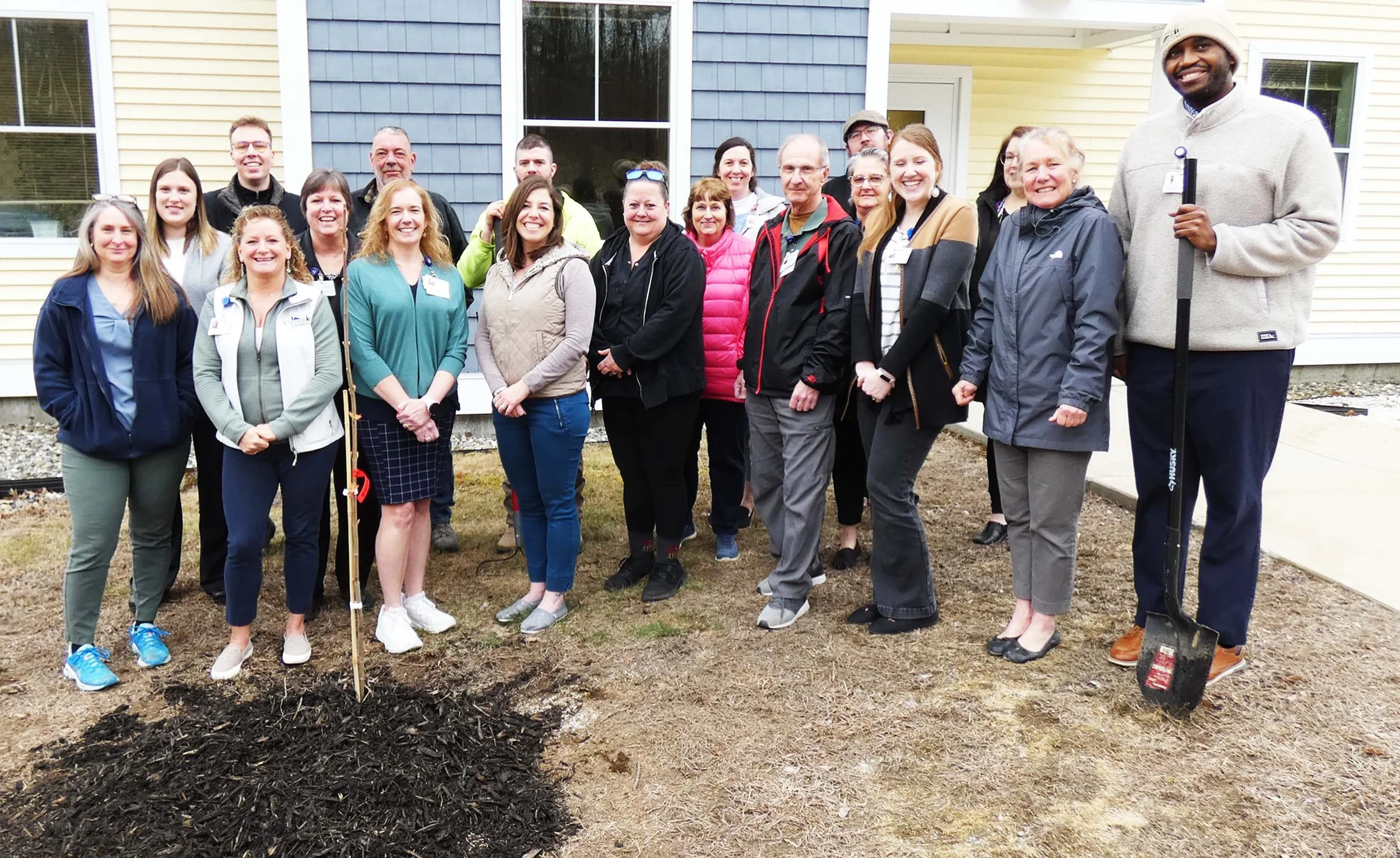
This year they raised the Donate Life flag in the usual robustly breezy April noon time program and for their second event, they held a special red maple tree planting across Swiftwater Road on the rolling lawns of the Rowe Building, where a group of Cottage Hospital employees gathered around while CEO Holly McCormack placed the first shovel full of loam onto the tree's root ball, to the cheers of those watching.
This commemorative tree planting honored hospital staff and community members who have given or received gifts of life through the donation program that is so popular throughout the nation.
According to hospital officials "The tree stands as a symbol of hope, strength and the lasting impact of generosity, because, like a red maple tree, strength (and trees) come in all sizes. We all look forward to watching this tree grow alongside our organization, rooted in giving and a reminder of the lived forever connected through a program of donation."
According to Cottage Hospital, New England Donor Services, the federally designated nonprofit organization responsible for coordinating organ and tissue donation across the region, presented donor participation awards to hospitals that go above and beyond in supporting donor awareness and education. Recipients are selected based on their dedication to best practices, collaboration, staff engagement, and meaningful efforts to increase public understanding of organ and tissue donation. This includes initiatives such as educational programs, community outreach events, and awareness campaigns designed to inform and empower individuals to register as donors.
According to Cottage Hospital Community Relations Director Kuba Kubkowski, assisting CEO McCormack with the program and organizing the Donate Life events at the hospital was Quality Director and Donate Life Liaison Kelly Hussey.
It was a busy time at the hospital as they celebrated Donate Life programs. National Donate Life Month and hospital programs reminded the community of the tremendous impact of organ, eye and tissue donations and the power of giving the gift of life.
During the week, Cottage Hospital held its annual Donate Life flag raising, which brought the staff together in a meaningful show of support, they said. As part of the special moment, they also wrote messages of hope, filling each of them with gratitude, remembrance and encouragement for those whose lives have been touched by donations.
They offered that "we are so grateful to our staff who took the time to come out, reflect, and stand together in support of this important cause. Their compassion and commitment help keep hope growing in the community."
One donor can save up to eight lives and enhance the lives of over 75 others. Behind every donation is a story of hope, resilience and strength shown by the community for those waiting on a transplant list, it can mean more time with loved ones and more moments that truly matter.
They said that at Cottage Hospital they recognized Donate Life month to help educate the community and shine a light on the lifesaving impact of donations. They noted it is time to learn, reflect and honor the individual and families whose decisions have made a lasting difference. Together, they recognized the power of giving, and their lives were forever changed because of it, they said.
Cottage Hospital CEO, Holly McCormack, third from left, was assisted by several hospital employees in a special Donate Life tree planting last week to observe the National Donate Life program. The red maple tree was planted on the side lawn located at the hospital's Rowe Building, across Swiftwater Road from the hospital. The Bridge Weekly/Bernie Marvin
Wildcat Microschool takes First Place in Rube Goldberg competition
A Rube Goldberg Master Contraptionist, often referred to as a Contraption Master, is an expert who specializes in designing and building Rube Goldberg machines. These are highly complex devices that use a series of interconnected chain reactions to accomplish a simple task in a comically indirect way.
By Bernie Marvin
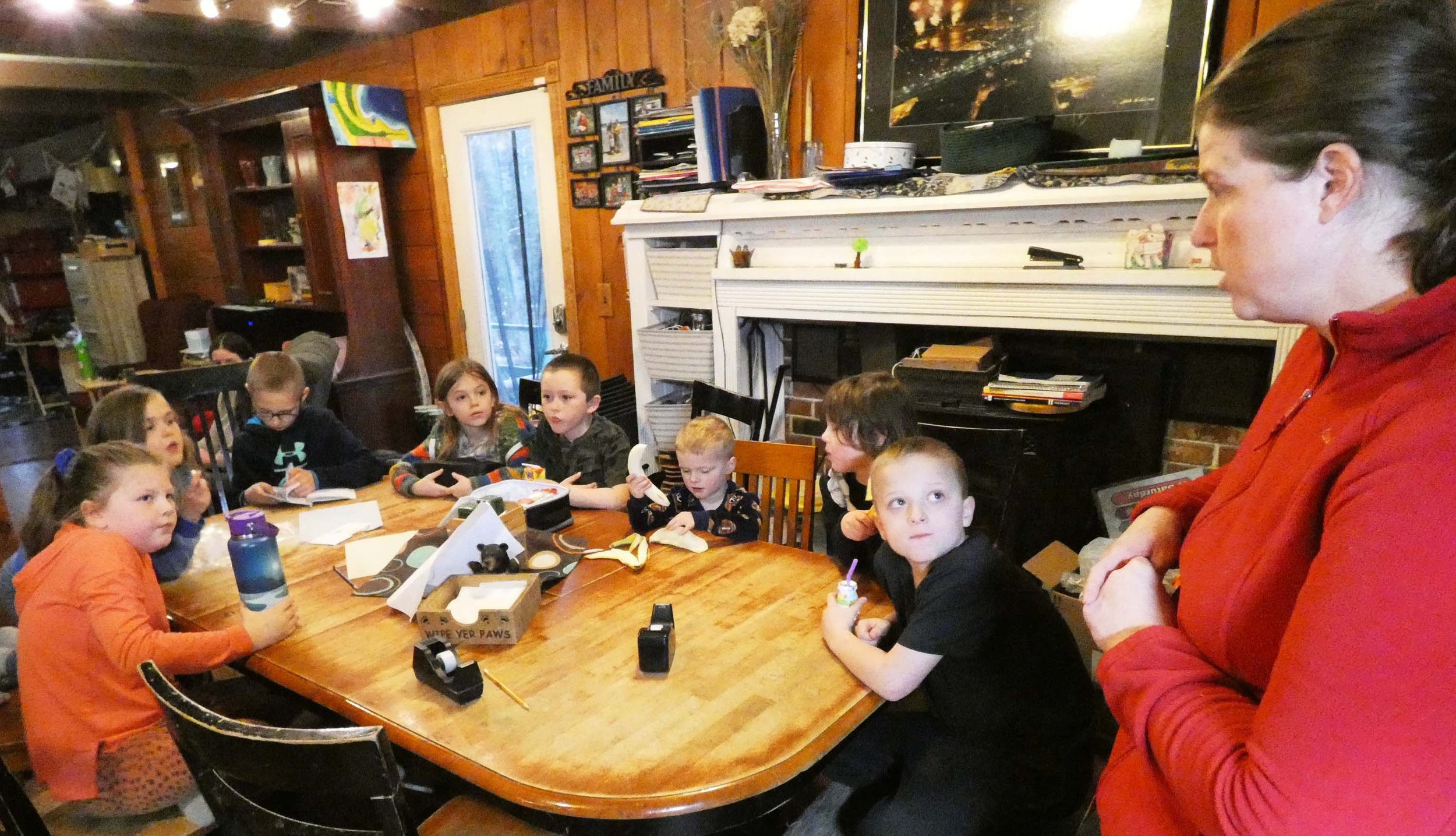
Wildcat Microschool members of the Rube Goldberg competition that came away from their recent competition in Manchester, NH with a First Place. They were also awarded First Place with the Best Costumes Award. They have advanced to the national competition that will be held in New York City. At right is Wildcat teacher Laura Sjolander. The Bridge Weekly/Bernie Marvin.
Haverhill, NH – The Wildcat Microschool youngsters of the kindergarten through 4th Grade came home with the First Place Rube Goldberg Competition Award recently. They also came home with the Rube Goldberg Spirit Award for being Master Contraptionists.
A Rube Goldberg Master Contraptionist, often referred to as a Contraption Master, is an expert who specializes in designing and building Rube Goldberg machines. These are highly complex devices that use a series of interconnected chain reactions to accomplish a simple task in a comically indirect way.
The Rube Goldberg competition for students in New Hampshire is known as the Rube Goldberg Machine Contest. It challenges students from grades K-12 to build complex machines from everyday objects that perform a simple task in the most unusual way possible.
The team traveled to Manchester, NH, on March 28 to compete in the Regional Rube Goldberg Competition. The Rube Goldberg Competition emphasizes the importance of problem-solving through STEM education—Science, Technology, Engineering, and Mathematics, especially for young children.
Early exposure to STEM helps students build problem-solving skills, creativity, collaboration skills, persistence, and determination. Through hands-on learning experiences, students discover that failure can sometimes lead to even greater success!
This was an exciting event where students displayed their contraptions-themed "Wildcat Zoo." They dressed as zoo members, presented an educational skit on energy transfers, and ran their hand-built contraption to open a box.
The Wildcat teachers and students learned about the program through a parent whose children participated in the Rube Goldberg Contraption Camp at the Fairbanks Museum in St. Johnsbury, VT.
After learning about the cool opportunity, students started their work. They have developed their knowledge of energy, engineering, electricity, and collaboration as they have worked to solve problems with creative, innovative solutions. Their final contraption consisted of about 15 chain reactions, including erosion, electrical transfer, and air. They have been creating their masterpieces for about three months.
The team will be competing next in New York City, as a result of the award they won in Manchester. This upcoming trip marks an important milestone for many of the students, as it will be their first opportunity to travel out of state for an academic competition. Students have been preparing their designs, testing ideas, and learning how different parts work together to achieve a final goal. Their hard work and dedication will be showcased alongside teams from schools across the region.
The Wildcat Microschool students were very excited to announce that their team took First Place in the regional competition and won the Rube Goldberg Spirit Award (Master Contraptionists)—also the best costumes award and the creative materials award —without marbles or dominoes.
The team will advance to the National Competition in New York City! The team has been fundraising for this event and held their fundraiser on Saturday, April 11, at the Woodsville United Methodist Church. There, they hosted a superb spaghetti dinner and a silent auction. All funds raised will be used to help with travel expenses and experiences for the students in NYC.
Seeing the children involved in their Rube Goldberg project is hard to explain to viewers new to the world of Rube Goldberg contraptions. Chain reactions of energy going every which way, and at the end of the line, a different contraption will open a box.
Parent Jean Alexander discovered the Rube Goldberg program during one of their annual demonstrations at the St. Johnsbury Fairbanks Museum. Gean has been instrumental and immensely helpful with the entire program at Wildcat, says teacher Laura Sjolander, who works closely with the kids on their STEM subjects.
Each participant had a specific job with the Rube Goldberg effort. Some of the children The Bridge Weekly spoke with included Elizabeth, who was an Investigator. She said, "She learned a lot by going to the rube Goldberg contest."
Avery said, "If you messed up. You would find out how to fix it. I fixed some wrong things."
Carson said, "Just be patient, especially with your team." Neal was an Interventionist. If the ball doesn't go down right, I fix it. Kept it running." Ethan was "really excited to be there. It is a worldwide competition and fun."
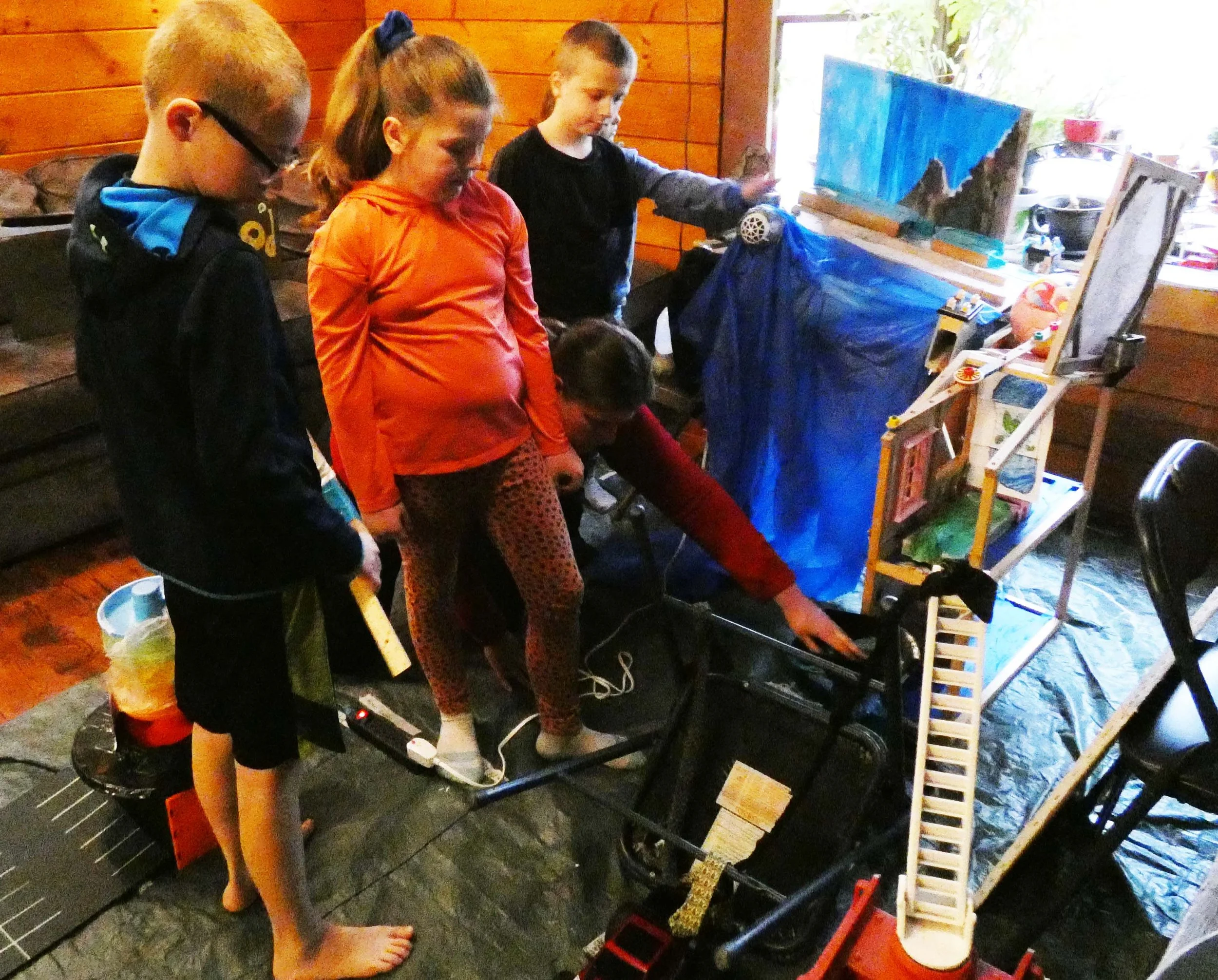
Some of the Wildcat Microschool Rube Goldberg competition team members are shown working with their winning contraption that won the team a First Place and moved them on to the national competition in New York City. The Bridge Weekly/Bernie Marvin
Oxbow Grad Aly RichardsAnnounces Gubernatorial Bid
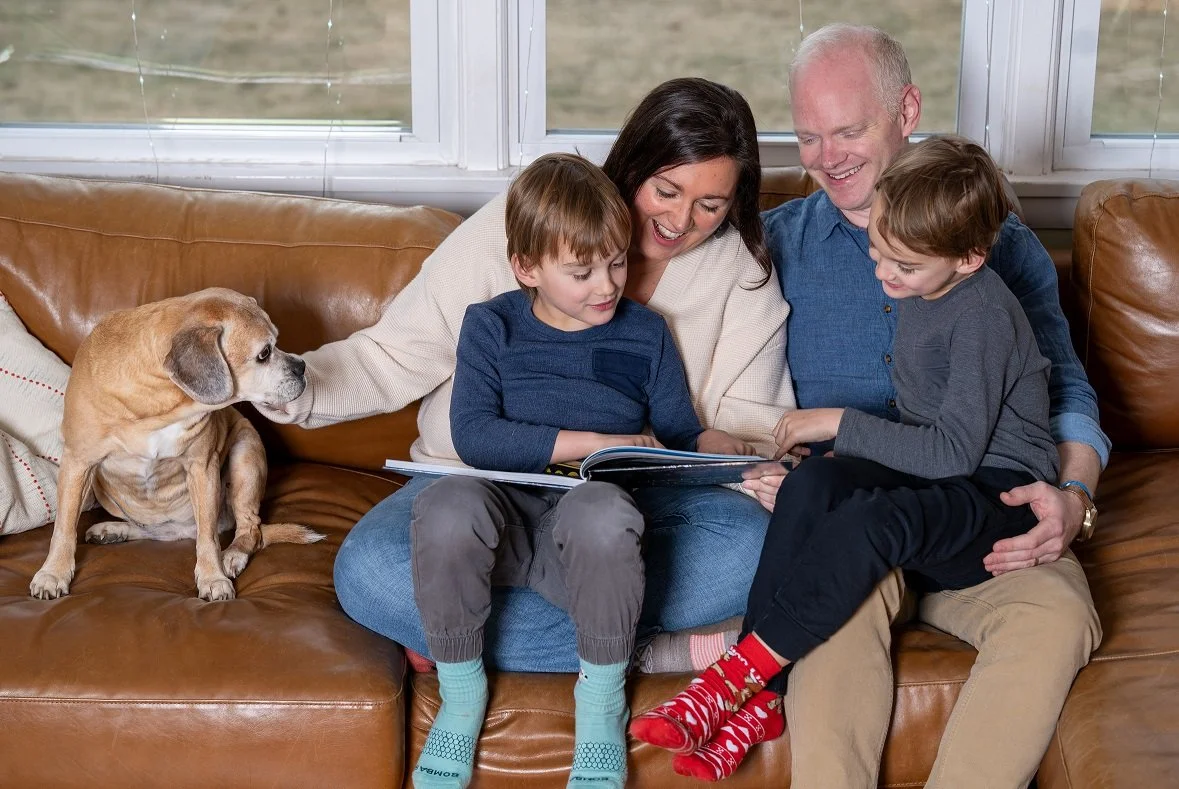
Earlier this week, Aly Richards officially announced her campaign for Vermont governor. She is pictured with her husband, James Pepper, their twin sons, Beau and Wesley, and their beloved pup, Eleanor “Ellie” Roosevelt. Aly currently resides in Montpelier but is deeply rooted in the Newbury/Bradford community.
By Trish Griswold
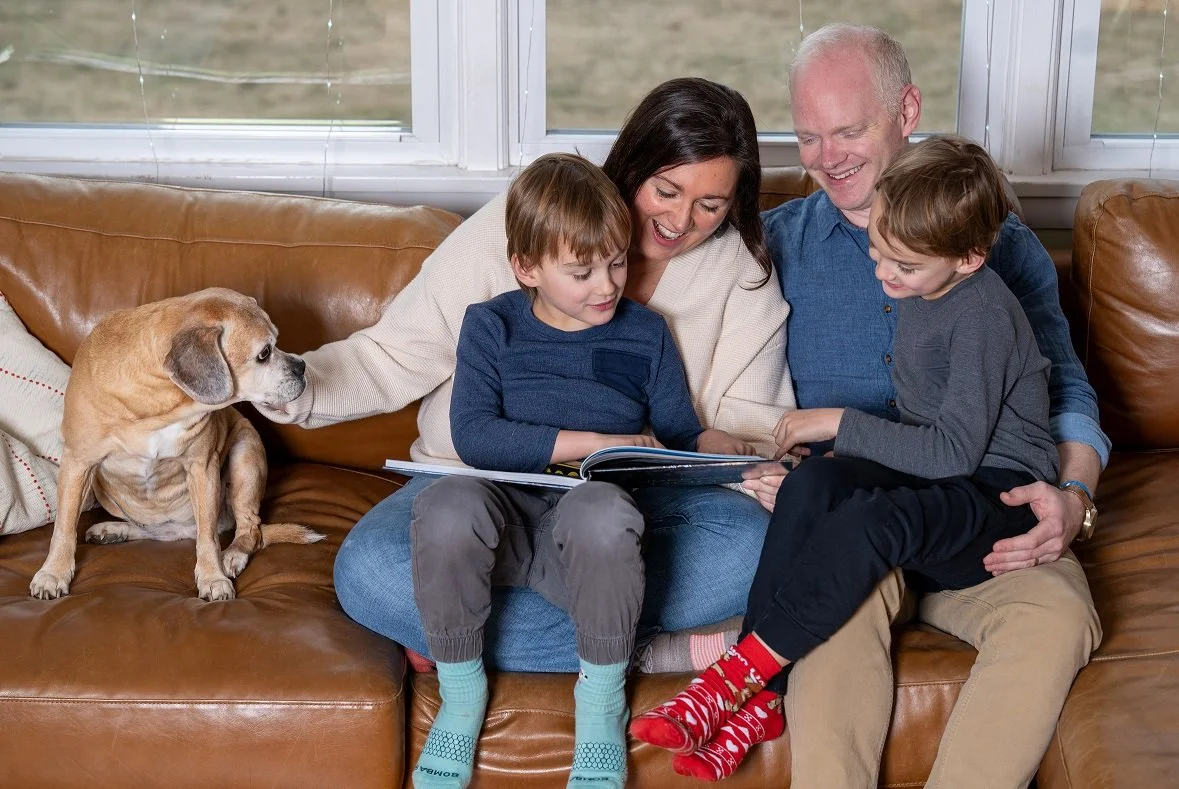
Earlier this week, Aly Richards officially announced her campaign for Vermont governor. She is pictured with her husband, James Pepper, their twin sons, Beau and Wesley, and their beloved pup, Eleanor “Ellie” Roosevelt. Aly currently resides in Montpelier but is deeply rooted in the Newbury/Bradford community. - Courtesy Photo
Newbury, VT - The 2026 Vermont gubernatorial ballot could include a name familiar to many area residents. Alyson “Aly” Richards, daughter of Bruce and Leslie Richards and granddaughter of Mari Luz, all of Newbury, formally announced her bid for governor at Newbury’s historic general store on Monday, April 6th.
“Aly contacted me to take part in Monday’s kickoff because she said I played a role in the opening chapter of what has become a stellar career in political activism,” Larry Coffin explains. “In 2001, she was a student in my 9th grade social studies class at Oxbow High School. I encouraged her to seek an appointment on the State Board of Education, even though it usually went to an older student. She had a successful interview with Governor Howard Dean and became the youngest student to have held that position. With admiration, I have followed her activities both in state government and in her work to protect the children of Vermont.”
Those close to Aly describe her as tenacious and pragmatic, community-centered and family-oriented. She is frugal, sensible, and dedicated to the people and platforms she believes in. Aly is not afraid to use a little elbow grease to tackle challenging situations and will do the work that needs to be done to solve tough problems. Her “Put me in, Coach!” mentality is backed by a lengthy track record of rolling up her sleeves and getting her hands dirty. Aly’s supporters contend that she embodies the characteristics and values of a true Vermonter.
“There is a right leader for every moment, and I believe Aly Richards is that leader for Vermont right now. I’ve seen firsthand that Aly is a problem-solver who knows how to bring the right people together to get things done. She doesn’t just talk about challenges; she builds coalitions to solve them,” declares Michele Asch, Chief People Officer of her family’s contract manufacturing business, Twincraft Skincare. “When Vermont faced a childcare crisis, Aly brought together business leaders, CEOs, and policymakers from across the state. She earned their trust, aligned their interests, and helped build support for a sustainable and affordable childcare system. Because of that leadership, thousands of Vermonters have been able to return to work, strengthening families, businesses, and our economy. That’s what real leadership looks like. Aly has the vision and the discipline to move Vermont forward, to grow our economy, expand housing so that people can actually live and work here, and create real opportunity across our state. She knows how to bring people together and turn ideas into real results, and that’s exactly what this moment demands.”
Aly’s deep-seated love for Vermont began when, at the age of three, her family moved from New Jersey to the small town of Newbury. She attended Newbury Elementary School, and like many other children, she took swimming lessons at Hall’s Pond, picked strawberries during the summer months, attended turkey suppers at the West Newbury Town Hall, and collected Easter eggs on the Newbury Green. “I had a wonderful childhood, just a great sense of community,” Aly says, reflecting on the perks of growing up in a small town.
Aly attended Oxbow High School, where she was voted class president and student council president. She started the school’s first recycling club, was a member of the Olympians’ cross-country ski team, and earned the role of Mole in Green Mountain Youth Theatre’s production of The Wind in the Willows. Aly was a well-rounded student who took Advanced Placement (AP) classes, including AP U.S. History and AP English courses taught by her father. “I promise you that he did not cut me any slack,” Aly says in jest.
At age 15, Aly served as a student member of the Vermont State Board of Education, an honor that, she says, fueled her aspirations for public service. “That was my first taste of state government, politics, and policy… As I got my feet under me, I got my courage up to realize that I had things to add to the conversation that were valuable. It really helped me grow my confidence.”
Following her high school graduation in 2004, Aly enrolled at Brown University in Providence, RI, where she earned her Bachelor of Arts degree in International Relations, a major that encompasses history, languages, political science, economics, negotiation, psychology, anthropology and more. “I went out of state hoping to change the world,” Aly recalls. “I took classes in every possible subject you can imagine. I explored everything.”
Aly’s first job after college led her to Washington, DC. “It was an exhilarating experience.” Aly started as a finance assistant but was quickly promoted to Deputy Director of Mid-Atlantic Finance for the Obama administration. “I was running fundraisers in the DC area, meeting incredible people who were supporting the President from all different sectors, and yet my husband and I both were not motivated to do this work because we didn’t believe that money should be in politics in the first place… It just wasn’t how we wanted to live our lives. I was hoping to go to the center to change the world, and what I found was that it was broken, and I couldn’t fix it… People who did not agree with each other didn’t talk to each other. How would we ever get anything done? So, I came back to Vermont as soon as I realized you couldn’t make forward progress in DC.”
Upon returning to Vermont, Aly went to work for the governor's office where, she says, she became deeply aware of the structural issues facing Vermont. “I realized that a root cause of so much of what was facing Vermonters was access to childcare. High-quality, affordable, early childhood education. We have all these jobs in Vermont. We just don’t have any workers to be in these jobs. Why? A big reason is because they can’t find or afford childcare.”
During her tenure as CEO of Let’s Grow Kids, a non-profit organization whose mission is to provide all Vermont families affordable access to childcare, Aly led the bi-partisan charge toward giving Vermont children the best opportunities possible from an early age. “We passed the most significant childcare bill in the country, and it’s working. It’s doing what we hoped it would do. It’s reducing costs for 5,000 Vermonters, and these are significant, life-altering costs. It’s allowing them to stay in the workplace and stay in Vermont. It’s opened up over 100 new childcare businesses all across Vermont, including in rural communities. It created 2,000 new childcare spaces all around Vermont. It’s raising the wages of the early childhood educators. It’s creating hundreds of new jobs. It’s this wonderful opportunity to move Vermont forward and spark economic growth.”
When asked to prioritize her top three goals, Aly cites housing, the economy, and health care. “Housing is really my number one priority. Building more housing. We need to be the state that is growing. We have basically a 5-alarm fire everywhere you look other than the growth we’ve seen in childcare. The costs are crushing us from our housing to our health care premiums to our property taxes for education. We need structural change, like we did in childcare, in all these areas.” Aly believes structural change is the “key solution” to revitalizing Vermont communities, and she is committed to making that happen.
Highly-skilled and industrious, Aly is a powerhouse in her field and a devoted mother who balances her dedication to her career with an equally strong commitment to her family. Aly volunteers as an assistant coach for her sons’ basketball team. She plays pickup basketball once a week, enjoys spending time with her friends and neighbors, and frequently returns to Newbury to spend time with her parents and grandmother. Aly and her family have movie nights once a week, host family board game nights, and eat pancakes and waffles together on the weekends. Aly has even been known to belt out a few of her favorite tunes on karaoke night.
Aly Richards is authentic. She is real, and she is a workhorse. Aly is motivated to work with and for the people of Vermont. She invites all Vermonters to meet and talk with her in person at some of her upcoming events, which are posted on her newly developed website alyforvt.com. “We have the power to change our future,” Aly maintains, “and that’s the power of people coming together, ready for change.”
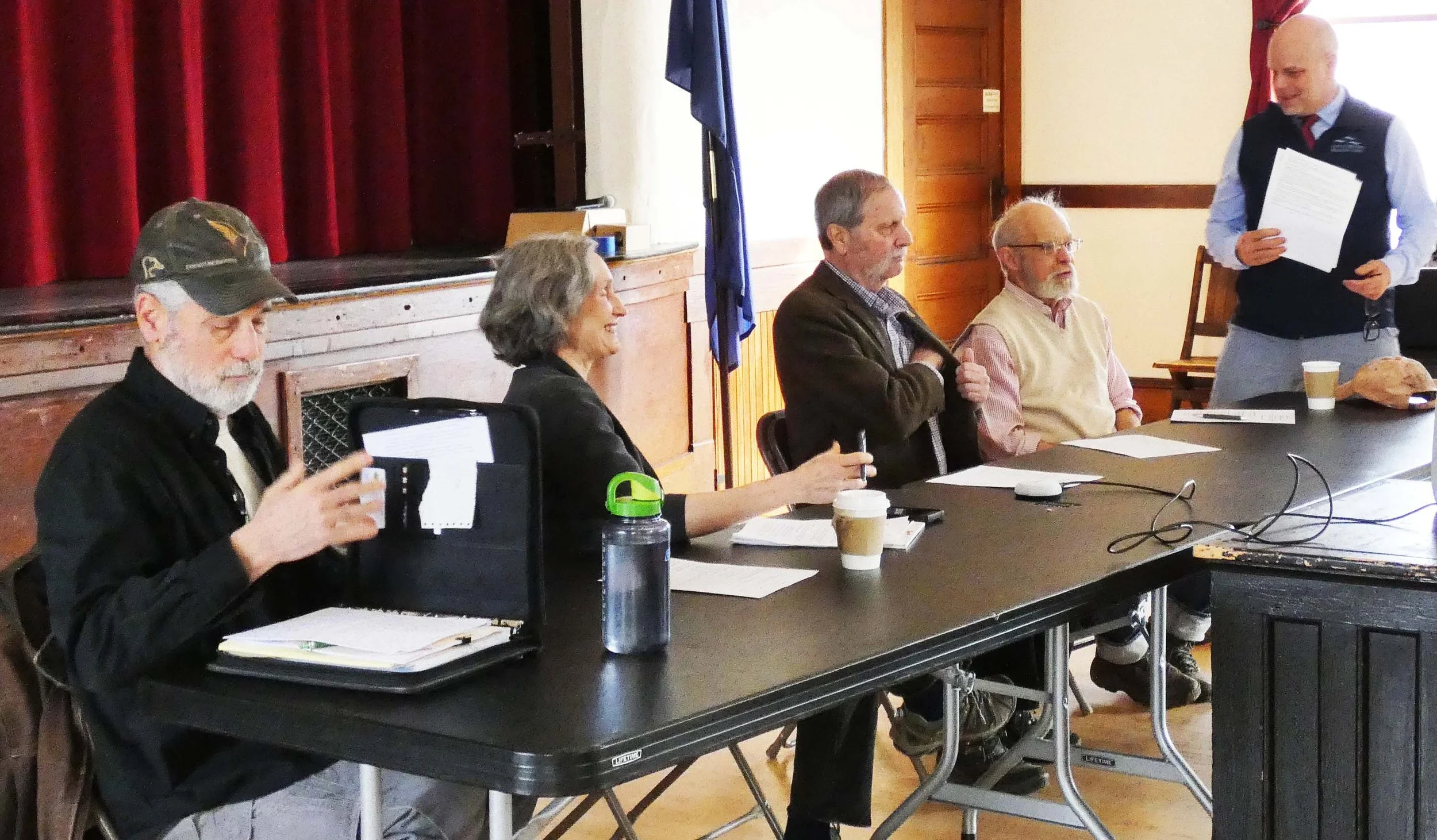
Little Rivers holds Legislative Town Hall session in Fairlee
Offering a welcome and making opening remarks to the attendees was Little Rivers Health Care CEO Andrew Barter at 9 AM. About 20 residents attended the session. Fairlee Select Board member Peter Berger also offered other remarks.
By Bernie Marvin
Attending a recent Vermont Legislative Town Hall at the Fairlee Town Hall were, left to right, Representative Michael Tagliavia, Representative Rebecca Holcomb, Senator John Benson, and Representative Jim Masland. Standing at right is Little Rivers Health Care CEO Andrew Barter who offered opening remarks and also moderated the meeting. Barter said the health care organization, based in Bradford, plans to hold similar forums across their service area. The Bridge Weekly/Bernie Marvin
Fairlee, VT – The Little Rivers Health Care, with offices in Bradford, Wells River, East Corinth, and Newbury, sponsored another Legislative Town Hall meeting at the Fairlee Town Hall on Monday, March 30, 2026.
This is not an unusual effort for the Bradford-based health care center, as it remains a busy site across its four locations, with high growth. For instance, between 2016 and 2021, Little Rivers Health Care experienced a 78 percent increase in patient visits, prompting major expansion efforts.
The recent legislative session in Fairlee was scheduled for a one-hour program and included local Vermont legislators and area residents. Legislators there included Representative Michael Tagliavia, Orange 1 District; Representative Rebecca Holcombe, Windsor-Orange 2 District; Senator John Benson, Orange District, and Representative James Masland, Windsor-Orange District 2.
Offering a welcome and making opening remarks to the attendees was Little Rivers Health Care CEO Andrew Barter at 9 AM. About 20 residents attended the session. Fairlee Select Board member Peter Berger also offered other remarks.
CEO Barter told The Bridge Weekly at the conclusion of the Fairlee Town Hall Legislative Session that he and the staff were "very pleased with the turnout and the level of engagement. The discussion reflected strong community interest in access to care and the future of local health services, which is exactly what we hoped to foster."
The programs:
Little Rivers Health Care has created an active schedule of public programs, including Town Hall sessions and advocacy and formal testimony, according to information available on their website and during the meeting.
The programs address a wide range of subjects, from rural healthcare challenges such as access to care and rising healthcare costs. About an hour was scheduled to hear from legislators who offered a summation of bills and legislation that are now or have been under consideration for action in Vermont.
Those four legislators concentrated their comments on several different subjects that headlined the meeting, including health care access and the workforce, housing and land use, education funding, and the State of Vermont budget and investment priorities.
Little Rivers Health Care is a not-for-profit, community-based, federally qualified health center. They are dedicated to providing high-quality, comprehensive primary care for individuals and families, regardless of ability to pay, in accordance with specific federal guidelines. Little Rivers Health Care works hard to meet the community's unique health needs, with a special focus on the medically underserved.
According to their online information, their service area includes the Vermont towns of Bradford, Chelsea, Corinth, Fairlee, Groton, Newbury, Norwich, Orange, Ryegate, Strafford, Thetford, Topsham, Tunbridge, Vershire, Washington, West Fairlee, and neighboring towns of border communities in New Hampshire.
Among many community legislative programs, town hall sessions are included, similar to the one held on Monday, March 30, 2026. These events allow community members to hear from and question local legislators on regional issues. Participating legislators often include regional personnel, such as those who were at the front of the room in the Fairlee Town Hall, to speak to visitors.
Discussions held usually center on health care affordability, housing challenges, and the future of community health in rural Vermont. And there is regular participation by Little Rivers Health Care leaders in the Vermont Legislative Day, where they visit the State House to meet with lawmakers, often alongside the Bi-State Primary Care Association, to advocate for the vital role of Federally Qualified Health Centers (FQHCs).
The staff at Little Rivers Health Care also provides expert testimony to the Vermont Legislature on specific public health initiatives, such as Food as Medicine, where Clinical Quality Director Maureen Boardman and other staff have testified before the Senate Agriculture Committee regarding the Little Rivers Food Farmacy, which uses nutritious food to manage chronic diseases. Also, 3SquaresVT Advocacy, with Little Rivers Health Care, is participating in 3SquaresVT Awareness Day to help legislators understand the impact of food access programs on the local community.
Little Rivers Health Care also participates in broader state legislative initiatives designed to stabilize and improve rural health: Blueprint for Health, a state program that funds "Self-Management" workshops (such as those for diabetes or chronic pain) and integrates mental health services into primary care.
And also, the Stabilization Program: Little Rivers Health Care has been part of discussions and reporting regarding state-funded sustainability approaches for community providers facing financial pressures.
20 years of growth:
Little Rivers Health Care has a dynamic history and was founded in 2003 by a group of citizens and healthcare leaders who wanted to maintain the medical services needed in the rural areas they now serve.
Little Rivers Health Care included several local practices in its family, one of the first being the Wells River Clinic, which was originally opened in 1951 by Dr. Harry Rowe. As the business expanded from its base office in Bradford, offices in East Corinth and Newbury were added over time.
In 2022, they launched a dynamic major capital campaign, "People you know, the care you trust," which sought $6.2 million for facility expansions. They recently celebrated 20 years of service in the area and completed extensive renovations at the Bradford clinic, with additional dental and health access centers in Wells River, which opened in 2025. As of 2024, the center has provided nearly 45,000 patient visits to over 7000 community members, and Little Rivers Health Care employs over 100 people.
CEO Barter said that Little Rivers Health Care plans to hold similar forums and to rotate locations across their service area to ensure broader community participation."
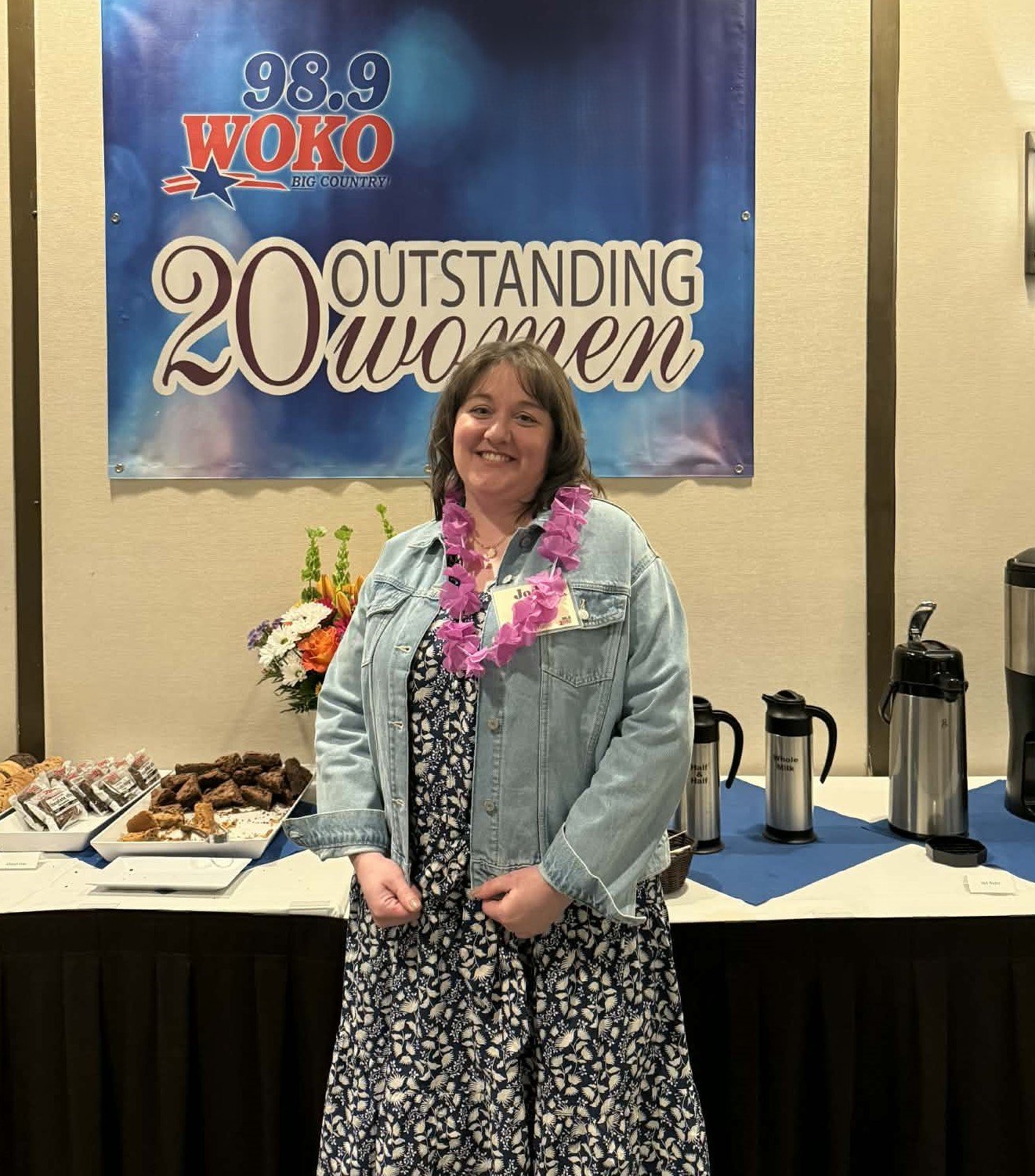
Jodi Fleurie-Wohlleb Recognized For Community Impact
The community closet operates through donations and serves a wide range of residents. Fleurie-Wohlleb told WOKO that some visitors are people who are unhoused or recovering from difficult situations, while others come in for a meal, conversation, or connection with others in town. “Because we’re so small, they’re there to get the town gossip, share some coffee, have something from the crockpot,” she said.
By Joshua Smith
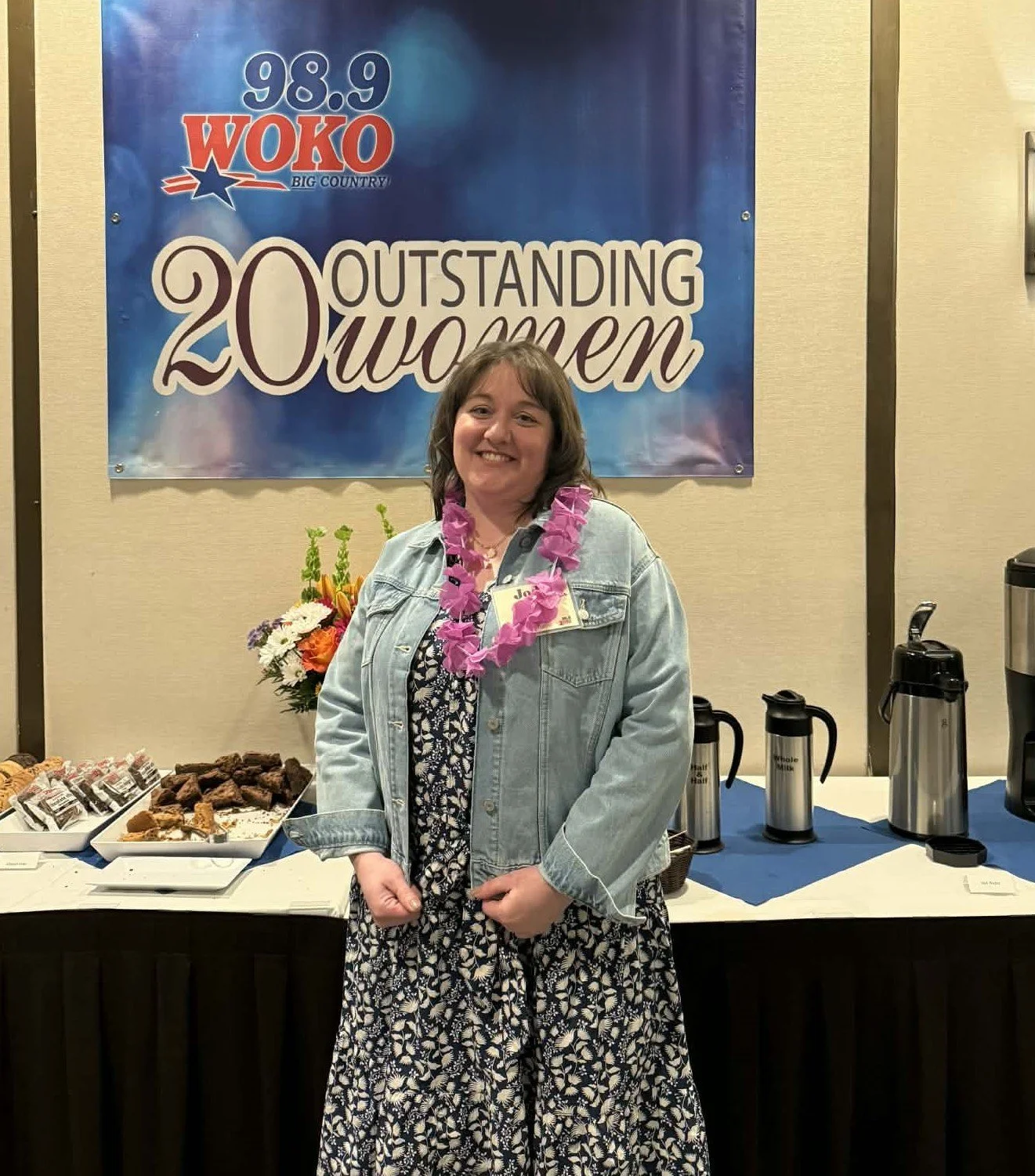
Jodi Fleurie-Wohlleb has been recognized as one of 2026’s Outstanding Women for her ongoing efforts to support neighbors and strengthen her community in Groton, Vermont.
Fleurie-Wohlleb is known for leading the Re-Treasure Community Closet, a free resource that offers clothing, household items, diapers, hygiene products, food, and other essentials to those who need them. In an interview with WOKO, she said the project began as a long-held idea. “Re-Treasured Community Closet was a seed that I planted when I was in college,” she said, explaining that she later worked with her daughter and husband to bring it to life.
The community closet operates through donations and serves a wide range of residents. Fleurie-Wohlleb told WOKO that some visitors are people who are unhoused or recovering from difficult situations, while others come in for a meal, conversation, or connection with others in town. “Because we’re so small, they’re there to get the town gossip, share some coffee, have something from the crockpot,” she said.
In addition to the closet, Fleurie-Wohlleb has organized prom outfit giveaways for students, holiday stockings for children, school-break breakfasts, crockpot meals during open hours, and community meals. Her work has focused on meeting both practical needs and creating a welcoming space for people of all backgrounds.
Supporters say her efforts have helped bring people together. One nomination described her as “a pillar of her community,” while another said, “Neighbors are coming together because of Jodi and her amazing work supporting all of us.”
Through these projects, Fleurie-Wohlleb has become a steady presence in her village, offering both resources and connection. Her recognition reflects the impact of service rooted in compassion, consistency, and community.
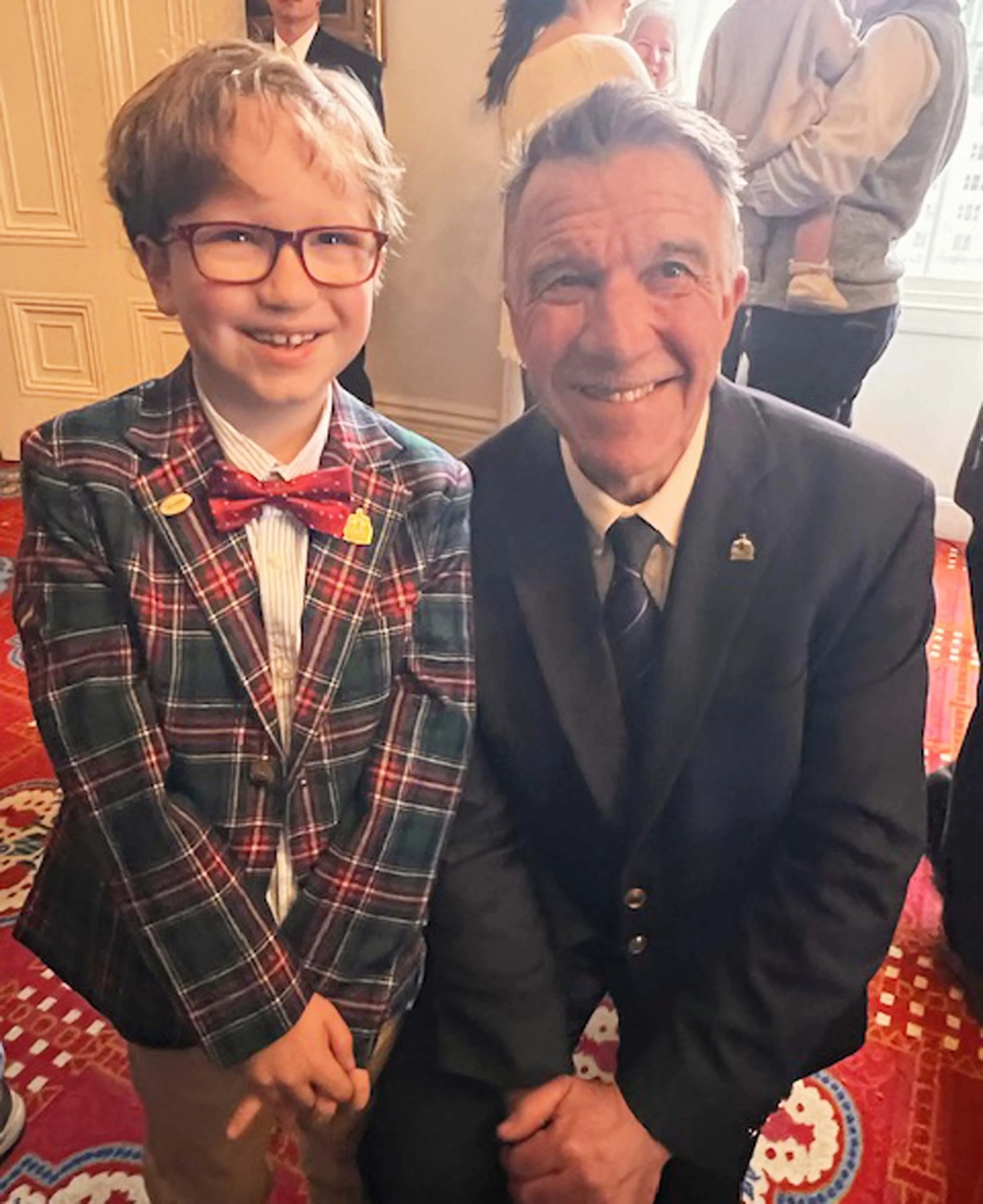
South Ryegate’s Johnny Zampieri Honored At Vermont State House
There was a total of 25 challenges he had to complete, and he told The Bridge Weekly that his most challenging event was assisting the nonprofits that benefit the community. For that, he collected eyeglasses for those in need and donated them to the Lions Club. He collected about 65 pairs of glasses and made his own donation drop box for his school. He dropped the glasses off to Mrs. Barbara Dutile, who works with the Lions Club, and received an official donation box from them. He is still collecting eyeglasses for the Lions Club effort.
By Bernie Marvin
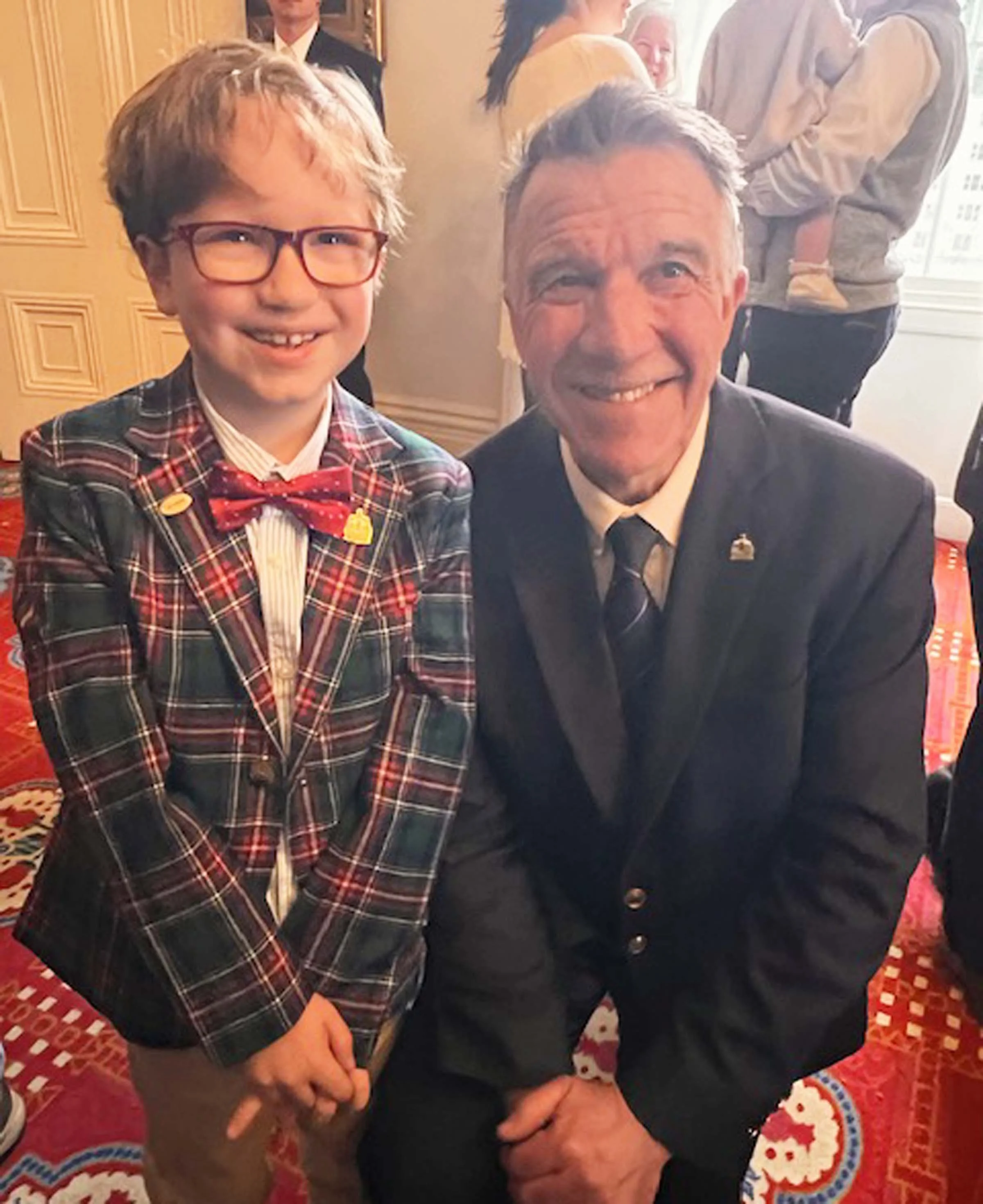
Johnny Zampieri, 11 with Vermont Governor Phil Scott at the Vermont State House during a tour for the winners of the Good Citizen Challenge. (Courtesy Photo)
South Ryegate, Vt - A seven-year-old South Ryegate Newbury Elementary School student, John James Zampieri 11, known affectionately by his mother, other family members, and school chums as “Johnny,” was recently honored for completing a Good Citizen Challenge. For this exceedingly good deed, he and six other contestants from throughout Vermont were recently invited to a full day of activities at Vermont’s State House in Montpelier.
The Good Citizen Challenge is a youth civics exercise created by the Seven Days news organization and launched in 2018 with support from the Vermont Community Foundation. The challenge invites kids in Grades K through 8 to complete activities that teach them about local history, government, and current events.
By the September 2025 deadline, 183 young people from around Vermont had completed a total of 963 activities. This included activities such as picking up trash along a trail, visiting a historic site, reading a community newspaper, or working with someone from a different background.
There were six “Distinguished Citizens” who completed all 25 activities, and they were invited to the Vermont Statehouse to celebrate their achievement and to meet with members of the Vermont legislature.
Johnny Zampieri of South Ryegate was one of the six students who completed the challenge, the youngest. He said he was inspired by his late grandfather, John J. Zampieri, who was a long-time member of the Vermont House of Representatives and who later served as Commissioner of State Buildings and General Services.
Recently, Johnny and his mother, Roxanna, sat down with The Bridge Weekly in a classroom (where his mother teaches music) at the Newbury Elementary School, for an interview about the distinguished award that Johnny received during a recent tour and special Good Citizen Challenge program of the State House.
Johnny explained that he has many interests in life, including building things with Legos, reading, hockey, baseball, soccer, playing the violin, the piano, and the drum kit.
Johnny’s grandfather, affectionately known as Nonno Zampieri, was well known in the Vermont State House, having served there for over 20 years under the administrations of five different governors, both Democrat and Republican.
Although just seven years old, Johnny carries his Italian heritage with family honor, standing proudly with the Zampieri name, which includes his own, John James Zampieri, 11; his grandfather, John James Zampieri; his great-grandfather, Giovanni Zampieri; and his great-great-grandfather, Guerrino Zampieri. Guerrino was a stonecutter from Sant’ Ambrogio di Valpolicella, Northern Italy.
During the exciting day he spent at the State House as a guest with his mother and Aunt Rebecca Zampieri, Esquire, he was given a tour. He also received an award, met with Vermont Governor Phil Scott, Vermont Lieutenant Governor John Rodgers, and Vermont’s Secretary of State Sarah Copeland-Hanzas.
According to Johnny’s mother and aunt, he also received a special bag filled with fun gifts from seven days that included books on democracy, and he announced that he was thankful his mother and aunt were able to attend this very special day with him.
He met with reporters from Seven Days, including Cathy Resmer, who created the program, and during an afternoon session, the House of Representatives recognized him and the part he played in the challenge.
There was a total of 25 challenges he had to complete, and he told The Bridge Weekly that his most challenging event was assisting the nonprofits that benefit the community. For that, he collected eyeglasses for those in need and donated them to the Lions Club. He collected about 65 pairs of glasses and made his own donation drop box for his school. He dropped the glasses off to Mrs. Barbara Dutile, who works with the Lions Club, and received an official donation box from them. He is still collecting eyeglasses for the Lions Club effort.
Another challenge he enjoyed was watching local news and reporting on the news programs that he watched. That included WCAX - TV, and he looks forward to watching it every night. A challenge he also loved was visiting Ryegate Town Clerk Elizabeth Page. The public can look up the birth certificates of his Nonno, John James Zampieri, who he found out was born in South Ryegate at his house! He also loved looking at the land maps and meeting Milo the Dog.
Another of his favorite challenges was visiting Vermont monuments. Johnny likes visiting Vermont monuments and designing his own. He thought it would be a nice idea to have a monument in Ryegate dedicated to the stonecutters who worked there, like his great-great-great Nonno, Guerrino Zampieri.
Another challenge he enjoyed was reading a local newspaper. And, of course, Johnny chose to read The Bridge Weekly. He also collected trash, visited several state parks, and interviewed a journalist.
As the folks who created the Good Citizen Challenge wrote recently, “The world needs more Good Citizens, people who nurture our communities and value our democracy; who listen to and consider different perspectives; who pitch in, help others and take care of the things we all share.”
That sums up Johnny Zampieri, 11.
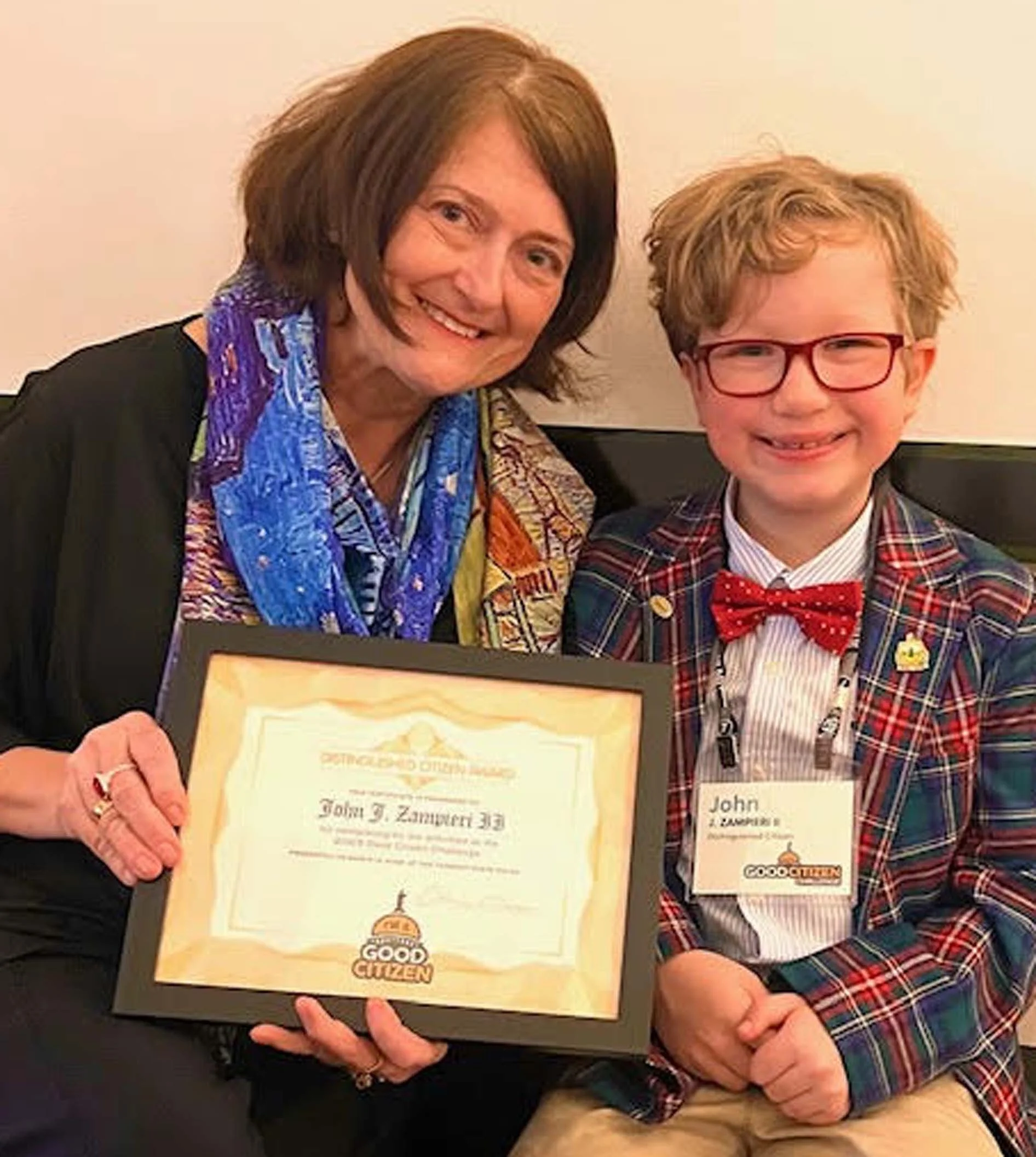
Johnny Zampieri,11 of South Ryegate with his mother, Roxanna Zampieri at the Vermont State House. (Courtesy Photo)
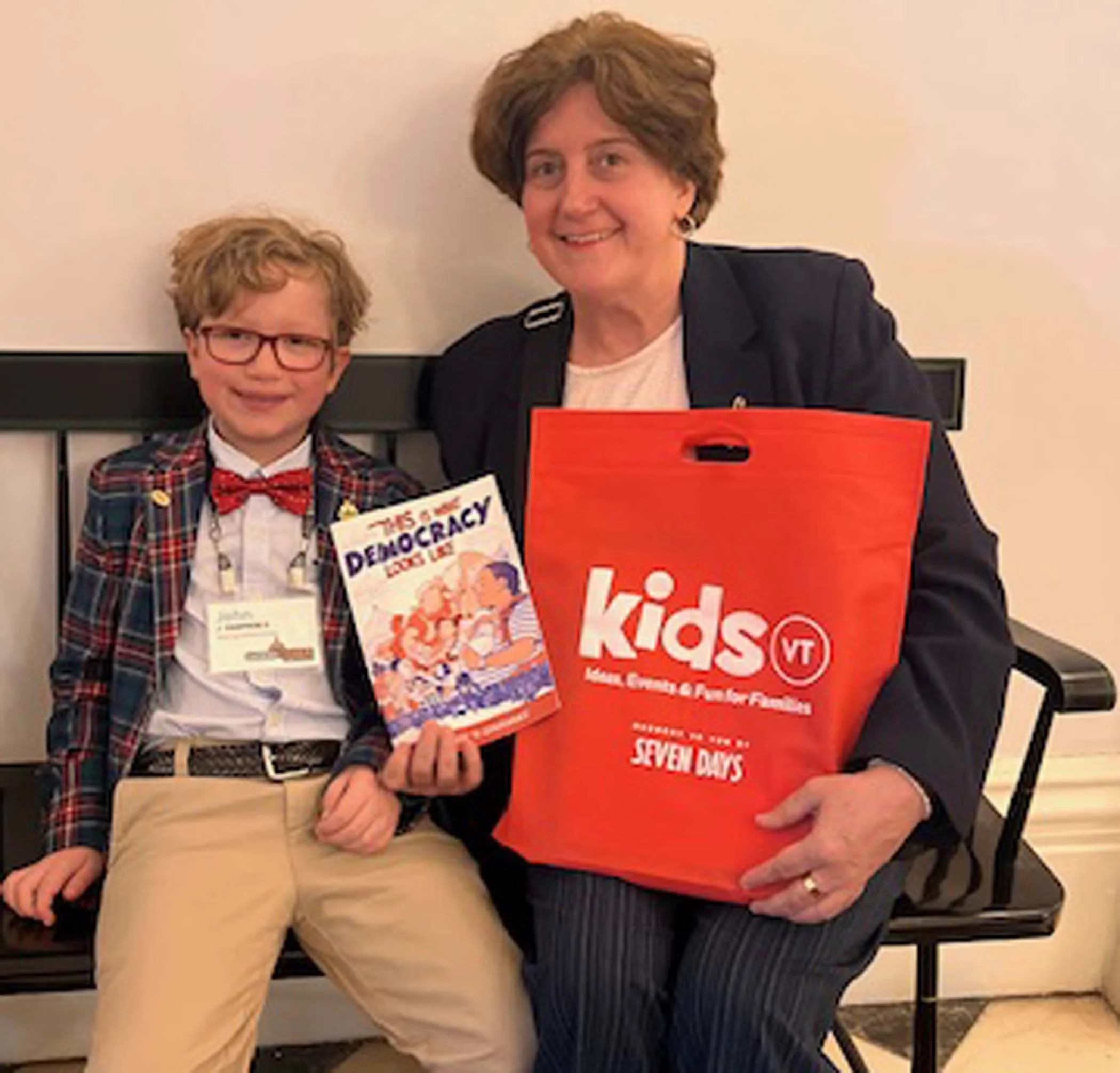
Johnny Zampieri, 11 with his aunt, Rebecca Zampieri, Esq. during a tour of the Vermont State House in Montpelier. (Courtesy Photo)
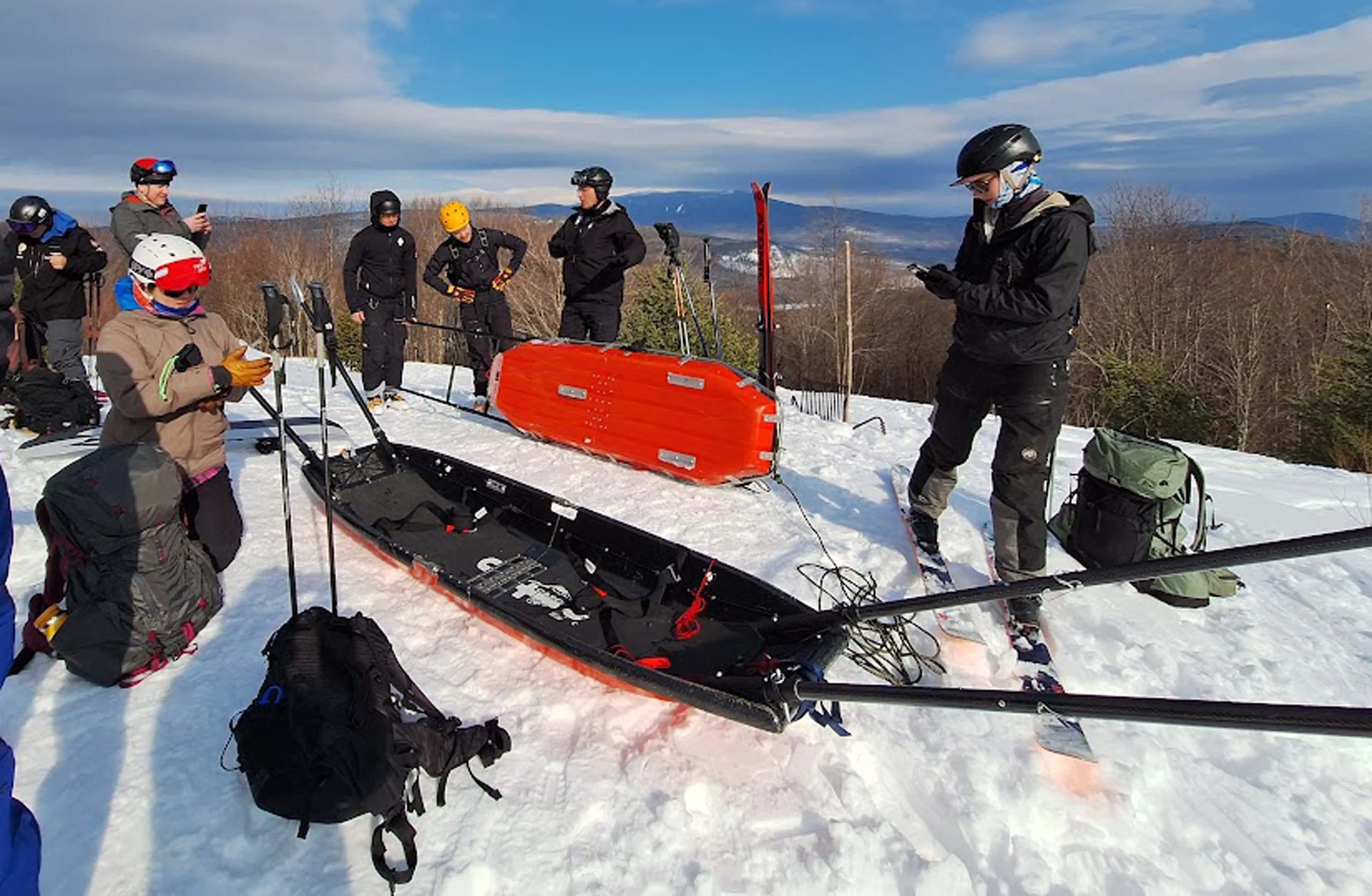
2D Backcountry Patroller School Held At Pike Glades
The training began on Friday evening, at the Stewardship Center staff meeting, followed by being ferried up in the mid-mountain cabin to set up base camp. With all the tents set up outside in the 20-degree weather, the staff held another meeting at dinnertime, and it was off to the sack for a busy Saturday and Sunday.
By Bernie Marvin
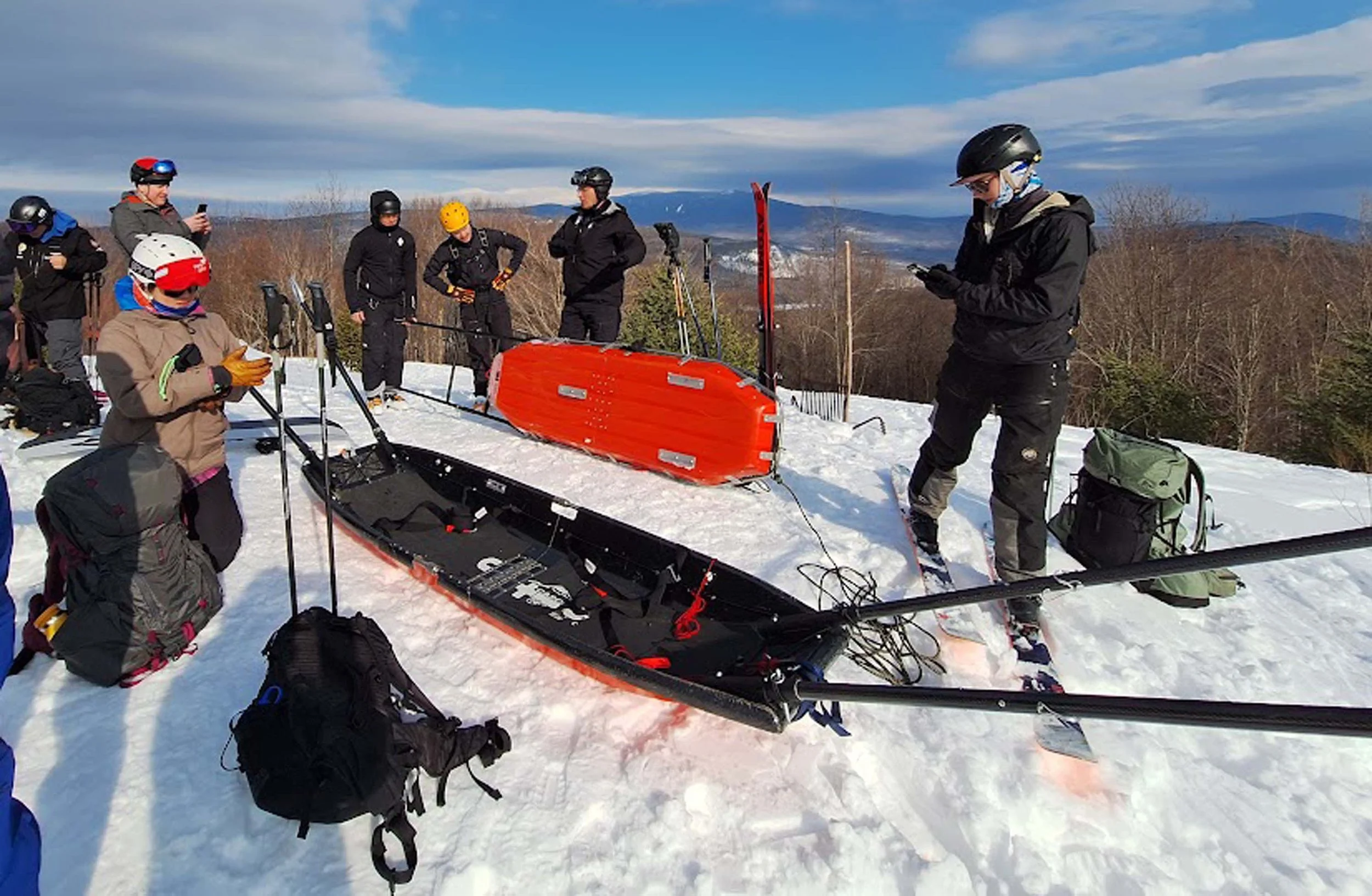
At the top of Iron Mountain, the class reviews the two types of rescue toboggans the class practiced with that weekend. The top toboggan is a Fiberglass split litter with conventional sled handles attached for control. The tub-like sled is also a split-in-half toboggan known as a “four-handle sled.” These are popular in Europe and in western Unites States. Seen left to right are Sherry Chang, Chuck Boyd, James Achard, Brandon Csongradi, Martin Csongradi, Orest Ohar and Laura Styer. Photo by Cathe Neuberger.
Pike, NH – Members of the National Ski Patrol assembled the first weekend of March 2026 at the Upper Valley Stewardship Center in Pike/East Haverhill, NH, for another weekend of rescue training at this popular Northcountry mountainscape and ski area.
The training course began at 8 AM on Saturday, where the dozen patrollers skied up Iron Mountain, a prominent peak on the backside of about 1800 acres located within the boundaries of the Stewardship Center.
They based their operations on the Warrior's Cabin, a former warming hut about halfway up the mountain, at an elevation of 2200 feet. Tentage for all participants was located there.
The theme this year was "out-of-bounds, lost skier." It was a search-and-rescue-based course. Heading up the training program was Orest Ohar of the New Hampshire Backcountry Ski Patrol, affiliated with the Granite State Backcountry Alliance.
He is one of five founders of the "New Hampshire Backcountry Ski Patrol which operates exclusively for the Granite Backcountry Alliance.
The training began on Friday evening, at the Stewardship Center staff meeting, followed by being ferried up in the mid-mountain cabin to set up base camp. With all the tents set up outside in the 20-degree weather, the staff held another meeting at dinnertime, and it was off to the sack for a busy Saturday and Sunday.
He said the classes still stress patient extraction by carry-in slit toboggans, but the surrounding theme will be preparing for lost skier searches. Saturday, the attendees met for a gear review and safety briefing.
Orest Ohar is one of five founders of the "New Hampshire Backcountry Ski Patrol" (NHBSP), which operates exclusively for the Granite Backcountry Alliance (GBA).
"We are two separate organizations. GBA's mission is to develop and maintain human-powered winter recreation ski glades, ensuring they remain accessible to the public. NHBSP is a "medical backcountry rescue unit" managed by GBA, set up to improve the safety of its members and the public attending GBA events. We serve year-round, including during community glade cut events during autumn months, as well as in the winter when GBA takes to the slopes on skis and snowboards during fundraisers, races, and ski festivals," ski patroller Ohar said.
GBA has an ethics education program known as Ski Kind, which is augmented by safety education programs that promote safety, self-reliance, and wilderness rescue. Both organizations serve GBA members and the public backcountry skiing community.
He explained the situation: "The difference between ski resort Patrollers and Backcountry Patrollers is that our rescues are often far from roads and access to the EMS system. The Backcountry Patroller's job is to locate, extricate, and evacuate patients injured deep in the wilderness and bring them out to local EMS waiting at the roadside. At a ski area, a rescue takes approximately 20 minutes. In the backcountry, rescuers must be prepared to work overnight to rescue their patients," Mr. Ohar said.
They then skinned up to the summit of Iron Mountain, with educational interludes along the way. There was the first Glade ski for area recon, with students setting up their camp. At 11:30 AM, toboggan laps began with skinning back to the summit.
Dinner was held at 6 PM at the Warrior Cabin. There was an SAR presentation, an SAR night Evolution and Navigation, and a 9 PM campfire and R&R. Sunday broke cold and clear; breakfast was held at the base camp, with a discussion with New Hampshire Fish and Game Officer Christopher McKee on an informant SAR discussion.
Another SAR session was held, then the team broke camp. Loaded their gear to be ferried down the mountain and prepared to ski the return leg to the base. On Sunday at 1 PM sharp, the event concluded at the Stewardship Center, and everyone headed home.
The group is about to strap on an “EMT Rescue Mannequin” onto a SKED SLED. The mannequin is used in place of a live human during technical rope rescue practice. Seen in the photo is Backcountry Instructor Linda Helms. Photo by Cathe Neuberger.
NH Backcountry Ski Patroller Orest Ohar, at left, also affiliated with the Granite Backcountry Alliance, briefs staff and students at a recent Backcountry Patroller School at the Pike Glades in Pike, NH recently. Their course began at the Upper Valley Stewardship Center and included training with the Search and Rescue-based theme of “out-of-bounds, lost skier.” Seen left to right are Orest Ohar, Laura Styer, Rachel Tobler, Sherry Chang, Brandon Csongradi, Linda Biyd, Michael Adamskowski and Martin Csongradi. The Bridge Weekly/Bernie Marvin
Sugaring Season: Patience, Weather, and a Little Bit of Luck
For those who don’t sugar, here’s the quick version of how it works. When temperatures drop below freezing, the tree essentially pulls moisture up from the ground. When it warms up, that pressure reverses, and the sap flows out—right into buckets or tubing systems if you’ve tapped the tree. It’s like the tree is breathing in and out.
No freeze? No recharge.
Too warm for too long? The season can start slipping away.
What this year is teaching us about maple season in our neck of the woods
By Joshua Smith
Boiling sap at sunrise at Oliver’s Sugarhouse in Groton, VT.
There are a few things you can count on this time of year. Mud season is coming whether we like it or not. Someone’s already put the snow tires on the “maybe next weekend” list. And across towns like Groton, Bath, Corinth and Peacham, there are folks watching the weather with the same level of trust they give a used snowblower.
Because it’s sugaring season.
Now, if you’ve ever made maple syrup—or even just helped out for a day—you know this isn’t a hobby for the impatient. It’s part science, part tradition, and a whole lot of hoping the weather cooperates.
I recently had the chance to talk with Mark Isselhardt from the Proctor Maple Research Center, and if there’s one takeaway from this year so far, it’s this: no two sugaring seasons are ever the same.
A Season That Keeps You Guessing
If you’ve been out in the sugar woods this year, you’ve probably already felt it. This season got off to a slower start than what we’ve seen the past few years. Colder temperatures early on meant things didn’t get moving right away.
Then came the snow—which looked promising—but it didn’t stick around long. A stretch of warm weather, some rain, and a little wind took care of that pretty quickly.
And here’s the thing a lot of folks don’t realize: too much warmth can be just as much of a problem as too much cold.
Sugaring depends on that classic New England rhythm—freezing nights and warmer days. That’s what gets the trees to move sap. Without that back-and-forth, things slow down.
As Mark explained, sap flow doesn’t just happen steadily over time. It comes in bursts. You might have a few days where everything lines up perfectly and you make a big chunk of your syrup all at once. Then you might go several days with almost nothing.
It keeps you humble.
Why the Weather Matters So Much
For those who don’t sugar, here’s the quick version of how it works. When temperatures drop below freezing, the tree essentially pulls moisture up from the ground. When it warms up, that pressure reverses, and the sap flows out—right into buckets or tubing systems if you’ve tapped the tree. It’s like the tree is breathing in and out.
No freeze? No recharge.
Too warm for too long? The season can start slipping away.
And that’s where things get tricky this year.
We’ve already had a stretch of warmer-than-average temperatures. For some producers, especially those in warmer areas or with trees facing the sun, that can impact how productive their taps are. The tap holes can start to seal up earlier than expected, meaning less sap when conditions improve.
So far, reports across the region—and the state—are all over the map. Some producers are just getting started, while others are already a good way into their season. That’s sugaring. It’s never one-size-fits-all.
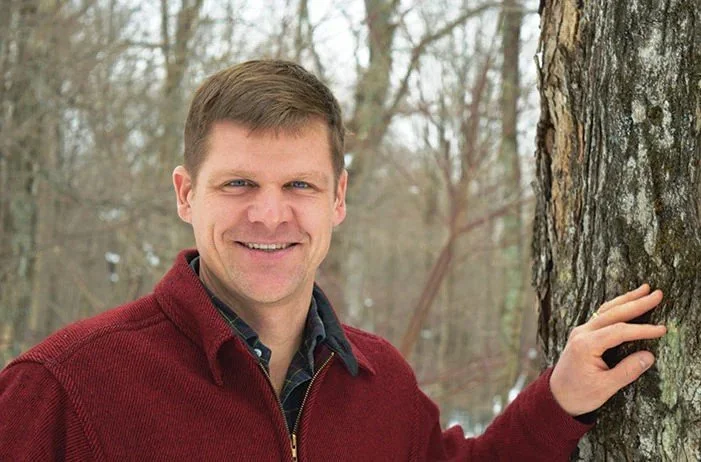
Mark Isselhardt is the UVM Extension maple specialist. He has been based at University of Vermont Proctor Maple Research Center since 2016. Photo courtesy of UVM Extension
The Good News
It’s not all uncertainty. One thing Mark pointed out is that the quality of syrup this year has been strong. Producers are reporting good flavor and color, and sap sweetness seems to be right where it should be.
That’s a big deal. There was some concern going into the season that last summer’s dry conditions might affect sugar content in the sap. So far, that doesn’t seem to be the case.
And while it’s still too early to call the season one way or the other, there’s a sense of cautious optimism out there. As long as we don’t get a long stretch of unseasonably warm weather, there’s still plenty of opportunity for good runs.
Buckets, Tubing, and Tradition
If you grew up around sugaring, you probably have your own version of how it was done.
For me, it was buckets, a tractor, and a whole lot of lifting. You’d go tree to tree, dump the sap, haul it back, and repeat until your arms reminded you exactly how much sap weighs. And for the record—it’s heavy.
These days, a lot of larger operations use tubing and vacuum systems, which allow them to collect sap more efficiently and at a larger scale. In fact, Vermont now produces over half of all the maple syrup in the United States, and production has grown dramatically over the past few decades.
But whether you’re running thousands of taps or just a handful in your backyard, the heart of sugaring hasn’t changed. It’s still about paying attention. Showing up. And working with what nature gives you.
For Those Who Don’t Sugar
Even if you’ve never tapped a tree, sugaring season is still part of life around here.
It’s the steam rising from sugarhouses on a cold morning. It’s the smell of boiling sap drifting through the woods. It’s the quiet understanding that spring is getting closer—even if it doesn’t quite feel like it yet.
And if you’ve never tried it, even tapping a couple trees with your family can give you a whole new appreciation for what goes into that bottle on your table.
Because it’s not quick. It’s not easy. And it’s definitely not predictable.
A Season Built on Optimism
Talking with Mark, one thing stood out more than anything else. You have to be an optimist to be a sugarmaker.
Every season brings its own challenges. Every year is a little different. And no matter how much experience you have, you’re still at the mercy of the weather. But that’s part of what makes it special.
So whether you’re out there collecting sap, boiling late into the night, or just enjoying a stack of pancakes with the finished product, this season is a reminder of something simple. Around here, we don’t just wait for spring.
We tap into it.
And if you’re not out there in the woods yourself, this is the perfect time to go find the folks who are. Take a drive. Follow the steam. Stop in at a sugarhouse if you see one open, or plan a visit during Vermont Maple Open House Weekend. You can also find local producers through the Vermont Maple Sugar Makers' Association at vermontmaple.org or the New Hampshire Maple Producers Association at nhmapleproducers.com.
And when you do—buy a bottle. Maybe two. Because behind every jug of syrup is a season like this one: unpredictable, a little stubborn, and made better by the people willing to stick with it.
That’s what you’re really bringing home.
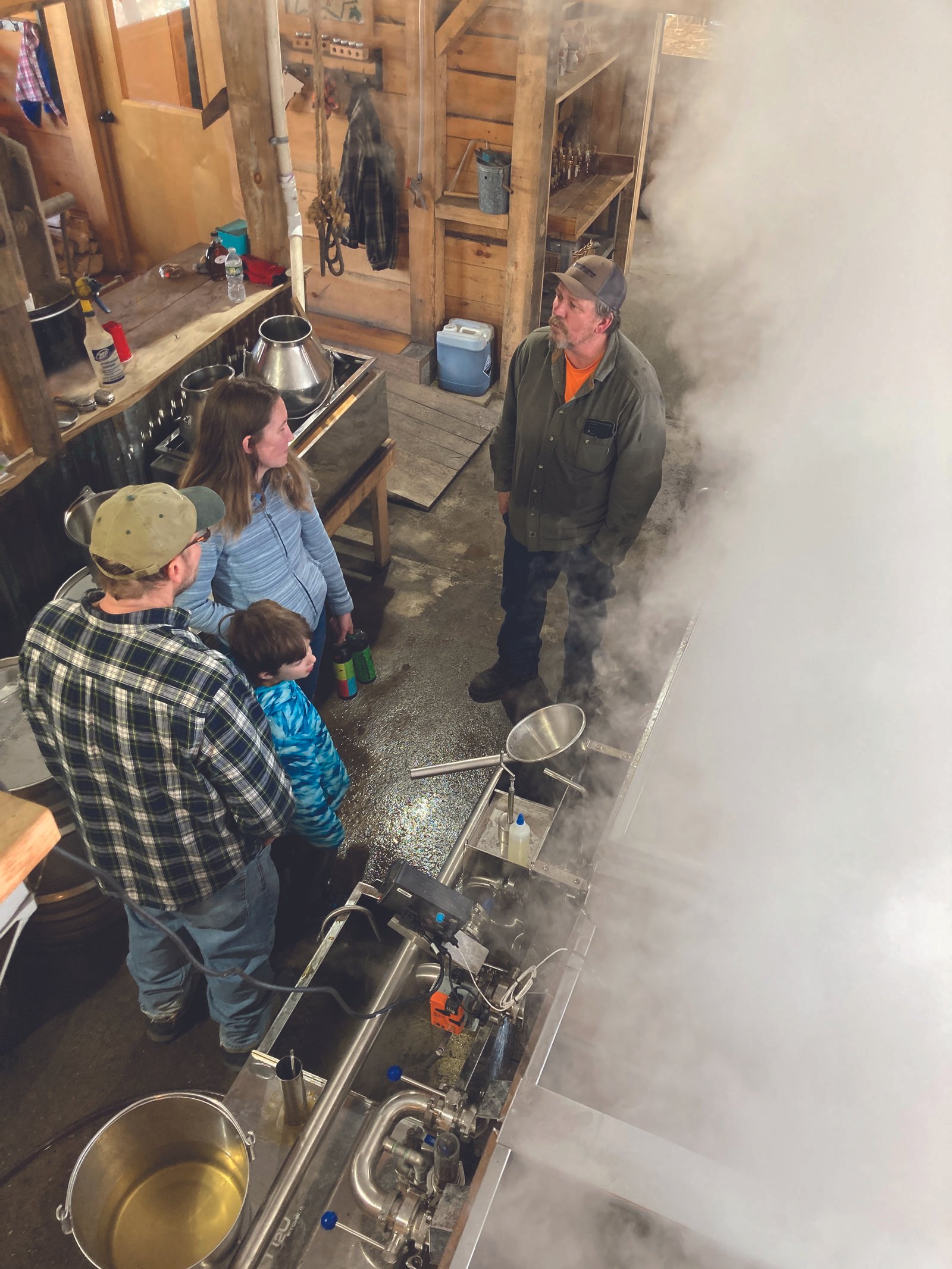
Troy Oliver (top right) explains the boiling process to visitors (bottom left) Kirk Morrison, Connor McCord and Kori McCord at Oliver’s Sugarhouse.
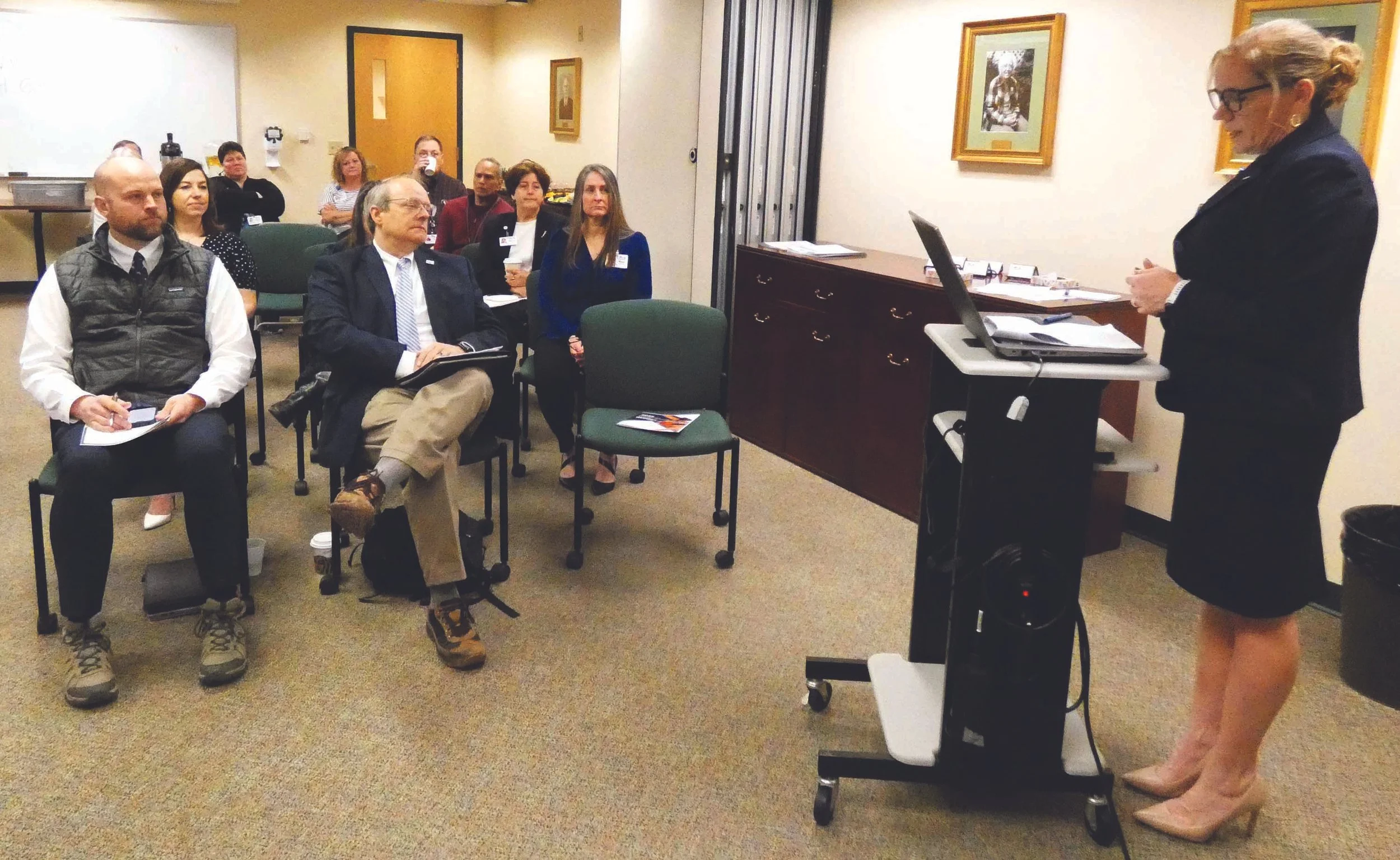
NH Legislative Event Held At Cottage Hospital
In her opening remarks for the legislative breakfast held at the hospital on Monday, March 9, 2026, she offered that she had been employed at the hospital for the past 16 years, with her being at the top post of the hospital that was established back in the early 1900’s for the past five years.
By Bernie Marvin
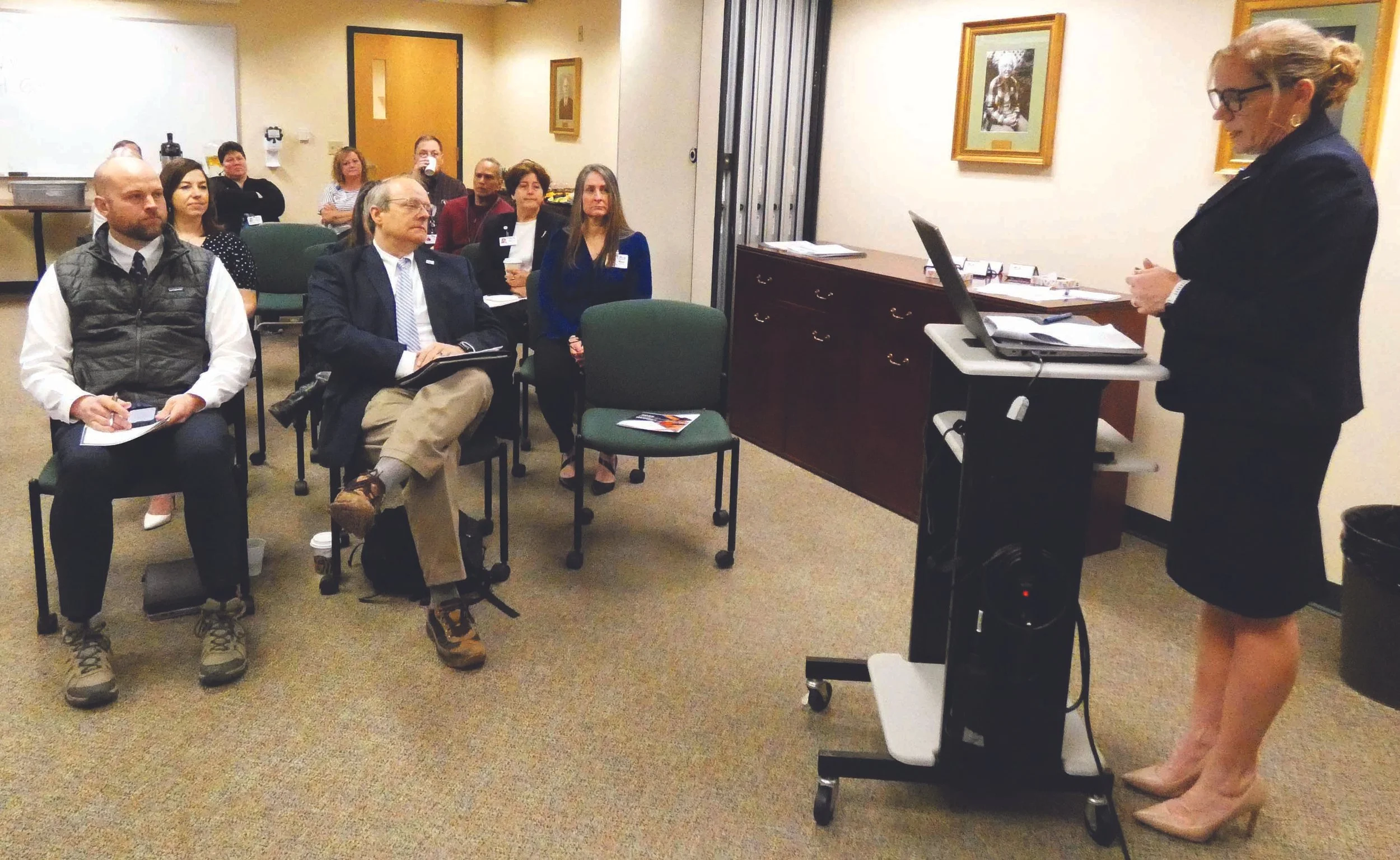
Cottage Hospital CEO and President Holly McCormack, DNP, RN, speaking at right, addresses a gathering of government and municipal officials recently at the Cottage Hospital Legislative Breakfast. The popular event is held annually and offers an opportunity for the hospital to discuss up-to-date programs and figures with legislators. The Bridge Weekly/Bernie Marvin
Woodsville, NH - Cottage Hospital President and CEO Holly McCormack, DNP, RN, told a gathering of legislators and officers of the New Hampshire Hospital Association that the renowned health magazine Becker’s Healthcare recently named Cottage Hospital as one of the top 150 places to work in the field of medicine.
In her opening remarks for the legislative breakfast held at the hospital on Monday, March 9, 2026, she offered that she had been employed at the hospital for the past 16 years, with her being at the top post of the hospital that was established back in the early 1900’s for the past five years.
She told her guests at the early morning event that the hospital was a very special and unique place. It was an independent critical access hospital, and it is the largest employer in the community, with approximately 200 employees with benefits and a total of 300, which includes a per diem staff.
She reported that the hospital, although faced with a negative 16 percent operating margin, had to recruit a local permanent workforce in place of a temporary travel workforce that the hospital had been relying on. By investing in local talent, the hospital reduced the travel labor costs by 118 percent and restored the continuity of care for the patients. The changes made a significant difference to the fiscal year bottom line last year.
CEO McCormack cited many instances of government requirements being placed on her hospital. She said each day the hospital is required to provide more and more resources to manage the regulatory requirements, reporting and administrative tasks associated with caring for our patients.
“It takes more than a village to care for rural America,” she said, “but it starts here with the help of each of you at the town, state and federal level. Your attendance here this morning demonstrates your support. We will keep fighting for the privilege of caring for our community. We ask for your support in protecting cost-based reimbursement, strengthening workforce, and reducing the administrative barriers that pull caregivers away from patients. Our vision is simple, a rural healthcare system where everyone, no matter their age, income or zip code- can access high quality care close to home,” she said in closing.
Also speaking at a legislative breakfast were President of the New Hampshire Hospital Association Steve Ahnen; Vice President of the State Government Relations Board of the New Hampshire Hospital Association Ben Bradley; Special Assistant for Projects and Policies for Senator Jeanne Shaheenís office Chuck Anderson; New Hampshire District 1 Senator David Rochefort; Executive Councilwoman Karen Liot Hill and Haverhill Town Administrator Tom Galinat.
Sweet Sunday In Newbury
The open house is set for Sunday, March 22, from 1 to 3 p.m. at the farm’s sugarhouse at 275 Saxie Welch Road, a short distance off Swamp Road. Visitors are invited to drop in, watch maple syrup being made, and enjoy fresh donuts from the Newbury Village Store, topped with maple cream generously donated by Harold Carleton and Cindy Merrill.
Open Sugarhouse Offers Syrup-Making, Donuts, And History
Head Waters Farm Sugarhouse on Saxie Welch Rd., site of the Newbury Historical Society’s 2026 Open Sugarhouse on March 22 from 1–3 p.m. (Courtesy Photo)
The Newbury Historical Society will highlight one of the town’s maple producers this month with an Open Sugarhouse event at Head Waters Farm.
The open house is set for Sunday, March 22, from 1 to 3 p.m. at the farm’s sugarhouse at 275 Saxie Welch Road, a short distance off Swamp Road. Visitors are invited to drop in, watch maple syrup being made, and enjoy fresh donuts from the Newbury Village Store, topped with maple cream generously donated by Harold Carleton and Cindy Merrill.
Those planning to attend should be prepared for early spring conditions. Organizers say roads leading to the sugarhouse are likely to be muddy, and four-wheel drive vehicles are recommended. To keep traffic moving smoothly, monitors will be stationed at the intersection of Swamp Road and Saxie Welch Road to help guide one-way traffic to and from the site.
Head Waters Farm is operated by Matthew Osanitsch and Rebekah Nydam. The farm produces more than 2,000 gallons of maple syrup annually from approximately 5,500 taps. While much of their syrup is sold wholesale in bulk, the farm will have bottled syrup available for purchase during the Open Sugarhouse, giving visitors a chance to stock up while they’re there.
Sugaring is only part of the farm’s work. Head Waters also raises grass-fed American Milking Devon cattle, a multi-purpose heritage breed valued for both milk and meat. Known for their distinctive long horns, Devon steers have historically been used as oxen, and the breed remains an important link to Vermont’s agricultural past.
That history runs deep at the Head Waters property itself. The land has been farmed since the 18th century, when it was first settled by the Norse family. In more recent decades, the Meyette family operated a dairy there until 1982, followed by Fred and Earla Swift’s alpaca farm, and later the Calley family’s sugaring operation—each chapter adding to a long tradition of working the land.
More information about the Open Sugarhouse and other Newbury Historical Society activities is available at newburyhistoricalsociety.org or by email at newburyhistorical@gmail.com.